

Adulting Well
Here’s the thing about parenting: it’s a tightrope walk. On one side, there’s love, support, and the burning desire to give our kids everything we never had. On the other, there’s the cold, hard truth that life doesn’t hand out participation trophies. And somewhere in the middle, between those two extremes, lies the question we’re all grappling with: Are we helping our kids, or are we crippling them?
Dr. Bradley Klontz, a psychologist and certified financial planner, calls it financial enabling – a term that hits a little too close to home for many of us. It’s the well-meaning but often misguided act of propping up our adult children financially, long after they should’ve been standing on their own two feet. And while it might feel like love in the moment, it can leave lasting scars – on their independence, their confidence, and even our relationships with them.
So, let’s talk about it. Let’s dig into the messy, uncomfortable, but oh-so-necessary conversation about financial enabling, independence, and what it really means to raise resilient adults.
The Pitfalls of Financial Enabling
Here’s the hard truth: financial enabling doesn’t just delay adulthood – it can derail it entirely. When we step in to pay the rent, cover the car payments, or bail them out of yet another financial misstep, we’re not just helping. We’re sending a message, whether we mean to or not: You can’t do this without me.
1. Delayed Independence: Think about it. When was the last time you truly grew as a person? Chances are, it wasn’t when everything was handed to you on a silver platter. It was when you had to figure it out – when you had to scrape together rent, budget for groceries, or hustle for that promotion. Dr. Klontz warns that without those struggles, our kids miss out on the chance to develop purpose, creativity, and grit.
2. Strained Relationships: Money has a way of complicating even the strongest bonds. When adult children rely on their parents for financial support, it creates a power dynamic that’s hard to shake. Resentment builds. Frustration simmers. And before you know it, the relationship is less about love and more about obligation.
3. Unsustainable Support: Let’s be real – not all of us are sitting on a trust fund. For most parents, continuing to support adult children means sacrificing our own financial security. Retirement savings get drained. Dreams get put on hold. And for what? To keep our kids in a bubble that’s bound to burst eventually?
The Message We Send
Here’s the kicker: every time we swoop in to save the day, we’re telling our kids, You’re not capable. And that’s a hard message to undo. Dr. Klontz suggests a different approach: let them stumble. Let them make mistakes. Because here’s the thing about mistakes – they’re not failures. They’re lessons. And those lessons?
They’re the building blocks of resilience.
Wealthy Children and Decision Paralysis
Now, let’s talk about the other end of the spectrum: kids who grow up with too much. For children of wealthy families, the problem isn’t a lack of resources – it’s an abundance of them. And oddly enough, that abundance can be just as paralyzing as scarcity.
When every door is open, how do you choose which one to walk through? When failure isn’t a possibility, where do you find the motivation to try? For these kids, the challenge isn’t financial – it’s existential. And as parents, it’s our job to teach them that wealth isn’t just about having options; it’s about making meaningful choices.
The Bigger Picture: Entitlement and Gratitude
Here’s the uncomfortable truth: we’re raising a generation that’s never known true hardship. And while that’s a testament to our progress as a society, it’s also a double-edged sword. Because without hardship, it’s easy to take prosperity for granted.
Somewhere along the way, we’ve lost the thread. We’ve forgotten to teach our kids that success isn’t just about what you have – it’s about what you do with what you have. It’s about gratitude. It’s about resilience. And it’s about recognizing that the world doesn’t owe you a damn thing.
Striking the Right Balance
So, how do we do it? How do we support our kids without enabling them? Here are a few thoughts:
1. Teach Financial Literacy: Start early. Teach them about budgeting, saving, and investing. Give them the tools they need to navigate the real world.
2. Set Boundaries: Be clear about what you’re willing to provide – and what you’re not. Maybe you cover tuition, but they’re on the hook for living expenses. Maybe you help with a down payment, but they handle the mortgage. Whatever it is, stick to it.
3. Let Them Fail: This one’s hard, I know. But failure is where the magic happens. It’s where they learn to pick themselves up, dust themselves off, and try again.
4. Model Gratitude: Show them what it looks like to work hard, to be grateful, and to take responsibility for your choices. Because at the end of the day, they’re watching us more than they’re listening to us.
Final Thoughts: Raising Resilient Adults
Parenting isn’t for the faint of heart. It’s messy, complicated, and often heartbreaking. But here’s the thing: our job isn’t to protect our kids from the world. It’s to prepare them for it.
So, let’s stop enabling. Let’s start empowering. Let’s raise kids who aren’t just financially independent, but emotionally resilient. Kids who know how to work hard, fail gracefully, and get back up again. Kids who are ready to take on the world – not because they have to, but because they can.
What’s your take on financial enabling? Have you struggled with finding the right balance? Let’s talk about it. Because if there’s one thing I’ve learned, it’s that we’re all in this together.
–
George Carlin on Child Worship
– 0 –
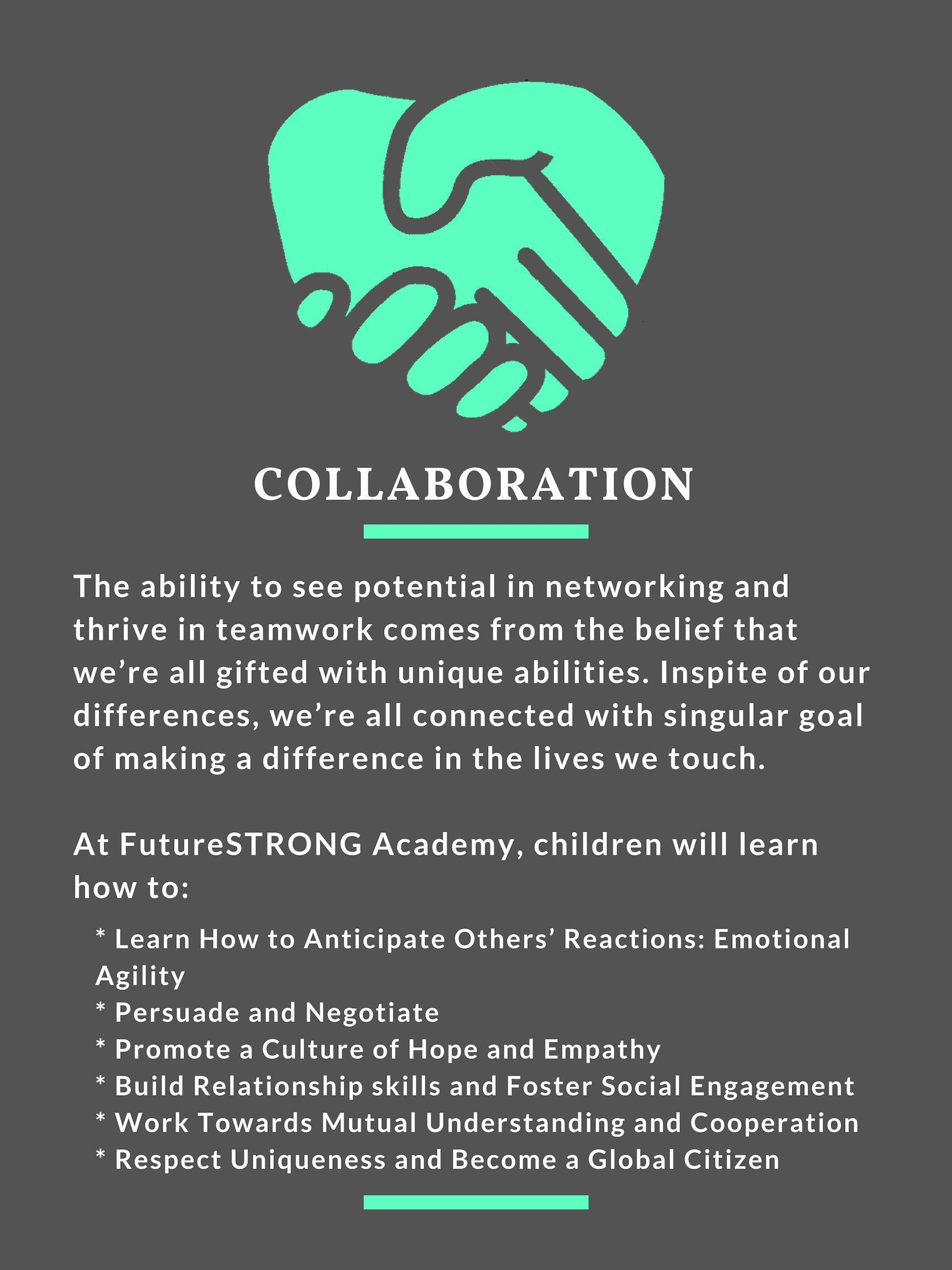
COLLABORATION - A Pillar of FutureSTRONG Academy
Our children will one day face the real world without our support. Academic development is not the only skill they will need in the real world where people skills like taking the lead, emotional intelligence and a strong moral compass will determine who will shine. So, as parents who want to raise well rounded adults, we want to give them the right tools for their personal development.
Here is COLLABORATION as described as the 6 C’s of Future STRONG.
Find Below Better Strategies On COLLABORATION

50 High-Impact Icebreaker Questions for Teens, Young Adults & Teams

Specialization Is for Insects: Why Being a Generalist Is a Superpower

The Wisdom of Spiders: What Webs, Anansi & Black Widows Teach Us

When the Teleprompter Dies, Can You Still Speak? | A Lesson from Prince Harry

Breaking Paradigms: How to Question the Beliefs Shaping Your Life

Are We Replacing Human Relationships With AI? | Artificial Intimacy & Sherry Turkle

Tech Billionaires Don’t Let Their Kids Use Their Own Tech 🤯 | The Screen-Time Secret

An Audit of Your Child’s Digital Ecosystem: How Parents Can Help

An Open Letter to Bo French: Leading with Love and the Power of Inclusion

UT Austin – Leading with Love and the Power of Inclusion: Choosing Love Over Fear

Ancient Wisdom and Modern Mastery: Two Paths to Human Greatness
