

Success vs. Failure
Billy Oppenheimer, a writer, once described picking up Robert Greene from the airport. For the uninitiated, Greene is the author of The 48 Laws of Power, a must-read for those who love power and want to dominate the world. Of course, the lessons can be dangerous in the hands of a psychopath.
During the drive, Greene discussed his experiences with research assistants. These people couldn’t grasp the spirit of his material, failed to spot what was interesting, and would crumble under criticism.
At the core, the issue was that they couldn’t tolerate boredom. And that, he says, is “the dividing line between people who are successful and people who are not.”
According to Greene, many people fail not because they lack talent, but because they cannot handle the mundane aspects of mastery. We must be able to handle the frustration of not achieving results on the first attempt, or the “torture” of investing hours into research that may ultimately prove fruitless. He wants us to get comfortable with questions like this: “Am I going to spend sixteen hours reading this biography only to discover there’s nothing in it I can use?”
True mastery requires a disciplined temperament to sit with repetitive, unglamorous work and resist the urge to quit when the process becomes unexciting.
Our Current State of Busyness
Let’s face it, real life is not naturally stimulating. It’s long stretches of quiet and routine, with bursts of temporary excitement. The sooner we accept this, the better.
In juxtaposition, our day-to-day lives pale in comparison to our online lives, which are unpredictable, exciting, and full of likes, comments, novelty, and stimulation. That’s why so many of us are struggling to “find meaning in our boring lives,” especially since 2011, with the massive intrusion of social media and digital excitement into our mental space.
Such is modern life, where taking downtime is mistaken for laziness and lack of motivation. In our busyness, we forget that our bodies and minds need rest. That we don’t always have to be in motion to be productive. That stillness is not failure.
Daydreaming for Problem Solving
We all know busyness is not productivity. And here’s the thing: downtime provides huge benefits to brain health.
Boredom allows our brains to connect the dots between thoughts and experiences. Letting the mind wander once in a while activates subconscious thinking, creating new connections between the past and what we’ve learned. That’s when we begin making inroads into problems that have been bothering us — finding patterns, discoveries, and new ways into old issues.
The Brain on Default Mode
Pausing changes the brain’s structure. Mindfulness and silence are associated with structural changes in the prefrontal cortex, a process known as gyrification. This matters because the PFC is the executive branch of the brain — it processes feelings, regulates emotions, supports cognitive flexibility, and governs decision-making.
The brain enters the “Default Mode Network” during self-reflection, the psychological task of examining one’s traits and experiences. This supports autobiographical planning, where we connect past and future experiences and translate them into insight for persistent problems.
Frequent brain breaks give the mind space to shift away from high stimulation and urgency. They boost creativity, clarity, and productivity when we return to our tasks. Seeking refuge in silence also allows us to give grace to ourselves and to others.
Boost Creativity Through Boredom
The funny thing about humans is that so many of us want to live 100 years when we don’t know what to do with a boring Sunday afternoon.
So try something new. Pick up a new skill. Try a new recipe. Learn to dance. Mental agility, aided by novelty and calculated risks, sets us on a path of growth and learning for a lifetime.
Let yourself pause. Let yourself daydream. Let your boredom not be rescued by your phone. Create opportunities for brain breaks — walking, silence, meditation, stillness. Let yourself have the terrifying thing called a deep conversation. With yourself. With someone you love. With your life.
Whether you grab a book and fall into the couch, or grab your headphones and go for a run — what you do with your time is up to you. But a little downtime resets the brain to think, create, and connect more efficiently.
Slowing Down in the Present for a Better Future
The upside to Covid was that our physical lives slowed to a more natural pace. But our mental lives didn’t. Now it’s up to us to bring our inner world to the same rhythm.
Adopt digital minimalism. Declutter the mental noise. Create space in your head. Start again.
It will be uncomfortable at first. Existential boredom always is. But it’s good for the soul — it allows you to sort through your thoughts and create real priorities. Research shows that when the brain is under-stimulated, it begins seeking self-stimulation, boosting creativity.
In the end, slowing down to the pace of nature helps us check whether the route we’re on is actually the one we want to be on.
Because whatever we’re navigating — boroughs or boardrooms — we’ll need tools like wonder, boredom, resilience, gratitude, and creativity.
And it starts with capturing moments of stillness inside our daily grind.
–
“When you press the pause button on a machine, it stops. But when you press the pause button on human beings they start,” argues my friend and teacher Dov Seidman, CEO of LRN. “You start to reflect, you start to rethink your assumptions, you start to reimagine what is possible and, most importantly, you start to reconnect.”
~ Thomas L. Friedman, Thank You for Being Late: An Optimist’s Guide to Thriving in the Age of Accelerations
– 0 –
About The Article Author:
Hi, I’m Rachana. Its been my dream for years to do something to consciously create a better future where every one of us is excited about our own potential. My challenge to everyone is that they aspire for their personal best and leave a legacy of their work through their contributions to mankind.
One more thing. In December of 2044, I hope to win the Nobel.
Will you join me on this journey of growth and transformation?
Namasté.
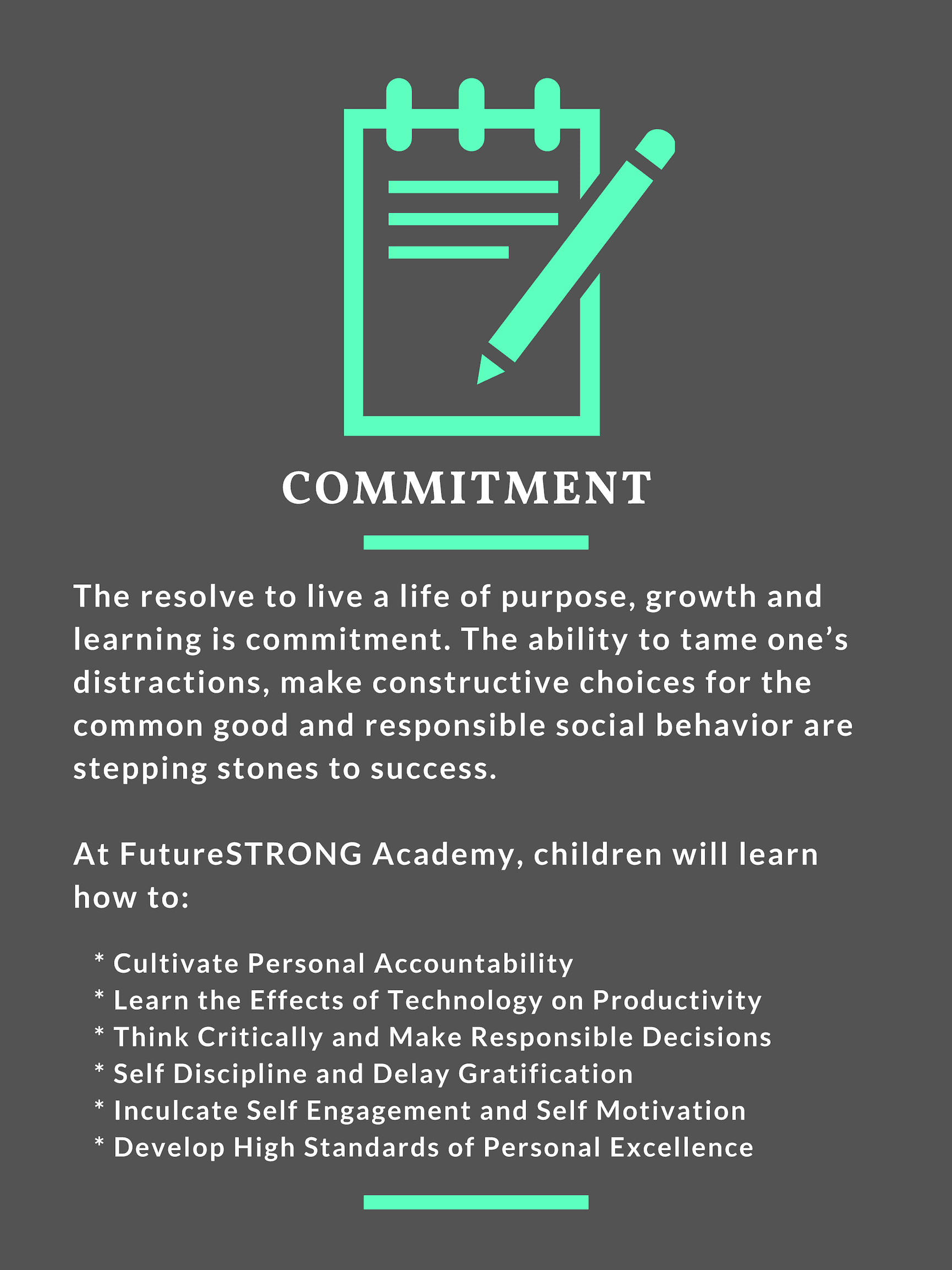
COMMITMENT - A Pillar of FutureSTRONG Academy
Our children will one day face the real world without our support. Academic development is not the only skill they will need in the real world where people skills like taking the lead, emotional intelligence and a strong moral compass will determine who will shine. So, as parents who want to raise well rounded adults, we want to give them the right tools for their personal development.
Here is COMMITMENT as described as the 6 C’s of Future STRONG.
Find Out How To Live An Optimal Life
– – – – – – – – – – – – –
Wellbeing is a sum of: Autonomy, Purpose, Connectedness.

Specialization Is for Insects: Why Being a Generalist Is a Superpower

The Wisdom of Spiders: What Webs, Anansi & Black Widows Teach Us

When the Teleprompter Dies, Can You Still Speak? | A Lesson from Prince Harry

Breaking Paradigms: How to Question the Beliefs Shaping Your Life

Are We Replacing Human Relationships With AI? | Artificial Intimacy & Sherry Turkle

Tech Billionaires Don’t Let Their Kids Use Their Own Tech 🤯 | The Screen-Time Secret

Ancient Wisdom and Modern Mastery: Two Paths to Human Greatness

On Life, Hope, and the Trap of Waiting — By Schopenhauer and Itka

The Human Arc in the Attention Economy: How Algorithms Are Changing Love

Vita Brevis: Life’s Too Short — Stop Drifting, Start Living

Growing Up Isn’t One Big Moment – It’s A Thousand Small Ones.

Trackbacks/Pingbacks