

The Art Of The Handshake
Let me tell you something about negotiation: it’s not just a skill. It’s a way of life. It’s the quiet hum beneath every conversation, the invisible thread that ties people together, whether you’re closing a million-dollar deal or convincing your toddler that broccoli is, in fact, a tiny tree they’re allowed to eat. But here’s the thing – negotiation isn’t about domination. It’s not about crushing the other side. It’s about creating something better, something that leaves everyone feeling like they’ve won. And that, my friend, is an art.
So, how do you master this art? How do you become the kind of person who walks into a room and walks out with a deal that feels less like a transaction and more like a handshake between allies? Let’s break it down.
The Power of Preparation: Don’t Wing It
Here’s a truth bomb: the negotiation doesn’t start when you sit down at the table. It starts long before, in the quiet moments of preparation. You don’t show up to a battle without a plan, and you don’t show up to a negotiation without knowing your BATNA.
#1. Know Your BATNA
Your Best Alternative to a Negotiated Agreement (BATNA) is your safety net. It’s the plan you fall back on if things go sideways. Knowing your BATNA isn’t about being pessimistic – it’s about being prepared. It’s about walking into that room with the confidence of someone who knows they’ll be okay, no matter what.
#2. Understand the Other Side
Here’s where empathy comes in. And no, I don’t mean the kind of empathy where you nod sympathetically while secretly planning your next move. I mean real empathy. The kind where you genuinely try to understand what the other person wants, what they’re afraid of, and what they’re hoping to achieve. Because when you understand their perspective, you’re not just negotiating – you’re problem-solving.
The Commandments of Networking (Because Relationships Matter)
Negotiation isn’t just about the deal – it’s about the people. And people are complicated, messy, and wonderful. Here’s how you navigate that:
1. Be Curious: Ask questions. Not the surface-level kind, but the ones that make people pause and think.
2. Defang ‘No’: A ‘no’ isn’t a dead end. It’s a detour. Use it as an opportunity to dig deeper.
3. Ask for a Different ‘Yes’: If they won’t give you what you want, ask for something else.
4. Believe in Yourself: Confidence isn’t arrogance. It’s the quiet belief that you deserve to be in the room.
5. Ditch ‘Nice’ for ‘Brave’: Nice gets you nowhere. Brave gets you results.
The Magic of Mirroring: The Subtle Art of Connection
Mirroring is one of those things that sounds like a party trick but is actually a superpower. It’s about reflecting the other person’s words, tone, or body language in a way that builds trust without them even realizing it.
– Repeat Key Words: If they say, “We need to finalize the budget,” you respond, “Finalize the budget?” It’s simple, but it works.
– Why It Works: Mirroring says, “I’m listening. I’m here with you.” And when people feel heard, they’re more likely to open up.
Turning a ‘No’ into a ‘Yes’ (Because ‘No’ Is Just the Beginning)
Let’s be real: rejection stings. But it doesn’t have to be the end of the conversation. Here’s how you flip the script:
1. Ask for an Exception: “Have you ever made an exception? Just this once?”
2. Focus on Outcomes: “What’s the best outcome we can achieve together?”
3. Use Their Name: There’s power in personalization.
4. Build a ‘Yes Ladder’: Start small. Get them saying yes to little things, and the big ask becomes easier.
Managing Emotions: The Invisible Battle
Negotiations are emotional. They’re messy. They’re human. And that’s okay. The key is to manage those emotions, not let them manage you.
– Anxiety: Prepare. Practice. Breathe.
– Anger: Don’t let it take the wheel. Take a break, or reframe it as sadness.
– Excitement: Stay grounded. Celebrate later.
The Principles of Successful Negotiation
1. Empathy: See the world through their eyes.
2. BATNA: Know your backup plan.
3. Reframe: Shift the conversation to mutual gains.
4. Stay Focused: Don’t get derailed.
5. Mutual Gain: Aim for a solution that benefits everyone.
Negotiation Doesn’t Have To Be A Zero Sum Game
Negotiation isn’t about winning or losing. It’s about creating something better than what existed before. It’s about finding common ground, building relationships, and walking away with a deal that feels like a handshake, not a tug-of-war. At the end, it can be a win win for all parties involved.
So, the next time you’re faced with a negotiation, remember this: Preparation, empathy, and mirroring are your secret weapons. Use them wisely.
– 0 –
COLLABORATION - A Pillar of FutureSTRONG Academy
Our children will one day face the real world without our support. Academic development is not the only skill they will need in the real world where people skills like taking the lead, emotional intelligence and a strong moral compass will determine who will shine. So, as parents who want to raise well rounded adults, we want to give them the right tools for their personal development.
Here is COLLABORATION as described as the 6 C’s of Future STRONG.
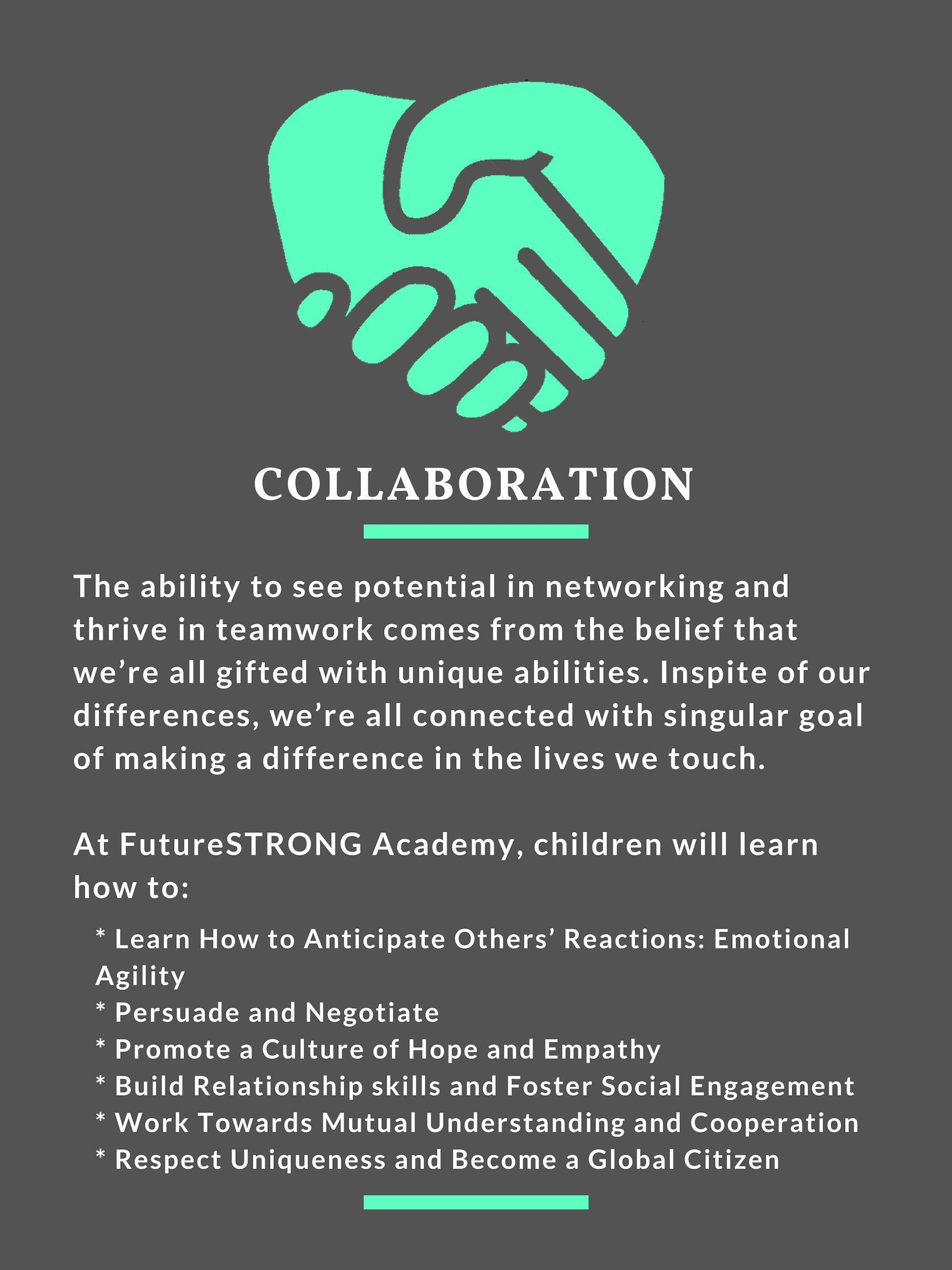
Find Below Better Strategies On COLLABORATION

An Audit of Your Child’s Digital Ecosystem: How Parents Can Help

An Open Letter to Bo French: Leading with Love and the Power of Inclusion

UT Austin – Leading with Love and the Power of Inclusion: Choosing Love Over Fear

Ancient Wisdom and Modern Mastery: Two Paths to Human Greatness

FutureSTRONG Cornerstone Articles: Personal Growth, Travel, Culture & Life

The Worth of Our Eyeballs: Meta, Social Media and the Price of Our Children’s Attention

The Human Arc in the Attention Economy: How Algorithms Are Changing Love

Can a Child’s Life Be a True Adventure? Teaching Kids Agency, Discipline & Independence

Vita Brevis: Life’s Too Short — Stop Drifting, Start Living

Daughters of the Earth: A Poem on Womanhood and Friendship

The 12 Car Commandments Every College Student Should Know Before Leaving Home

Trackbacks/Pingbacks