

An Antidote To Loneliness
We’ve all been there, we’re in a relationship that sucks the life out of us. But, we somehow have to endure for the sake of keeping peace within the family or the workplace. And that’s how life is – a combination of low quality and high quality connections.
Low quality connections are corrosive, they take so much from us and give nothing in return. On the other hand, high quality connections are those that enable both parties to feel important and nurtured.
When we’re in a high quality relationship, we operate with high level of self-awareness for our needs as well the other person’s needs. Simple moments of joy can elevate our mood and help us come alive. This kind of positive resonance leads to “neural coupling” like the kind where you end up finishing the sentences of each other.
In what I can call an antidote to the loneliness epidemic, this book is a treasure for anyone who wants to understand what drives our need for connection and intimacy. And understanding what makes relationships high quality is one way to sustain ourselves and thrive in this amazing world.
These below excerpts have been taken from the book, Transcend: The New Science of Self-Actualization By Scott Barry Kaufman.
Our Basic Needs As Humans
The need for connection actually consists of two subneeds:
(a) The need to belong, to be liked, to be accepted, and
(b) The need for intimacy, for mutuality, for relatedness.
THE NEED FOR BELONGING:
When one feels belonging, one feels accepted and seen, and when one is deprived of belonging, one feels rejected and invisible. These emotions stem from a deeply evolved “social protection system” that clearly had important survival and reproduction functions during the course of human evolution.
THE NEED FOR INTIMACY:
If you have great relationships, they must be able to answer these questions.
• I have a close, intimate relationship with someone.
• I like to fully immerse myself in a relationship.
• I want to be able to share all the good and negative emotions in a• relationship.
• I don’t like being separated from the people I really care about.
• My thoughts often revolve around my loved ones.
• Sometimes I feel a deep connection and complete unity with another• person.
• I don’t keep any secrets from the people I love.
• While a secure attachment style serves as a critical foundation for
• connection, it does not assure intimacy. The essence of intimacy is a high quality connection.
What Is A High Quality Connection?
Jane Dutton and Emily Heaphy define a high-quality connection as a “dynamic, living tissue that exists between two people when there is some contact between them involving mutual awareness and social interaction.”
All high-quality connections share some common characteristics. First, they involve what Carl Rogers referred to as “unconditional positive regard.”20 Each person in the relationship feels seen and cared about and feels safe expressing a full range of experiences and thoughts. According to psychologist Lance Sandelands, high-quality connections create a feeling of “living presence, a state of pure being, in which isolating worries, vanities and desires vanish within a single vital organism.”
High-quality connections also include a sense of mutuality; both parties are engaged and participating. While positive regard is a momentary feeling of acceptance of the whole being of another person, mutuality “captures the feeling of potential movement in the connection . . . born from mutual vulnerability and mutual responsiveness.”
The feeling of mutuality often has an air of buoyancy and spontaneity to it, which Dutton and Heaphy note creates “expansive emotional spaces that open possibilities for action and creativity.”
High-quality connections that furnish opportunities for self-disclosure, emotional intimacy, trust, and openness have been shown to increase life satisfaction everywhere in the world.
Finally, high-quality connections foster what social psychologist Sara Algoe refers to as “positive interpersonal processes,” defined as “the good stuff that keeps us coming back for more in a friend or loved one.”
This includes having fun together, sharing laughs, doing kind things for one another, celebrating good news together, admiring the other person’s virtues, and expressing gratitude. The importance of fostering high-quality relationships for health and growth should not be understated. In a study of the happiest 10 percent of college students, one characteristic stood out: they all enjoyed a highly fulfilling social life.
High-quality connections affect a variety of life domains, acting as a “rising tide” that enhances the effects of other sources of well-being, such as good physical health, self-esteem, optimism, constructive coping, and perceived control over the environment.
The Brain Gets High On Social Connections, Literally
The brain’s opioid system is a key player in increasing connection. While the opioid system is not specific to social connection – in fact, the opioid system is really the “pleasure system” – it just so happens that social connections provide the most important and dramatic experiences of
pleasure in our lives most of the time.
During heightened social connection, the opioid system downregulates the HPA axis, dampening the body’s response to stress. The opioid system is also involved in feelings of loss and grief when a social bond is lost. The opioid system is so integral to the connection system that one prominent team of neuroscientists deemed strong social connections “in some fundamental neurochemical sense opioid addictions.”
Another key player in the connection system is the neuropeptide oxytocin. Oxytocin is produced in the hypothalamus and functions both as a hormone and as a neurotransmitter. There is some evidence that oxytocin increases the willingness to trust and cooperate, while also enhancing the ability to discern cues of trust and goodness in others.
Oxytocin is also part of the calm-and-connect system; it dials down the sensitivity to threats in specific parts of the amygdala, downregulating feelings of distress and fear. While some researchers have referred to oxytocin as the “love hormone” or even the “cuddle hormone,” more recent research suggests that the effects of oxytocin on social behaviors are highly dependent on context.
Oxytocin increases in-group favoritism, taking costly risks (including lying) to improve the welfare of your group, and conformity, trust, and cooperation for the in-group. However, oxytocin’s effect on trust is actually reduced when another person is perceived as untrustworthy, is unknown, or is a member of an out-group that has conflicting views and values from the in-group.
When the in-group and out-group have similar views and values, oxytocin doesn’t seem to show this in-group bias. Therefore, while oxytocin does help strengthen connections with others and is a key player in the calm-and-connect system, it is becoming increasingly clear that oxytocin is not the “universal love hormone.” It might be more accurate to think of oxytocin as the “in-group love hormone.”
The Importance Of The Vagus Nerve
Another key player in the connection system is the tenth cranial nerve, also known as the vagus nerve. The vagus nerve emerges from the brain stem deep within the skull and connects the brain to many organs, including the heart and lungs. The vagus nerve soothes a racing heart, encourages eye contact with another person, and synchronizes facial expressions.
The strength of the vagus nerve, referred to as vagal tone, can be reliably measured; it is associated with physical, mental, and social flexibility and the ability to adapt to stress. Those with higher vagal tone experience greater connection with others in their daily lives, and in turn, this greater connection increases vagal tone, causing “upward spirals of the heart.”
Works Cited
Transcend: The New Science of Self-Actualization By Scott Barry Kaufman
Mental Health: Loneliness Could Be The Next Crisis
– 0 –
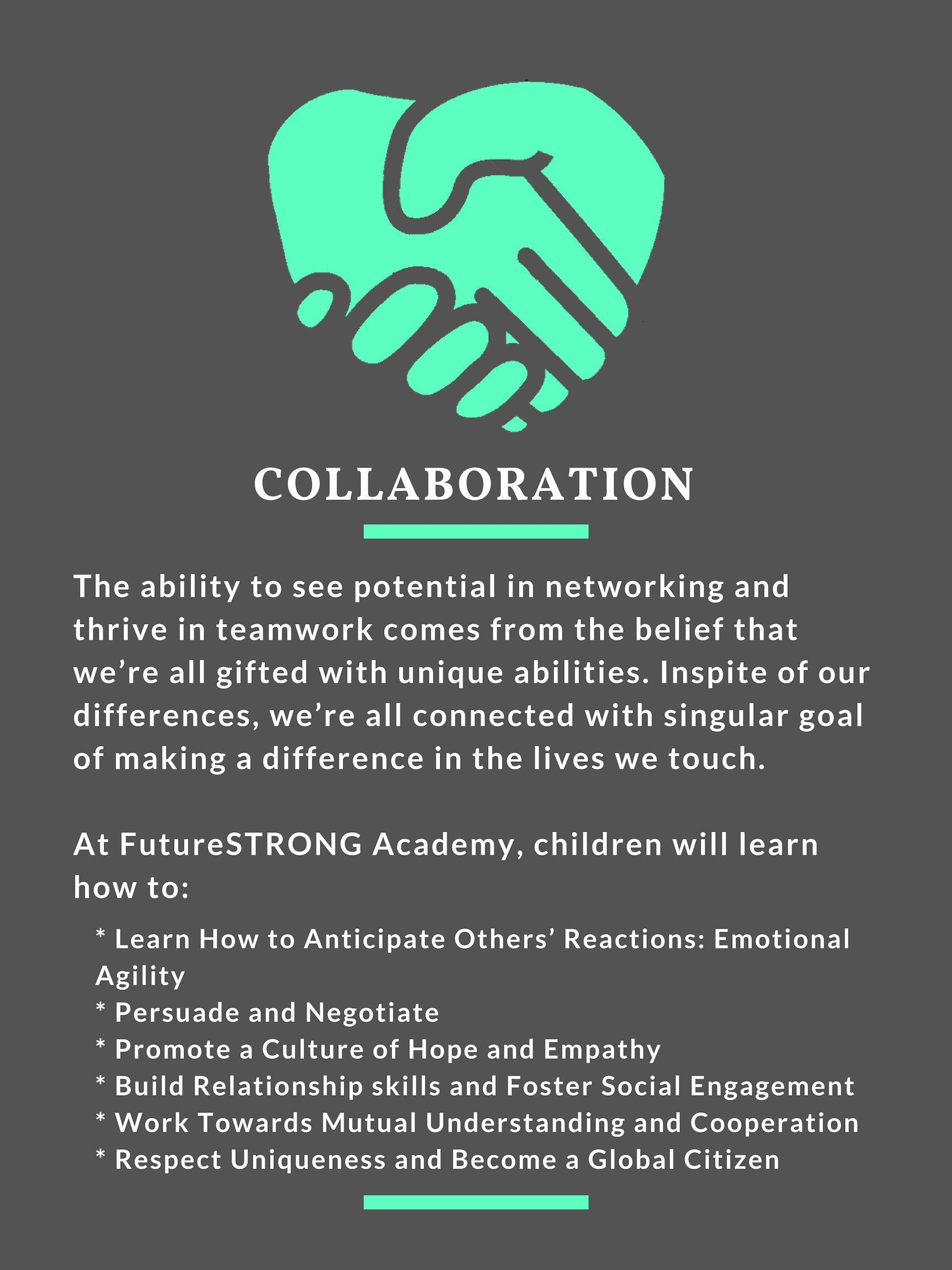
COLLABORATION - A Pillar of FutureSTRONG Academy
Our children will one day face the real world without our support. Academic development is not the only skill they will need in the real world where people skills like taking the lead, emotional intelligence and a strong moral compass will determine who will shine. So, as parents who want to raise well rounded adults, we want to give them the right tools for their personal development.
Here is COLLABORATION as described as the 6 C’s of Future STRONG.
Find Below Better Strategies On COLLABORATION

Why Being Alone (With Intentionality) Is the New Superpower for Happiness and Growth 🧘♀️

Anthropic Scanned Millions of Real Books to Train Claude AI 📚

Why Every Parent Should Teach Kids Coding, Ethics & Problem-Solving Before It’s Too Late

I Sit, Scroll, Rot and Repeat. Yes, It Was The Damn Phones | A Powerful Poem By Kori Jane Spaulding 📵🤳

Why ChatGPT Gets It Wrong: Gary Marcus on AI’s Big Flaws and What We Must Fix

How ChatGPT Can Worsen OCD and Mental Health: A Hidden Danger No One’s Talking About

The Rise of Hate and Intolerance: How Social Media Fuels Asshole Supremacy

OpenAI and Microsoft Clash Over AGI Access as Tensions Rise

College Decision Readiness: Your Step-by-Step Guide to Academic, Financial, and Personal Preparation for Success

Why Gen Z Is Struggling: Jonathan Haidt and Trevor Noah Break It Down 🎙️

The Real Talk on Money: Lessons from The Psychology of Money | A FutureSTRONG Production
