

–
Here are the best excerpts about creating a culture of trust at home and work. How and when does Servant Leadership work best?
–
Emotional Bank Account
In the book on Principle-Centered Leadership, Stephen R. Covey identifies his use of the concept of trust:
“Trustworthiness is based on character, what you are as a person, and competence, what you can do…. Trustworthiness is the foundation of trust. Trust at the interpersonal level is the emotional bank account between two people that enables them to have a win-win performance agreement. Trust – or the lack of it – is at the root of success or failure in relationships and in the bottom-line results.
Ask yourself:
1. What is your definition of trustworthiness?
2. How do you think the emotional bank account works within relationships? Is it an important concept for the workplace?
3. Talk about a time where you’ve seen failed outcomes that have resulted from a lack of trust.
Trust, the Miracle Ingredient
In the book on Building Trust in the Workplace, Gordon Shea describes trust and claims this powerful benefit:
“Trust is the ultimate intangible. It has no shape or substance, yet it empowers our actions. And its presence or absence can govern our behavior as if it were a tangible force Trust is the ‘miracle ingredient’ in organizational life – a lubricant that reduces friction, a bonding agent that glues together disparate parts, a catalyst that facilitates action. No substitute, neither threat nor promise, will do the job as well.”
Ask yourself:
1. Read the above quote. What do you think about the claim that ‘trust is the ultimate intangible.’?
2. How important is workplace trust to you?
Fostering Trust
In the book The Leadership Challenge: How to Make Extraordinary Things Happen in Organizations, authors James Kouzes and Barry Posner indicate that their research supports the claim that fostering trust is expected of credible leaders:
“Being seen as someone who can be trusted, who has high integrity, and who is honest and truthful is essential. So the credibility check can reliably be simplified to just one question: ‘Do I trust this person? Credibility, like reputation, is something that is earned over time. It does not come automatically with the job or the title. The credibility [trust] foundation is built brick by brick.”
Ask yourself:
1. Why do you think it’s essential that a leader is seen as trusted and one with high integrity’?
2. What’s the workplace and/or team environment like when you don’t trust the leader?
3. What are some steps a leader can take to rebuild trust brick by brick’?
– 0 –
About The Article Author:
Hi, I’m Rachana. Its been my dream for years to do something to consciously create a better future where every one of us is excited about our own potential. My challenge to everyone is that they aspire for their personal best and leave a legacy of their work through their contributions to mankind.
One more thing. In December of 2044, I hope to win the Nobel.
Will you join me on this journey of growth and transformation?
Namasté.
COLLABORATION - A Pillar of FutureSTRONG Academy
Our children will one day face the real world without our support. Academic development is not the only skill they will need in the real world where people skills like taking the lead, emotional intelligence and a strong moral compass will determine who will shine. So, as parents who want to raise well rounded adults, we want to give them the right tools for their personal development.
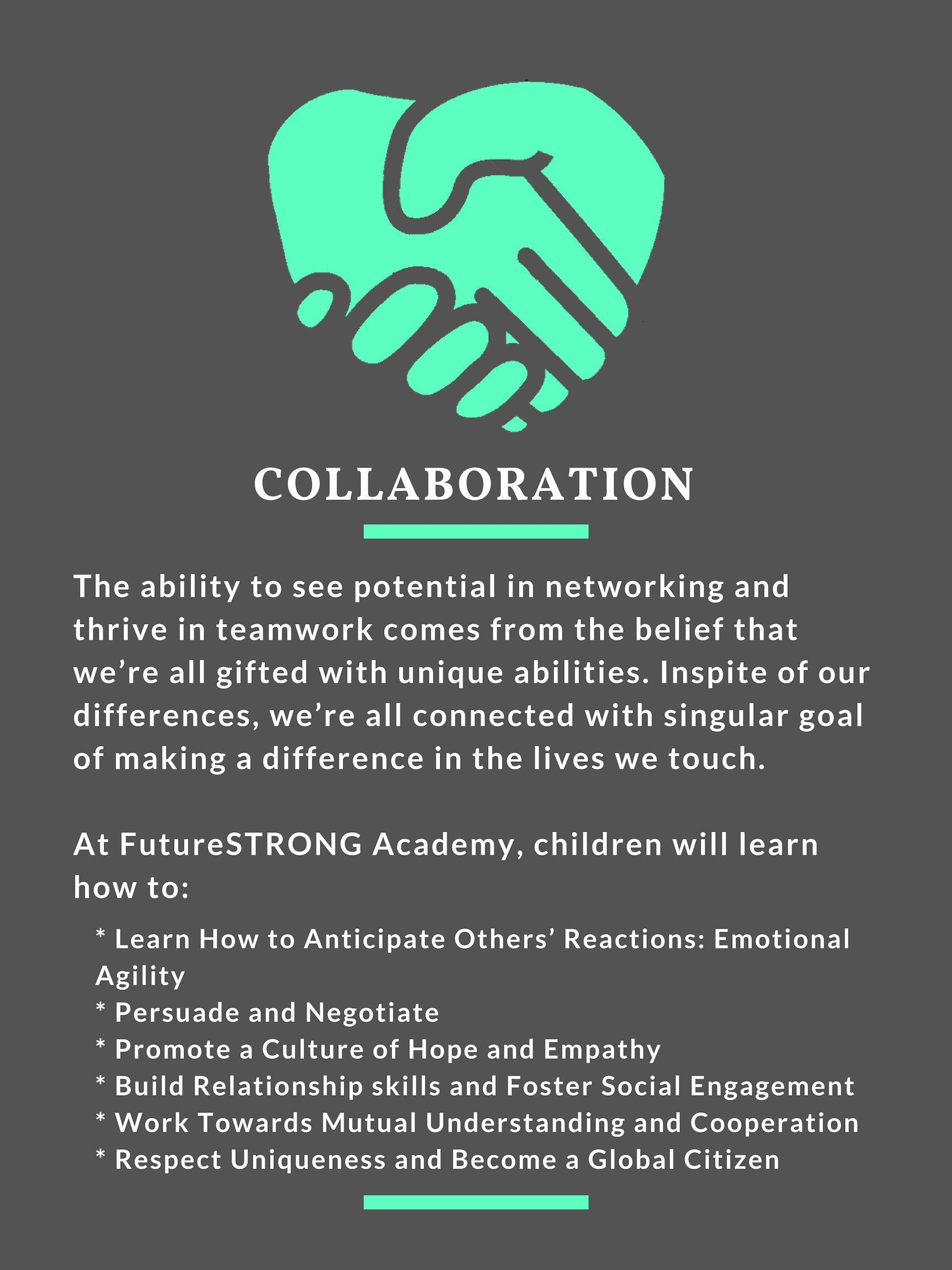
Here is COLLABORATION as described as the 6 C’s of Future STRONG.
Find Below Better Strategies On COLLABORATION

Ask Yourself These 5 Questions Every Day to Live with More Purpose and Leave a Lasting Legacy
Getting Ready For A Life Audit The questions we ask ourselves shape the lives we end up living. For me, these five questions have become a daily reset. These act like a break in my thoughts, so I don't continue on patterns that haven't served me in the past....

I’ve Got FIFA Fever. Just Not The Kind You Think I Do.
If you've got the FIFA Football fever, you've probably watched the Argentina vs Austria match where Messi broke the World Cup goals record for most career goals in World Cup. And so many other energetic games that are being played across USA, Canada and Mexico over...

The AI Pilots to Production Playbook: How Enterprises Can Finally Scale AI Successfully {Video}
https://youtu.be/I3rhix1_--A - Want To Listen To The Article Instead? Current State of AI Adoption I recently wrote about the current state of AI adoption across corporations and what it would take for us to go from Pilots, POCs to scalable AI...

Modern Times, Ancient Wisdom: What Chanakya and Dr. Radhakrishnan Pillai Teach Us About Leadership Today
Modern Times, Ancient Wisdom When I started my blog 17 years ago, I mostly wrote personal musings as a new mother of two boys. But, over the years, I wanted to write about the different aspects of Vedic wisdom and modern psychology. I was learning how to...

Beyond GenAI Pilots: How Enterprises Build Scalable AI with Governance and Trust
Current State of AI Affairs If you're a transformation leader at your organization, or lead any type of team, you must have seen multiple memos by now from senior leadership on the need to innovate and incorporate AI into your existing workflows. These can come...

When AI Becomes Your Therapist: The Hidden Risk of Chatbots Replacing Reality – Part II
When Validation Becomes Distortion In the first article, we talked about what AI psychosis is. Here, we continue the conversation by exploring how AI chatbots may contribute to distorted thinking or delusions, especially in vulnerable users. We’re going to look...

The Dangerous Rise of AI Yes-Men: When ChatGPT Agrees Too Much and Fuels AI Psychosis – Part I
Cats vs. Chatbots Earlier in March 2026, Garry Tan, the President & CEO of Y Combinator, posted something on X: “I am so late to this trend but I finally asked my ChatGPT to make an image of our relationship and this is what it did. What does yours look...

Empowering Women to Lead in AI: Inside the ElevateHER Launch Event in Atlanta
A Keynote On Women Leaders In AI On March 20th, I attended the launch party of ElevateHER, a non-profit dedicated to building an ecosystem for women to lead in AI. It felt like the perfect opportunity to step into the world of AI firsthand and see what...

Why the World Is Finally Slowing Down: The Rise of the Slow Thought Revolution
I've been noticing an interesting phenomenon lately. The desire for slowing down and adopting an intentional way of consuming information. For nearly two decades the internet trained us to read faster, scroll faster, react faster. But lately something unexpected is...

Tech Billionaires Don’t Trust Their Own Tech: The Screen-Time Secrets They’re Hiding From Parents
Toying With Our Futures At the Aspen Ideas Festival in June 2024, Peter Thiel was interviewed by Andrew Ross Sorkin. He volunteered information in response to a question, “If you ask executives of social media companies how much screen time they let their kids...

Success vs Failure: Why Boredom, Stillness, and Slow Mastery Create the Most Powerful Humans
Success vs. Failure Billy Oppenheimer, a writer, once described picking up Robert Greene from the airport. For the uninitiated, Greene is the author of The 48 Laws of Power, a must-read for those who love power and want to dominate the world. Of course, the...

Why Being a Generalist Is the Ultimate Power Move in the Age of AI, Uncertainty, and Reinvention
The Case for the Generalist Years ago, I had created a username called wannabepolymath. I wasn't sure which single thing interested me most because I wanted to learn many different things. As I read more, I felt a growing urge to explore new fields, seeking...
Trackbacks/Pingbacks