

–
Fun days are when I meet many brand new strangers and also have a chance to invite some of them to my home. Yesterday was one such day. I was witness to an event where two friends who had never met after 7th grade, but had stayed in touch, met in person after 44 years.
It was an interesting evening where a lot unfolded. We told jokes, shared stories from our past, and just listened to one another. We took pictures, fretted over our lives, and ate a lot of food — once again another theme that seems to bring people together. We might not have been showing the depths of our vulnerabilities, but our need to be seen and heard was on full display.
As I chatted away, I saw a notification on my phone that made my heart sink into the depths of despair. One of my very good friends lost her father, her biggest anchor and guiding light. After a quick phone call to her, I tried to stay present to entertain the friends I was hosting. I wondered how and what makes people come together.
Some uncles I know are my dad’s friends from over 70 years. And once I spoke for 20 minutes with my mother’s friend who was on her deathbed. We both put her on speaker after holding the phone tightly close to our ears and secretly cried as we tried to stay brave for her. My own best friends are miles apart, and I haven’t seen one in decades, but I know she’s only a phone call away. Over the years, there were countless times when I had to lean on her for advice.
There was a time when I had written about a village tree who lost its little friend to the charm of the city lights. I tried to create a first-person lament of the tree waiting at dawn for the boy’s shrill cries of laughter, pondering its simple life while the boy chased bigger dreams. Friendships that endure the changes of seasons in our life must have roots that dig deep — no pun intended, and have to be transformational for both parties.
I even feel sad because my kids don’t know the thrill of growing up with cousins during summer holidays and having the love and joy of being surrounded by a bunch of aunts and uncles. Now, because of distances, I miss many family functions and reunions. So, I try my best to get them together with the kids of our friends. After all, in America, friends are our family.
Imagine being in the orbit of those we know, those we have met, and those we will meet in the future. And I love Metcalfe’s Law of networks for the same reason. It says a network’s value grows with the square of its users. No other place do we see this more clearly than on social media platforms, which become more valuable as more of your friends and colleagues join. The law says that if we have 10 friends and approximately 100 possible connections, then with 100 users it becomes approximately 10,000 connections.
Each new user doesn’t just add one relationship. They unlock value for everyone already there. And that’s the network effect in action. In this modern age, our network is our net worth. Imagine leveraging the strengths of hundreds of well-minded people like us to solve humanity’s toughest problems. And life’s hard anyway, why go at it alone??
We’re leveraging the power of abstraction anyway. If we want a new car, we don’t go build one; we simply buy it which is a product of someone else’s creativity. The power of abstraction is its ability to simplify complex systems by focusing on essential features and hiding irrelevant details, which makes it easier to manage, understand, and adapt.
Loneliness and friendlessness among American teens are shown in this sheet that seems to be derived from the MTF (MonitoringTheFuture.org) studies. This specific spreadsheet doesn’t look like an official dataset release of MTF, but ChatGPT says it’s a good derived source from MTF.
–

Girl Friends
–


–
But all is not lost. Gen Z children are active socially – both in person and online. This week my older one tells me that his friend went to Iceland, and there a young fisherman chap who had asked them in a restaurant if turning off the red-button bindi on her mother’s forehead turns them off. LOL.
As I was wrapping up for the night after my friends left, my 11th grader told me it would be a while before he called it a night because his friend had resigned himself to flunk the math test, but he was not “going to let that happen.”
Friendship isn’t doomed to fade if we nurture it with intention, especially in our kids and teens who are navigating this wild world of social media facades and fleeting connections. When we help teens build empathy, we’re giving them a survival kit for their hearts that might otherwise toughen up too soon.
I’ve always been fascinated by the concept of the six degrees of separation in humanity. It’s a concept created by Stanley Milgram, and his small-world experiment says any two people on the planet are connected by no more than six social connections, what we call that “friend of a friend.” It basically proves that the world is way smaller than it looks, with everybody linked up through just a handful of acquaintances.
It’s a reminder that every time we show kindness, stay curious, or choose to connect, we’re tugging gently on that giant web of humanity. We’re closer than we think. We always were.
As I called it a night, I peeped into my son’s room to find him on Google Meet discussing math at midnight. Who knew animated conversations could happen over the internet too?
It’s my cue to keep my phone handy, read and reply to my loved ones who message me lovingly.
–
The Science of Six Degrees of Separation
Footnote: Graph images copyright
– 0 –
About The Article Author:
Hi, I’m Rachana. Its been my dream for years to do something to consciously create a better future where every one of us is excited about our own potential. My challenge to everyone is that they aspire for their personal best and leave a legacy of their work through their contributions to mankind.
One more thing. In December of 2044, I hope to win the Nobel.
Will you join me on this journey of growth and transformation?
Namasté.
COLLABORATION - A Pillar of FutureSTRONG Academy
Our children will one day face the real world without our support. Academic development is not the only skill they will need in the real world where people skills like taking the lead, emotional intelligence and a strong moral compass will determine who will shine. So, as parents who want to raise well rounded adults, we want to give them the right tools for their personal development.
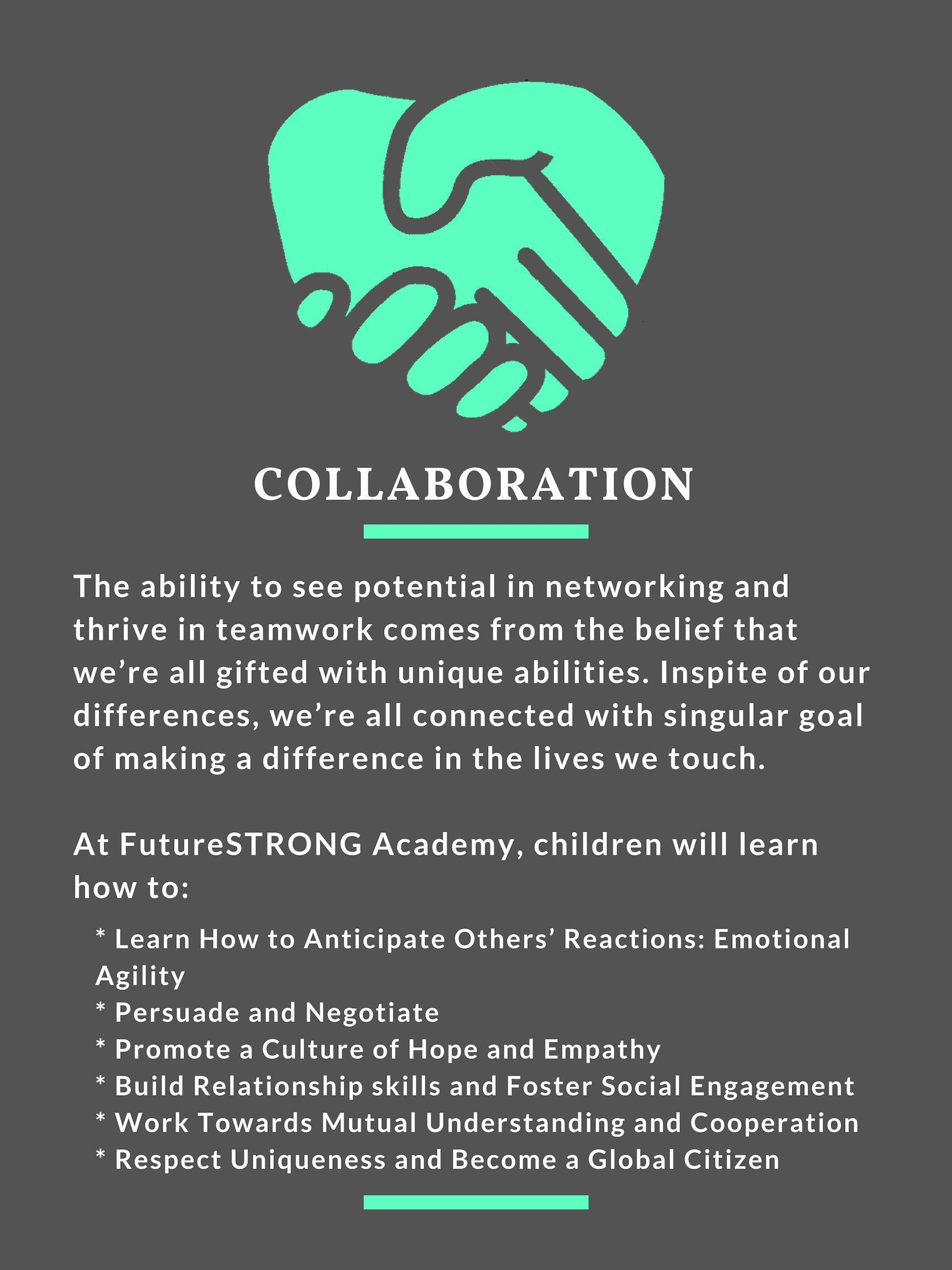
Here is COLLABORATION as described as the 6 C’s of Future STRONG.
Find Below Better Strategies On COLLABORATION

Why Being Alone (With Intentionality) Is the New Superpower for Happiness and Growth 🧘♀️
- Want To Listen To The Article Instead? - The Joys of Chosen Solitude 🧘♀️ This article from the BBC explores a growing cultural shift towards embracing solitude and single living, distinguishing it from loneliness. It highlights a recent surge...

Anthropic Scanned Millions of Real Books to Train Claude AI 📚
- Want To Listen To The Article Instead? - Claude's Library: Training with Real Books 📚 Anthropic, the company behind the Claude AI model, acquired millions of physical print books and digitally scanned them to use as training data. This approach...

Empowering the Next Generation: How to Teach Kids Coding, Ethics, and Problem-Solving for a Brighter Future
Humanity Before Digital Citizenship Let me tell you something about the future. It’s not some distant, abstract concept - it’s being built right now, in classrooms, living rooms, and playgrounds around the world. And the kids? They’re not just bystanders....

I Sit, Scroll, Rot and Repeat. Yes, It Was The Damn Phones | A Powerful Poem By Kori Jane Spaulding 📵🤳
- Sit and Scroll and Rot 📵🤳 For years, I've been writing about all that Ms. Spaulding talks about in her poem "It was the damn phones". But, hearing this from someone like her from Gen Z stands out because she understands that "We are the product." The weight...

Why ChatGPT Gets It Wrong: Gary Marcus on AI’s Big Flaws and What We Must Fix
- Gary Marcus' Take On The AI Evolution Of Our Times 🤖 One of the most important videos you will hear about the state of AI innovation at the present moment ft. Gary Marcus. This is a discussion between Michael Walker from Novara Media with Gary Marcus, a...

How ChatGPT Can Worsen OCD and Mental Health: A Hidden Danger No One’s Talking About
- Want To Listen To The Article Instead? - ChatGPT and OCD: A Dangerous Combination 😥 We explore the potential dangers of ChatGPT for individuals with Obsessive-Compulsive Disorder (OCD). We discuss how the chatbot, unlike human interaction,...

The Rise of Hate and Intolerance: How Social Media Fuels Asshole Supremacy
Breaking A Vicious Cycle Let’s not mince words here: social media has become a cesspool of hate, intolerance, and performative outrage. It’s a digital coliseum where the loudest, most aggressive voices are crowned champions, and nuance is thrown to the lions....

OpenAI and Microsoft Clash Over AGI Access as Tensions Rise
- Want To Listen To The Article Instead? - AGI Access Dispute: OpenAI Versus Microsoft 🤖 A recent paper from OpenAI regarding the classification of Artificial General Intelligence (AGI) has ignited a dispute with Microsoft. The core of the...

College Decision Readiness: Your Step-by-Step Guide to Academic, Financial, and Personal Preparation for Success
College Decision Readiness Deciding on college isn’t just about picking a school - it’s about preparing yourself academically, financially, emotionally, and socially for the next chapter of your life. Let’s break it down step by step. 1. Academic...

Why Gen Z Is Struggling: Jonathan Haidt and Trevor Noah Break It Down 🎙️
- Want To Listen To The Article Instead? - The Anxious Generation with Jonathan Haidt and Trevor Noah 🎙️ This Apple Podcast episode of "What Now? with Trevor Noah" features social psychologist Jonathan Haidt, the author of "The Anxious...

The Real Talk on Money: Lessons from The Psychology of Money | A FutureSTRONG Production
https://youtu.be/jU9GfZhXAHo - Want To Listen To The Article Instead? The Psychology of Money by Morgan Housel Join us for an insightful coffee chat as we explore *The Psychology of Money* by Morgan Housel, where we dive deep into the intricate...

What Every School Must Teach by 2030 (Hint: It’s Not Memorization)
- Want To Listen To The Article Instead? - The Core Skills for 2030 📈 What Should Schools Truly Prepare Students For? According to the World Economic Forum’s Future of Jobs Survey 2024, the skills that will matter most by 2030 aren’t memorized...

Trackbacks/Pingbacks