

–
Adulting Well
Here’s the thing about parenting: it’s a tightrope walk. On one side, there’s love, support, and the burning desire to give our kids everything we never had. On the other, there’s the cold, hard truth that life doesn’t hand out participation trophies. And somewhere in the middle, between those two extremes, lies the question we’re all grappling with: Are we helping our kids, or are we crippling them?
Dr. Bradley Klontz, a psychologist and certified financial planner, calls it financial enabling – a term that hits a little too close to home for many of us. It’s the well-meaning but often misguided act of propping up our adult children financially, long after they should’ve been standing on their own two feet. And while it might feel like love in the moment, it can leave lasting scars – on their independence, their confidence, and even our relationships with them.
So, let’s talk about it. Let’s dig into the messy, uncomfortable, but oh-so-necessary conversation about financial enabling, independence, and what it really means to raise resilient adults.
The Pitfalls of Financial Enabling
Here’s the hard truth: financial enabling doesn’t just delay adulthood – it can derail it entirely. When we step in to pay the rent, cover the car payments, or bail them out of yet another financial misstep, we’re not just helping. We’re sending a message, whether we mean to or not: You can’t do this without me.
1. Delayed Independence: Think about it. When was the last time you truly grew as a person? Chances are, it wasn’t when everything was handed to you on a silver platter. It was when you had to figure it out – when you had to scrape together rent, budget for groceries, or hustle for that promotion. Dr. Klontz warns that without those struggles, our kids miss out on the chance to develop purpose, creativity, and grit.
2. Strained Relationships: Money has a way of complicating even the strongest bonds. When adult children rely on their parents for financial support, it creates a power dynamic that’s hard to shake. Resentment builds. Frustration simmers. And before you know it, the relationship is less about love and more about obligation.
3. Unsustainable Support: Let’s be real – not all of us are sitting on a trust fund. For most parents, continuing to support adult children means sacrificing our own financial security. Retirement savings get drained. Dreams get put on hold. And for what? To keep our kids in a bubble that’s bound to burst eventually?
The Message We Send
Here’s the kicker: every time we swoop in to save the day, we’re telling our kids, You’re not capable. And that’s a hard message to undo. Dr. Klontz suggests a different approach: let them stumble. Let them make mistakes. Because here’s the thing about mistakes – they’re not failures. They’re lessons. And those lessons?
They’re the building blocks of resilience.
Wealthy Children and Decision Paralysis
Now, let’s talk about the other end of the spectrum: kids who grow up with too much. For children of wealthy families, the problem isn’t a lack of resources – it’s an abundance of them. And oddly enough, that abundance can be just as paralyzing as scarcity.
When every door is open, how do you choose which one to walk through? When failure isn’t a possibility, where do you find the motivation to try? For these kids, the challenge isn’t financial – it’s existential. And as parents, it’s our job to teach them that wealth isn’t just about having options; it’s about making meaningful choices.
The Bigger Picture: Entitlement and Gratitude
Here’s the uncomfortable truth: we’re raising a generation that’s never known true hardship. And while that’s a testament to our progress as a society, it’s also a double-edged sword. Because without hardship, it’s easy to take prosperity for granted.
Somewhere along the way, we’ve lost the thread. We’ve forgotten to teach our kids that success isn’t just about what you have – it’s about what you do with what you have. It’s about gratitude. It’s about resilience. And it’s about recognizing that the world doesn’t owe you a damn thing.
Striking the Right Balance
So, how do we do it? How do we support our kids without enabling them? Here are a few thoughts:
1. Teach Financial Literacy: Start early. Teach them about budgeting, saving, and investing. Give them the tools they need to navigate the real world.
2. Set Boundaries: Be clear about what you’re willing to provide – and what you’re not. Maybe you cover tuition, but they’re on the hook for living expenses. Maybe you help with a down payment, but they handle the mortgage. Whatever it is, stick to it.
3. Let Them Fail: This one’s hard, I know. But failure is where the magic happens. It’s where they learn to pick themselves up, dust themselves off, and try again.
4. Model Gratitude: Show them what it looks like to work hard, to be grateful, and to take responsibility for your choices. Because at the end of the day, they’re watching us more than they’re listening to us.
Final Thoughts: Raising Resilient Adults
Parenting isn’t for the faint of heart. It’s messy, complicated, and often heartbreaking. But here’s the thing: our job isn’t to protect our kids from the world. It’s to prepare them for it.
So, let’s stop enabling. Let’s start empowering. Let’s raise kids who aren’t just financially independent, but emotionally resilient. Kids who know how to work hard, fail gracefully, and get back up again. Kids who are ready to take on the world – not because they have to, but because they can.
What’s your take on financial enabling? Have you struggled with finding the right balance? Let’s talk about it. Because if there’s one thing I’ve learned, it’s that we’re all in this together.
–
George Carlin on Child Worship
– 0 –
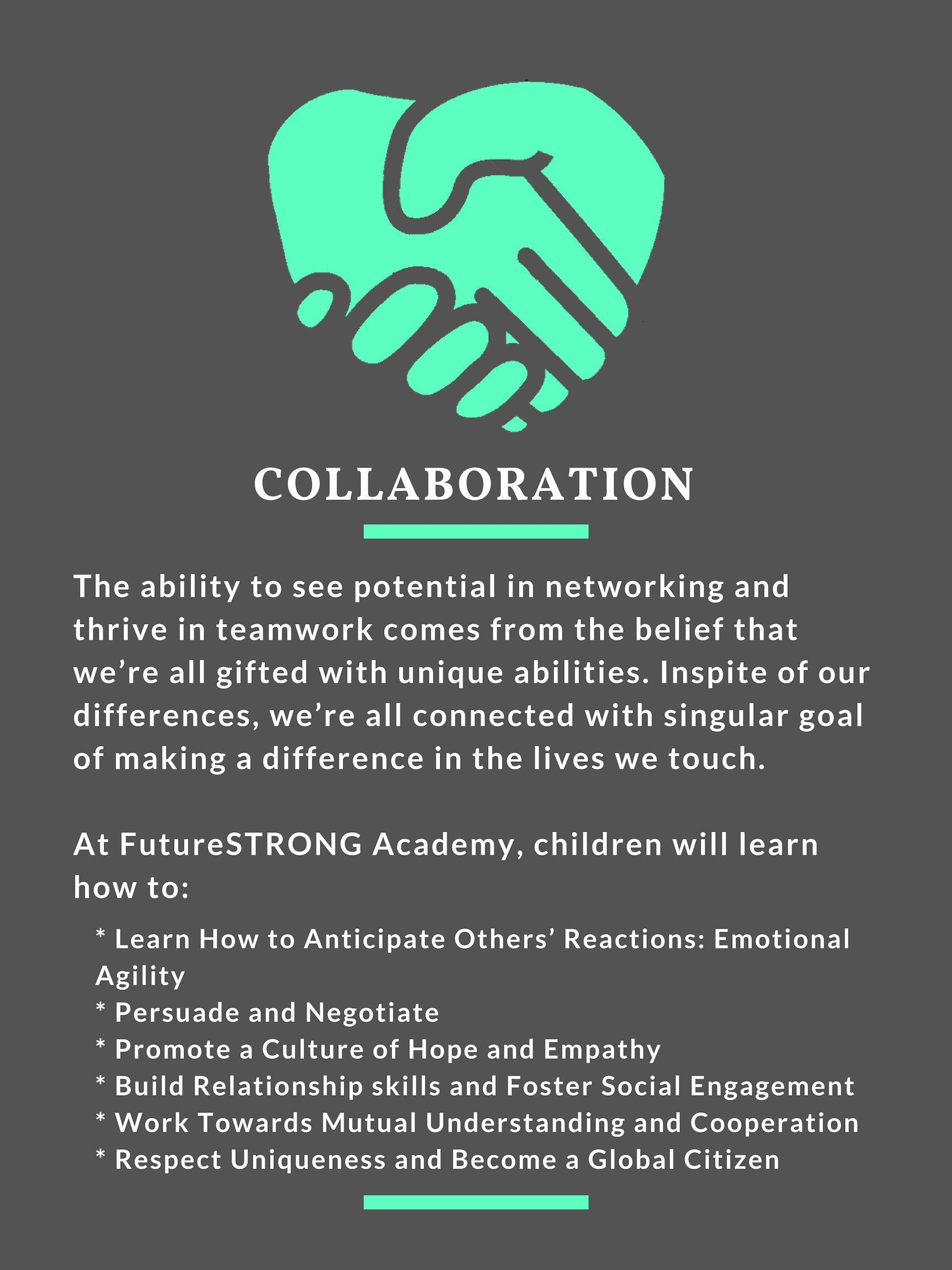
COLLABORATION - A Pillar of FutureSTRONG Academy
Our children will one day face the real world without our support. Academic development is not the only skill they will need in the real world where people skills like taking the lead, emotional intelligence and a strong moral compass will determine who will shine. So, as parents who want to raise well rounded adults, we want to give them the right tools for their personal development.
Here is COLLABORATION as described as the 6 C’s of Future STRONG.
Find Below Better Strategies On COLLABORATION

Why Naval Ravikant Says If You’re Unsure, It’s a No – The Decision-Making Rule That Changes Everything 🤔🎯✅
- Want To Listen To The Article Instead? - The Almanack of Naval Ravikant 🤔 The book "The Almanac of Naval Ravikant" by Eric Jorgenson can be described as a guide to wealth and happiness. The text visible from the book suggests that when faced...

Transform Your Life with These 8 Timeless Japanese Philosophies for Growth and Peace ⛩️
- Want To Listen To The Article Instead? - Eight Japanese Life Philosophies ⛩️ This is a discussion on the eight distinct Japanese philosophies intended to positively influence one's life. Each philosophy is identified by its Japanese name and...

Aaron Swartz’s Theory of Change Will Reshape How You Think About Goals
- Want To Listen To The Article Instead? - Aaron Swartz: Theory of Change (Raw Thought) Aaron Swartz's Theory of Change contrasts a typical forward-thinking theory of action with a more effective backward-thinking theory of change. Swartz argues...

Why Gen Z Is Turning to AI for Emotional Support Instead of Dating 🤳
- Want To Listen To The Article Instead? - Gen Z, AI, and Emotional Support 🤳 This discussion sheds light on how Generation Z is increasingly turning to artificial intelligence for emotional support. It explores the possibility that AI may be...

Massive Survey Reveals Alarming Link Between Smartphones and Youth Mental Health Crisis 📵📵
- Want To Listen To The Article Instead? - Youth Mental Health and Technology Consensus Survey 📱 Author and professor Jonathan Haidt discusses findings from the largest expert survey to date on youth mental health, which reveals broad...

Nietzsche on Suffering and Happiness: The Hidden Connection Between Pain and Comfort
https://youtu.be/40sSAKwR-ss - Want To Listen To The Article Instead? - If you experience suffering and displeasure as evil, hateful, worthy of annihilation, and as a defect of existence, then it is clear that besides your religion of pity you...

AI Is the Better Teacher? Duolingo CEO Says Schools Will Survive Only for Childcare
https://youtu.be/PjleTdYho1o - Want To Listen To The Article Instead? - Duolingo CEO on AI in Education 🤖 According to its CEO, Luis von Ahn, Duolingo foresees a future where artificial intelligence will become the primary method of teaching any...

Why Limiting Screen Time Isn’t the Answer: What Kids Really Need in a Digital World 📱
- 🎙️Want To Listen To The Article Instead? - The Rise and Fall of Screen Time 📱 This academic paper examines the historical trends and societal shifts related to the amount of time people spend looking at screens. It tracks the increase in screen time...

Microsoft’s Vision for the Agentic Web: GitHub Copilot Evolves, Foundry Expands, and the Future of AI Development Begins
- 🎙️Want To Listen To The Article Instead? - 🚀 The Future of the Web Is Agentic - And It's Already Here At Microsoft Build 2025, Satya Nadella unveiled a bold vision: the rise of the open agentic web. This isn’t just tech evolution - it’s a revolution in...

What The Denial of Death Can Teach You About Living a Fully Awake Life
- Ernest Becker's Challenge To Mankind: The Denial of Death by Ernest Becker is a deeply philosophical, psychological, and spiritual exploration of the human condition - and it's all about one core truth: we are terrified of dying, and we do everything in our...

How FutureSTRONG Academy Is Raising Smart, Confident Kids in the Digital Age
- Imagine this: It’s dinnertime. You're trying to get everyone's attention in the house to come to the dinner table. It's a tough job, your willpower muscle is weak and the kids know. Their ears are hearing your calls, but their eyes are glued to their devices....

How Large Language Models Are Probabilistic In Fueling Creativity in Generative AI 🎲✨
- Want To Listen To The Article Instead? - LLMs and the Stochastic Nature of Generative AI 🎲 Here we discuss large language models (LLMs) and their role in generative AI applications. The newsletter specifically highlights the stochastic nature of...

10 Mind-Blowing Things AI Can Do in 2025 That It Couldn’t in 2024 ✨✨
- 🎙️Want To Listen To The Article Instead? - AI Advances 2025 vs 2024 🤖 We blinked, and AI leveled up - again. If you thought 2024 was wild with ChatGPT writing your emails and Midjourney designing your logo, wait till you see what 2025 brought to...

Is Your Relationship Over? Signs, Insights, and How to Navigate the Complex World of Modern Love
The Intricate Web Of Our Social Lives The topic is as enduring and timeless as it can get, I want to talk about love. I've just learnt that one of my close friends is going through a contentious divorce, and it breaks my heart. So, no, I won't be talking about...

How to Protect Kids from AI: The Code Every Parent and Technologist Needs to Read
- Dear AI, Don’t Break Our Children. Our world is changing and our children are navigating its exponential changes as best as they can. And most times, they're doing it alone, without the guiding light of an adult who understands the digital and AI evolution....

AI-Generated CSAM and the UK Online Safety Act: A New Frontline in Digital Child Protection 🚫
- Want To Listen To The Article Instead? - AI, CSAM, and the Online Safety Act 🚫 Authored by Elena Martellozzo and Paula Bradbury, this blog focuses on the increasing threat of AI-generated child sexual abuse material (CSAM) and its implications...

Feeling Lonely? How to Find Your Tribe and Thrive Together in 5 Simple Steps
https://youtu.be/ozoEy68bFtw - Want To Listen To The Article Instead? - Summary This discussion explore the pervasive issue of loneliness, examining its impact across various demographics and life stages. Sources highlight the detrimental effects...

AI Is Coming for Your Job – Unless You Upskill Fast, Warns Fiverr CEO Micha Kaufman
- Want To Listen To The Article Instead? - Upskill or Be Left Behind: AI's Impact on Jobs 🤖 Fiverr CEO Micha Kaufman's warns his staff via an email to his staff about the impact of AI on jobs, including his own. Kaufman emphasizes the need for...