

–
Adulting Well
Here’s the thing about parenting: it’s a tightrope walk. On one side, there’s love, support, and the burning desire to give our kids everything we never had. On the other, there’s the cold, hard truth that life doesn’t hand out participation trophies. And somewhere in the middle, between those two extremes, lies the question we’re all grappling with: Are we helping our kids, or are we crippling them?
Dr. Bradley Klontz, a psychologist and certified financial planner, calls it financial enabling – a term that hits a little too close to home for many of us. It’s the well-meaning but often misguided act of propping up our adult children financially, long after they should’ve been standing on their own two feet. And while it might feel like love in the moment, it can leave lasting scars – on their independence, their confidence, and even our relationships with them.
So, let’s talk about it. Let’s dig into the messy, uncomfortable, but oh-so-necessary conversation about financial enabling, independence, and what it really means to raise resilient adults.
The Pitfalls of Financial Enabling
Here’s the hard truth: financial enabling doesn’t just delay adulthood – it can derail it entirely. When we step in to pay the rent, cover the car payments, or bail them out of yet another financial misstep, we’re not just helping. We’re sending a message, whether we mean to or not: You can’t do this without me.
1. Delayed Independence: Think about it. When was the last time you truly grew as a person? Chances are, it wasn’t when everything was handed to you on a silver platter. It was when you had to figure it out – when you had to scrape together rent, budget for groceries, or hustle for that promotion. Dr. Klontz warns that without those struggles, our kids miss out on the chance to develop purpose, creativity, and grit.
2. Strained Relationships: Money has a way of complicating even the strongest bonds. When adult children rely on their parents for financial support, it creates a power dynamic that’s hard to shake. Resentment builds. Frustration simmers. And before you know it, the relationship is less about love and more about obligation.
3. Unsustainable Support: Let’s be real – not all of us are sitting on a trust fund. For most parents, continuing to support adult children means sacrificing our own financial security. Retirement savings get drained. Dreams get put on hold. And for what? To keep our kids in a bubble that’s bound to burst eventually?
The Message We Send
Here’s the kicker: every time we swoop in to save the day, we’re telling our kids, You’re not capable. And that’s a hard message to undo. Dr. Klontz suggests a different approach: let them stumble. Let them make mistakes. Because here’s the thing about mistakes – they’re not failures. They’re lessons. And those lessons?
They’re the building blocks of resilience.
Wealthy Children and Decision Paralysis
Now, let’s talk about the other end of the spectrum: kids who grow up with too much. For children of wealthy families, the problem isn’t a lack of resources – it’s an abundance of them. And oddly enough, that abundance can be just as paralyzing as scarcity.
When every door is open, how do you choose which one to walk through? When failure isn’t a possibility, where do you find the motivation to try? For these kids, the challenge isn’t financial – it’s existential. And as parents, it’s our job to teach them that wealth isn’t just about having options; it’s about making meaningful choices.
The Bigger Picture: Entitlement and Gratitude
Here’s the uncomfortable truth: we’re raising a generation that’s never known true hardship. And while that’s a testament to our progress as a society, it’s also a double-edged sword. Because without hardship, it’s easy to take prosperity for granted.
Somewhere along the way, we’ve lost the thread. We’ve forgotten to teach our kids that success isn’t just about what you have – it’s about what you do with what you have. It’s about gratitude. It’s about resilience. And it’s about recognizing that the world doesn’t owe you a damn thing.
Striking the Right Balance
So, how do we do it? How do we support our kids without enabling them? Here are a few thoughts:
1. Teach Financial Literacy: Start early. Teach them about budgeting, saving, and investing. Give them the tools they need to navigate the real world.
2. Set Boundaries: Be clear about what you’re willing to provide – and what you’re not. Maybe you cover tuition, but they’re on the hook for living expenses. Maybe you help with a down payment, but they handle the mortgage. Whatever it is, stick to it.
3. Let Them Fail: This one’s hard, I know. But failure is where the magic happens. It’s where they learn to pick themselves up, dust themselves off, and try again.
4. Model Gratitude: Show them what it looks like to work hard, to be grateful, and to take responsibility for your choices. Because at the end of the day, they’re watching us more than they’re listening to us.
Final Thoughts: Raising Resilient Adults
Parenting isn’t for the faint of heart. It’s messy, complicated, and often heartbreaking. But here’s the thing: our job isn’t to protect our kids from the world. It’s to prepare them for it.
So, let’s stop enabling. Let’s start empowering. Let’s raise kids who aren’t just financially independent, but emotionally resilient. Kids who know how to work hard, fail gracefully, and get back up again. Kids who are ready to take on the world – not because they have to, but because they can.
What’s your take on financial enabling? Have you struggled with finding the right balance? Let’s talk about it. Because if there’s one thing I’ve learned, it’s that we’re all in this together.
–
George Carlin on Child Worship
– 0 –
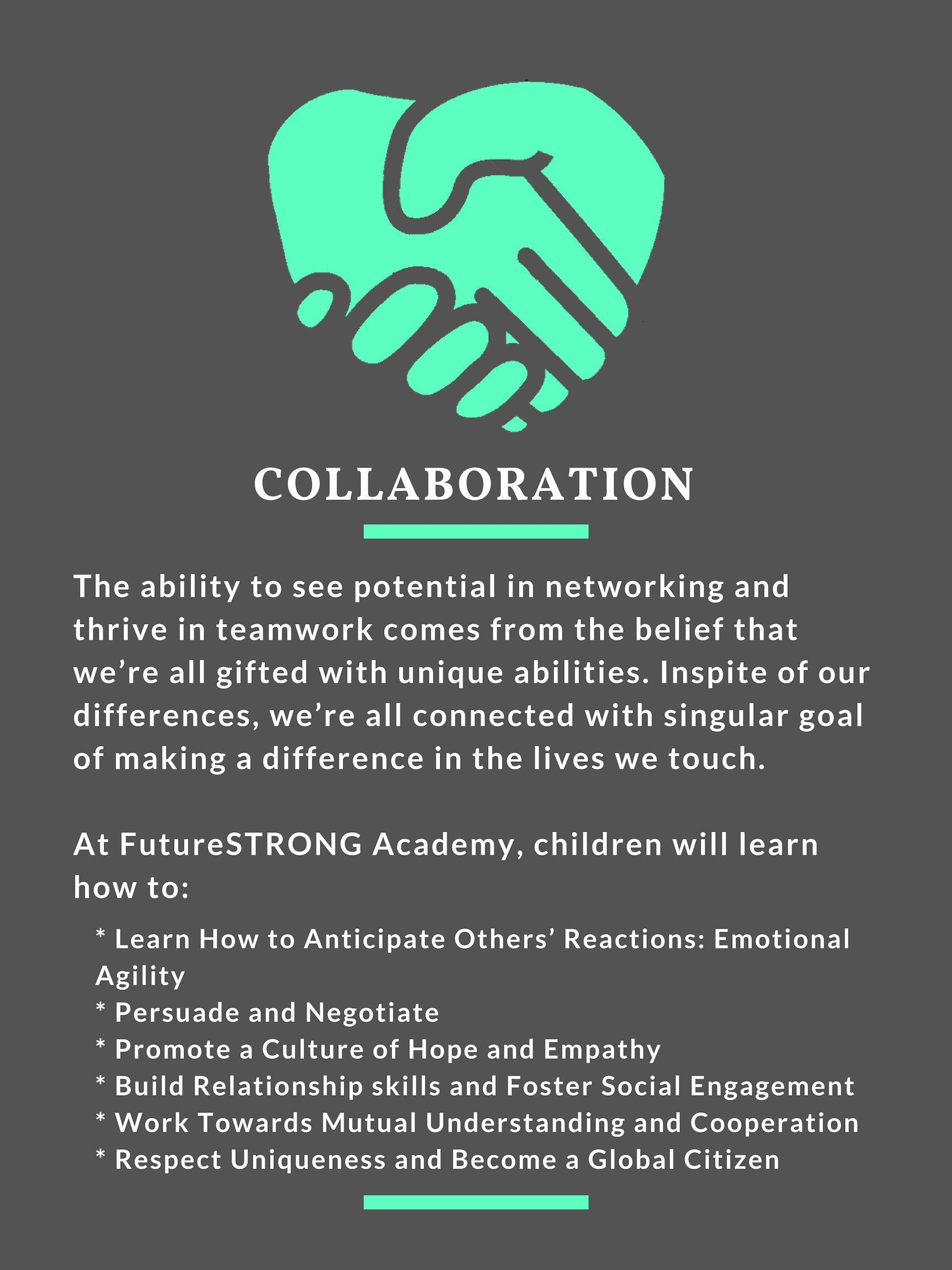
COLLABORATION - A Pillar of FutureSTRONG Academy
Our children will one day face the real world without our support. Academic development is not the only skill they will need in the real world where people skills like taking the lead, emotional intelligence and a strong moral compass will determine who will shine. So, as parents who want to raise well rounded adults, we want to give them the right tools for their personal development.
Here is COLLABORATION as described as the 6 C’s of Future STRONG.
Find Below Better Strategies On COLLABORATION

College Decision Readiness: Your Step-by-Step Guide to Academic, Financial, and Personal Preparation for Success
College Decision Readiness Deciding on college isn’t just about picking a school - it’s about preparing yourself academically, financially, emotionally, and socially for the next chapter of your life. Let’s break it down step by step. 1. Academic...

Why Gen Z Is Struggling: Jonathan Haidt and Trevor Noah Break It Down 🎙️
- Want To Listen To The Article Instead? - The Anxious Generation with Jonathan Haidt and Trevor Noah 🎙️ This Apple Podcast episode of "What Now? with Trevor Noah" features social psychologist Jonathan Haidt, the author of "The Anxious...

The Real Talk on Money: Lessons from The Psychology of Money | A FutureSTRONG Production
https://youtu.be/jU9GfZhXAHo - Want To Listen To The Article Instead? The Psychology of Money by Morgan Housel Join us for an insightful coffee chat as we explore *The Psychology of Money* by Morgan Housel, where we dive deep into the intricate...

What Every School Must Teach by 2030 (Hint: It’s Not Memorization)
- Want To Listen To The Article Instead? - The Core Skills for 2030 📈 What Should Schools Truly Prepare Students For? According to the World Economic Forum’s Future of Jobs Survey 2024, the skills that will matter most by 2030 aren’t memorized...

The Two Triangles of Success: How to Measure Performance and Unlock Human Potential
The Full Spectrum Of Human Potential Success. It’s a word that carries weight, yet its meaning shifts depending on who you ask. For some, it’s the crisp satisfaction of hitting deadlines and staying under budget. For others, it’s the warmth of meaningful...

What Every New Product Manager Must Know According to Coinbase Founder Brian Armstrong
- Want To Listen To The Article Instead? - Letter to a New Product Manager: A Brian Armstrong's Guide 🧠 Brian Armstrong, the founder of Coinbase, offers guidance to a new product manager in an adapted email from June 2025, published in The...

An Important Question We Must Ask Ourselves About AI Ethics And Who’s Incharge Of Reshaping Our Moral Decisions
https://youtu.be/qpI25dHEevU - Want To Listen To The Article Instead? - How Does AI Ethics Shape Human Decision-Making and Cognition? 🤖 AI ethics is pivotal in guiding the creation and implementation of AI systems. But how does it affect the way...

Why Success Feels So Lonely: Inside a CEO’s Billion-Dollar Breakdown
- Want To Listen To The Article Instead? - The Solitude of Success: A CEO's Reflection ⛰️ Even a $100B IPO couldn't fill the void. One CEO opens up about the hidden loneliness at the top behind massive success. This essay by Brian Chesky explores...

The Non-Partisan Untold Truth: How Stories Influence America’s Gun Violence Crisis
https://youtu.be/QB7D2olVemk - Want To Listen To The Article Instead? - Works Cited: Magazine referenced:https://time.com/6328465/stories-guns-violence-essay/ - 0 - Hi, I’m Rachana. Its been my dream for years to do something...

Why the Still Face Experiment Proves You Don’t Have to Be a Perfect Parent
- Want To Listen To The Article Instead? - The Still Face Experiment Developed by psychologist Edward Tronick, the Still Face Experiment reveals something profound about early emotional development. In the experiment, a parent interacts warmly...

Amazon CEO Predicts AI Will Reshape Jobs and Shrink Workforce 🤖✨
- Want To Listen To The Article Instead? - Amazon's AI-Driven Workforce Transformation 🤖 A memo from Amazon CEO Andy Jassy indicates that the company anticipates a reduction in its corporate workforce within the next few years. This expected...

Why Screen-Free Living Is Becoming the Coolest Rebellion 📵🤳
- Want To Listen To The Article Instead? - The Offline Movement: Embracing Screen-Free Living 📵🤳 The Outdoor lifestyle of shunning 24/7 connectivity in a movement of "The Rise of Screen-Free Living" mentions clubs like ScreenStrong.org and...

How Leaders Can Stay Relevant by Embracing AI: Strategies for Bridging the Gap Between Perception and Reality
– Want To Listen To The Article Instead? - Leading with AI: Skills for Executives This timely Forbes article underscores a significant disconnect between executive perceptions and the reality of employee AI usage in the workplace. It highlights that...

Why Gen Z Is Anxious and What Jonathan Haidt Says We Must Do About It 🤳📵
- Want To Listen To The Article Instead? - The Anxious Generation: Fighting Big Tech for Young Minds 📵 This article from Guardian primarily focuses on Jonathan Haidt, author of "The Anxious Generation," and his urgent message regarding the...

Unlock Your Ikigai: The Secret to Finding Your Life’s Purpose and True Fulfillment
https://youtu.be/w6sVR9yQd-4 - Want To Listen To The Article Instead? - Ikigai: A Reason For Being The Japanese concept of Ikigai when translated means "a reason for being." There are four core elements that contribute to the concept of Ikigai....

Mastering Expectations, Boundaries, and Intentions: Your Guide to a Balanced and Fulfilling Life
- A Guide to Balanced Living Expectations. They’re the silent architects of our lives, shaping how we move through the world. They can lift us up, propelling us toward our goals, or they can weigh us down, leaving us tangled in disappointment when reality...

Are You a Hedgehog or a Fox? How to Think Deeply in a World That Won’t Stop Distracting You
- Isaiah Berlin’s Enduring Insight In his influential essay "The Hedgehog and the Fox", Isaiah Berlin borrows a line from the ancient Greek poet Archilochus: “The fox knows many things, but the hedgehog knows one big thing.” With this simple aphorism, Berlin...

AI Is Coming for White-Collar Jobs – And No One’s Ready ✨✨
https://youtu.be/JYUV_im7TtM - Want To Listen To The Article Instead? - 🤖 AI and the White - Collar Job Reckoning Artificial intelligence is on the brink of reshaping the job market - and not in subtle ways. In a stark warning, Dario Amodei, CEO...