

You’re What You Eat
Have you ever paused, mid-bite or mid-sip, to wonder about the deeper story behind the food on your plate or the water in your glass? I mean, really wondered. Not just about the calories or the nutrients, but about the way these simple, everyday elements shape who we are – body, mind, and soul. The Chandogya Upanishad, one of the oldest and most profound texts of ancient Indian wisdom, dives headfirst into this very question. It doesn’t just tell us what food and water do; it reveals how they transform us, layer by layer, breath by breath.
Let’s take a journey into this ancient text and uncover what it has to say about the intimate connection between what we consume and who we become. Spoiler: it’s way more fascinating than you might think.
The Three Layers of Food: More Than Just Fuel
The Chandogya Upanishad doesn’t see food as just a pile of nutrients. Nope. It’s a dynamic, transformative force that works on us in three distinct ways. Here’s the breakdown:
1. Coarse Food → Feces
Let’s start with the obvious. The gross, physical part of food? It becomes waste. It’s the part that exits our body, a reminder that not everything we consume sticks around. It’s humbling, really – a little nudge from the universe that not all of life’s offerings are meant to stay.
2. Soft Food → Blood
The middle layer of food is where the magic of nourishment happens. This part becomes our blood, muscles, and bones. It’s the fuel that keeps our physical engine running, the stuff that makes us strong, resilient, and alive.
3. Subtle Food → Mind
And then there’s the subtlest layer of food – the part that doesn’t just feed our bodies but our minds. This is where food transcends the physical and becomes mental and emotional energy. What we eat doesn’t just shape our waistlines; it shapes our thoughts, our moods, our very consciousness.
The Three Layers of Water: Life’s Liquid Essence
Water, too, isn’t just H2O. According to the Upanishad, it transforms within us in ways that are just as profound as food:
1. Coarse Water → Urine
The gross part of water becomes waste, exiting our body as urine. It’s the part that doesn’t stay, a reminder that even something as essential as water has its transient aspects.
2. Soft Water → Blood
The middle layer of water nourishes our blood, keeping us hydrated and healthy. It’s the life-giving fluid that flows through us, quite literally keeping us alive.
3. Subtle Water → Breath
And here’s where it gets really interesting. The subtlest part of water becomes our breath. Think about that for a second. The water you drink doesn’t just quench your thirst – it becomes the very air you breathe, the life force that sustains you.
The Role of Fire: The Hidden Transformer
The Upanishad doesn’t stop at food and water. It also introduces the concept of fire (or heat) as a transformative force, especially in oily foods and nuts:
1. Coarse Fire → Bone
The gross part of fire in food becomes our bones. It’s the structure, the framework that holds us up. Without it, we’d be a puddle on the floor.
2. Soft Fire → Marrow
The middle layer of fire nourishes our marrow, the essence of our vitality. It’s the stuff that keeps us strong, resilient, and full of life.
3. Subtle Fire → Voice
And the subtlest part of fire? It becomes our voice. Not just the sound we make, but the expression of our inner self. It’s the fire that lets us speak our truth, share our ideas, and connect with others.
The Bigger Picture: Eating as a Sacred Act
The Chandogya Upanishad isn’t just a manual for understanding how food and water work. It’s an invitation to see eating and drinking as sacred acts, as opportunities to connect with the world around us in a deeper, more meaningful way.
– Conscious Eating: When we eat, we’re not just feeding our bodies. We’re engaging all our senses – touch, taste, smell, sight, and sound. Food becomes a form of meditation, a way to nurture not just our present selves, but our future selves too.
– Gratitude for Nature: By appreciating the bounty of nature, we cultivate gratitude. This mindfulness transforms eating from a mundane act into a sacred practice. Every meal becomes a chance to say thank you – to the earth, to the farmers, to the universe.
– Parental Responsibility: The Upanishad also reminds us that, as parents, we’re building our children “fiber by fiber.” What we feed them doesn’t just shape their bodies; it shapes their minds, their emotions, their very essence.
Water: The Primordial Essence
The Upanishad places water above food in the hierarchy of creation. It’s not just a physical necessity – it’s a symbol of life itself.
– Water as Ultimate Reality: In the cosmogonical story, water comes before food. It’s the primordial essence from which all life emerges. Without it, there’s no life, no growth, no future.
– Interconnectedness: Water connects us to the earth, to each other, and to the cycle of life. It’s a reminder that we’re all part of something bigger, something vast and interconnected.
Final Thought: Food as a Mirror of Life
The Chandogya Upanishad teaches us that food and water are more than just sustenance. They’re mirrors of life itself, reflecting the cycles of creation, transformation, and renewal. By understanding their deeper significance, we can cultivate a more mindful, grateful, and harmonious relationship with what we consume.
So, the next time you sit down for a meal or take a sip of water, pause for a moment. Remember: you’re not just nourishing your body – you’re shaping your mind, your breath, and your very essence.
What’s one small step you can take today to eat and drink more consciously? Let me know in the comments.
– 0 –
About Sanatana Dharma
ब्रह्म सत्यं जगन्मिथ्या जीवो ब्रह्मैव नापरः।
अनेन वेद्यं सच्छास्त्रमिति वेदान्तडिण्डिमः॥
Brahman alone is real; the universe is mithya – neither fully real nor unreal, but an appearance. The individual self (jiva) is none other than Brahman itself, not separate or different. This is the true teaching of the scriptures, as revealed by Vedanta. ~ Verse 20 from Brahma Jnānavali Māla

Ugadi & Gudi Padwa: Celebrate the Hindu Lunar New Year with 9 Days of Spring Festivities!
Shobhakruthu Naama Samvatsaram: 2023 According to the Hindu Calendar, Ugadi falls on the first day of the Chaitra month. Yugadi means the beginning of new age. The day also marks the beginning of spring season, which is considered to be the first of all...

The Mahabharata: Ancient Wisdom for Modern Life – Timeless Lessons on Human Philosophy and Existence
- It is said in the texts that 80% of the fighting male population of the civilization was wiped out in the eighteen days Mahabharata war. Sanjay, at the end of the war went to the spot where the greatest war took place; Kurukshetra. He looked around and...

Eastern Philosophers Reveal Timeless Wisdom on Advaita Vedanta and Hinduism – Must-Read Insights!
What Hindu Scriptures Say The wise neither grieve for the dead nor for the living. I myself never was not, nor thus, nor all the princes of the earth; nor shall we ever hereafter cease to be. ~ Bhagavad Gita The Brahman forms everything that is living or...

Unlock the Secrets of Modern India: Must-Read Books on Vedic History and Indian Heritage
Books By Indian Authors Breaking India By Rajiv Malhotra & Aravindan Neelakandan Snakes in the Ganga: Breaking India 2.0 By Rajiv Malhotra & Vijaya Viswanathan India, that is Bharat: Coloniality, Civilization, Constitution By J. Sai Deepak Urban Naxals:...

Will God Eat Our Offerings? Lord Krishna Reveals the Truth Behind Naivedyam and Prasad
What Is Prasad? Before eating, a lot of Hindus, offer the food first to God before they consume it. But the question is, will God come and eat our offerings? An attempt is made here to understand the predicament. What follows below is a Guru-Shishya...

Ancient Wisdom for Modern Life: Unlocking Timeless Scriptures with Ami Ganatra
Know Your Scriptures Workshop Timestamp Of Questions 3:04 - QUESTION 1: Bad things happen to good people and good things happen to bad people. What convincing arguments do we find in our scriptures that guide us to follow the path of dharma in...
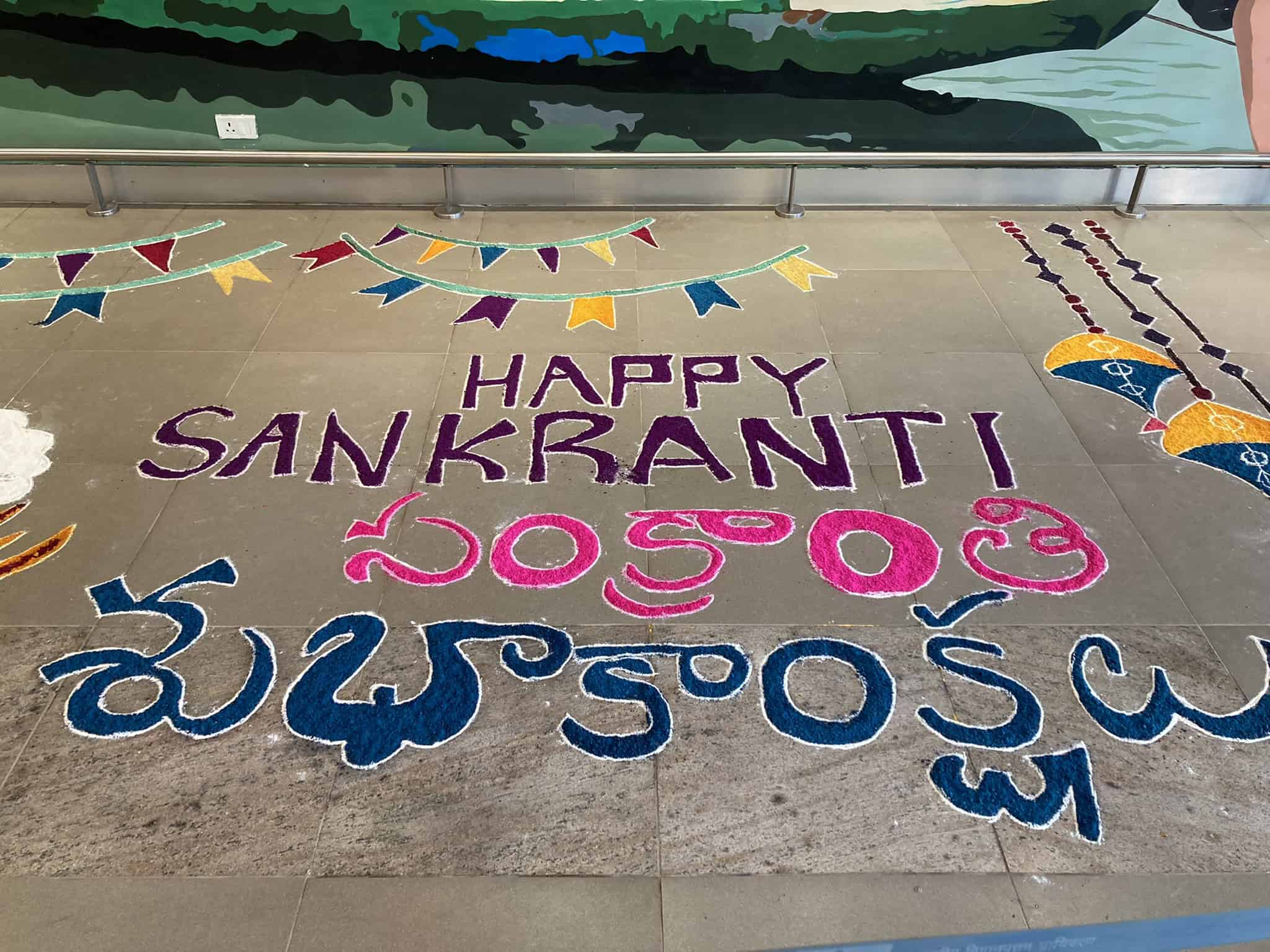
Makar Sankranti: Declutter Your Life, Embrace Brotherhood, and Lead with the Light of Your Heart
Significance Of Makar Sankranti The auspicious day of Makara Sankranti is the day dedicated to worship the Sun - whose light nourishes and sustains all life on this planet. Sankranti means Passage in Sanskrit. Sankranti comes every month of the solar year when...

How to Make Your Heart Pure: Spiritual Lessons for Kids Explained in Satsang
- 1. Obeying the rules of life.2. Preforming one's duties.3. Seeing work as workship.4. Chanting lord's name again and again.5. Trusting God as trusted and beloved to all.6. Seeing the blessings of Lord in everything.7. Love God as much as you love yourself....

Unlock the Secrets of a Well-Lived Life: Ancient Hindu Wisdom from Sanatana Dharma to Become Your Optimal Self
The Perfect Harmony A person's state is said to be in perfect harmony if they are able to balance, both Aahaara - Eating and Vihaara - Resting. Aahara is for the body whereas Vihaara is for the mind. Our personal and professional wellbeing depends on our moral...

How God Stays In and Out of the Frame: The Spiritual Life of Indians in the Diaspora
- 0 - Hi, I’m Rachana. Its been my dream for years to do something to consciously create a better future where every one of us is excited about our own potential. My challenge to everyone is that they aspire for their personal best and leave a legacy of their...

Sri Krishna’s Timeless Wisdom on True Love: Life-Changing Lessons from the Bhagavad Gita
- What Is Love? Krishna explains pure love in this way in the Gita. "The spirit of pure love is to love without condition, to speak without intention, to give without reason, and to care without expectation." As long as humans have existed on earth, there's...

What Western Thinkers Really Say About Advaita Vedanta and Hinduism – Mind-Blowing Insights!
- Thoughts On Hinduism And Eastern Philosophy Some of the most famous people in the world are fascinated by India and Sanatana Dharma. Find out how and why. What distinguishes the Vedanta philosophy from all other philosophies is that it is at the same...
Trackbacks/Pingbacks