

The Chariot Metaphor
To understand the glory of Gita is to understand the glory of the self. When we imbibe the meaning of the Gita, we begin the journey from traveling from the Jeevatma to the Paramatma and recognize that they are one and the same.
Since Gita is the essence of the Upanishads, let’s go to one of the sources, the Kathopanishad.
Here’s the chariot metaphor, Ratha Roopa Kalpana, that is being used just as the chariot is depicted in Gita in the war of Kurukshetra.
आत्मानं रथिनं विद्धि शरीरं रथमेव तु। बुद्धिं तु सारथिं विद्धि मनः प्रगहमेव च॥ इन्द्रियाणि हयानाहुíवषयांस्तेषु गोचरान्। आत्मेन्द्रियमनोयुक्तं भोक्तेत्याहुर्मनीषिणः॥
“Ãtmãnam rathinam vidhi shariram rathameva tu Buddhim tu sarathim viddhi maraha pragahameva cha॥ Indriyãni hayãnãhurvishayãnsteshu gocharãn Ãtmendriyamanoyuktam bhoktetyãhurmaneeshinaha॥
Here Yama explains to Nachiketa that this body is the chariot and this atma is its owner, the charioteer. The buddhi is its driver. The mind is its reins. The indriyas are the horses pulling the chariot. The objects of taste, touch, etc. are its path. Thus, the atma uses the indriyas and anthkaran as a means to enjoy worldly pleasures. Understand in this way’ (Katha Upanishad 3/3-4).
So, the owner is separate from the chariot, driver, horses, reins, path and everything else. He is called the master of the chariot. Similarly, this atma is totally different from body, indriyas, antahkaran and other things, and is the master, or head, of them all.
SOURCE: https://www.baps.org/Article/2011/The-Kathopanishad-(pt-3)-2056.aspx
Only when we have everything under our control, the chariot – the human body, the driver – the intellect, the 10 horses – are the karmendriyas and the gyanedriyas, the reins – the mind – we can go on the right path to the destination.
What Must Be Our Destination?
Recall the Shanti mantra:
Om Asato Maa Sad-Gamaya |
Tamaso Maa Jyotir-Gamaya |
Mrtyor-Maa Amrtam Gamaya |
Om Shaantih Shaantih Shaantih ||
O Lord, lead me from ignorance to knowledge,
From illusion to reality, and
From misery to bliss – mortality to immortality.
Depending on the distance we are going to travel, we determine our vehicle. If the terrain is water, we go via boat, if the distance is near, we take a bike, if it’s too far, we go in an aeroplane.
For going from Jeevatma to the Paramatma, we use our body as the vehicle .
The charioteer is the one that makes sure we reach our destination. He is the one who is going to decide how we are going to get there. His strength is his knowledge of everything he needs to know. He must determine the speed and the direction in which he will take the chariot.
He must be the master of the horses, he must know how to use the reins, and must have a good understanding of the roads. In essence, he must be an embodiment of knowledge.
Life Led By Sensory Pleasures
Based on past experiences, based on others’ ideas, and books etc, we can collect all the knowledge to decide whether we are right or wrong with what we are about to do. The charioteer – the intellect, must be able to command the mind and the senses to implement the right decisions.
Then, the one mind – reins, can understand and guide all the 10 sensory experiences – the horses.
But, if the intellect has no knowledge, then the horses – the senses, will decide the destination.
Gita Chapter 2, Verse 67:
indriyanam hi charatam yan mano ’nuvidhiyate
tadasya harati prajnam vayur navam ivambhasi
Translation: Just as a strong wind sweeps a boat off its chartered course on the water, even one of the senses on which the mind focuses can lead the intellect astray.
Chapter 3, Verse 34:
indriyasyendriyasyarthe raga-dveshau vyavasthitau
tayor na vasham agachchhet tau hyasya paripanthinau
Translation: The senses naturally experience attachment and aversion to the sense objects, but do not be controlled by them, for they are way-layers and foes.
In essence, the mind loves to follow the sense pleasures – vishayaananda. The senses are indiscriminately indulging in pleasures.
Even though, the intellect is a decision making engine, when it sees the mind being happy in the sensory experiences, it lets the mind take charge of the decision making process.
But, what is the problem with vishayaananda? Why is indulging in sensory experiences bad?
1. the joy is limited.
2. it is full of misery and pain.
Chapter 18, Verse 37:
yat tad agre visham iva pariname ‘mritopamam
tat sukham sattvikam proktam atma-buddhi-prasada-jam
Translation: That which seems like poison at first, but tastes like nectar in the end, is said to be happiness in the mode of goodness. It is generated by the pure intellect that is situated in self-knowledge.
Vishayaananda is painful because it drains away the vitality of the senses. And these pleasures never satiate us, infact, they are addictive. When we are under the spell of addiction, we lose our discretionary powers.
3. they will take you to places where you will suffer.
Experiences that enable our kama krodha lobha will take us to miserable places.
4. the mind is a slave to senses and the chariot – the body, moves to hell.
5. sense objects are few, but desires around sensory pleasures are many.
So unhealthy competition comes into play. Our thoughts, intentions and actions become impure, because we are focused on getting ahead at any cost. To acquire sense objects, we need wealth. In the pursuit of wealth, we might indulge in unlawful and illegal things. Once we are successful, we get greedy and our ahamkara (ego) might kick in.
We lose our peace of mind and to quieten our mind, we might indulge in drugs or alcohol. But, these are all unnatural means to achieve the ultimate goal of peace. This is how life becomes miserable when ruled by the senses.
What Is True Knowledge
With Gita, we realize that the real ananda is not vishayaananda. There’s a higher way to get ananda and that is through the nature of the self. Our true nature is the original source of our joy.
How do you find it, by withdrawing our senses and indulging in some inner reflection. Thus, we gain knowledge through shravanam – listening, mananam – inner reflection, and nidhdhyasanam – the state of awakening.
Our intellect – buddhi is “sat paksha paatini”. It means that its naturally attracted to the truth.
When the right knowledge, our intellect tells the mind, “Come with me, there’s a source of happiness, I will show you.”
Through practice – sadhana, we can get better at finding out the right path.
Chapter 2, Verse 40:
nehabhikrama-nasho ’sti pratyavayo na vidyate
svalpam apyasya dharmasya trayate mahato bhayat
Translation: Working in this state of consciousness, there is no loss or adverse result, and even a little effort saves one from great danger.
Slowly, we start moving towards the higher pleasures of life through the joy of selfless service, satsang, meditation and devotion. Once we get a taste, the mind starts cooperating with the intellect which has shown the direction.
Kathopanishad says:
yastu vigyanavaan bhavati yuktena manasa sada
When the person has the right knowledge, the intellect gets more and more stronger with shravanam, mananam and nidhidhyasanam. When the intellect gets more stronger, the mind is able to control itself from sensory urges. And continue to pursue the original source of happiness, which is aatmananda, not vishayaananda – the reflected, glossy, temporary happiness.
When the mind is pursuing aatmananda, it is fulfilling. And it becomes one with the intellect. And they both continue doing what they like to do, like doing more meditation because it gives them bliss.
yuktena manasa sada: Mind becomes one with the intellect. Such a mind becomes a divine mind.
The senses remain quietly at the feet of the mind, mind is at the feet of the intellect. and intellect is at the feet of devotion. “yasmaat bhooyonajaayate” This is the point of no return. We have achieved Vishnu’s paramam padam.
Thus, true knowledge is that that silences the indriyas. My senses become calm and quiet, there’s peace and there’s tranquility.
In Dhanyashtakam, Adi Sankara says:
tat gyanam prashamakaram yat indriyaanam
That jnanam prasamakaram yadheendryanam – That is wisdom, which maintains senses at peace.
The Glory Of Gita
The above article is a summary of Swamiji’s lecture. Please watch:
– 0 –
About Sanatana Dharma
ब्रह्म सत्यं जगन्मिथ्या जीवो ब्रह्मैव नापरः।
अनेन वेद्यं सच्छास्त्रमिति वेदान्तडिण्डिमः॥
Brahman alone is real; the universe is mithya – neither fully real nor unreal, but an appearance. The individual self (jiva) is none other than Brahman itself, not separate or different. This is the true teaching of the scriptures, as revealed by Vedanta. ~ Verse 20 from Brahma Jnānavali Māla

Discover Peace at Sandeepany Sadhanalaya: Swami Chinmayananda’s Spiritual Oasis in Powai, Mumbai
- - 0 - About Sanatana Dharma ब्रह्म सत्यं जगन्मिथ्या जीवो ब्रह्मैव नापरः।अनेन वेद्यं सच्छास्त्रमिति वेदान्तडिण्डिमः॥ Brahman alone is real; the universe is mithya – neither fully real nor unreal, but an appearance. The individual self (jiva) is none other...

The Secret to Achieving Any Goal: Start with Clarity of Intention
The Yogic Guide To Goal Setting Kalpana and Vikalpa are two words that are derived from the word Kalpa that means imaginative creation. Vikalpa refers to our imagination or fantasy. It is daydreaming, or thinking of things that don't exist. Another word that's...

How to Be a Modern Renaissance Man: Raghav Krishna Brhat’s Yogic Secrets to Holistic Growth
- Refine Your Instrument Workshop Let's gather to find out from Raghava Krishna, what it takes to be a modern human with deep roots in our cultural traditions. Raghava Krishna is the CEO and Founder of Bṛhat बृहत्. He has 21 yrs of experience spanning...

Ugadi & Gudi Padwa: Celebrate the Hindu Lunar New Year with 9 Days of Spring Festivities!
Shobhakruthu Naama Samvatsaram: 2023 According to the Hindu Calendar, Ugadi falls on the first day of the Chaitra month. Yugadi means the beginning of new age. The day also marks the beginning of spring season, which is considered to be the first of all...

The Mahabharata: Ancient Wisdom for Modern Life – Timeless Lessons on Human Philosophy and Existence
- It is said in the texts that 80% of the fighting male population of the civilization was wiped out in the eighteen days Mahabharata war. Sanjay, at the end of the war went to the spot where the greatest war took place; Kurukshetra. He looked around and...

Eastern Philosophers Reveal Timeless Wisdom on Advaita Vedanta and Hinduism – Must-Read Insights!
What Hindu Scriptures Say The wise neither grieve for the dead nor for the living. I myself never was not, nor thus, nor all the princes of the earth; nor shall we ever hereafter cease to be. ~ Bhagavad Gita The Brahman forms everything that is living or...

Unlock the Secrets of Modern India: Must-Read Books on Vedic History and Indian Heritage
Books By Indian Authors Breaking India By Rajiv Malhotra & Aravindan Neelakandan Snakes in the Ganga: Breaking India 2.0 By Rajiv Malhotra & Vijaya Viswanathan India, that is Bharat: Coloniality, Civilization, Constitution By J. Sai Deepak Urban Naxals:...

Will God Eat Our Offerings? Lord Krishna Reveals the Truth Behind Naivedyam and Prasad
What Is Prasad? Before eating, a lot of Hindus, offer the food first to God before they consume it. But the question is, will God come and eat our offerings? An attempt is made here to understand the predicament. What follows below is a Guru-Shishya...

Ancient Wisdom for Modern Life: Unlocking Timeless Scriptures with Ami Ganatra
Know Your Scriptures Workshop Timestamp Of Questions 3:04 - QUESTION 1: Bad things happen to good people and good things happen to bad people. What convincing arguments do we find in our scriptures that guide us to follow the path of dharma in...
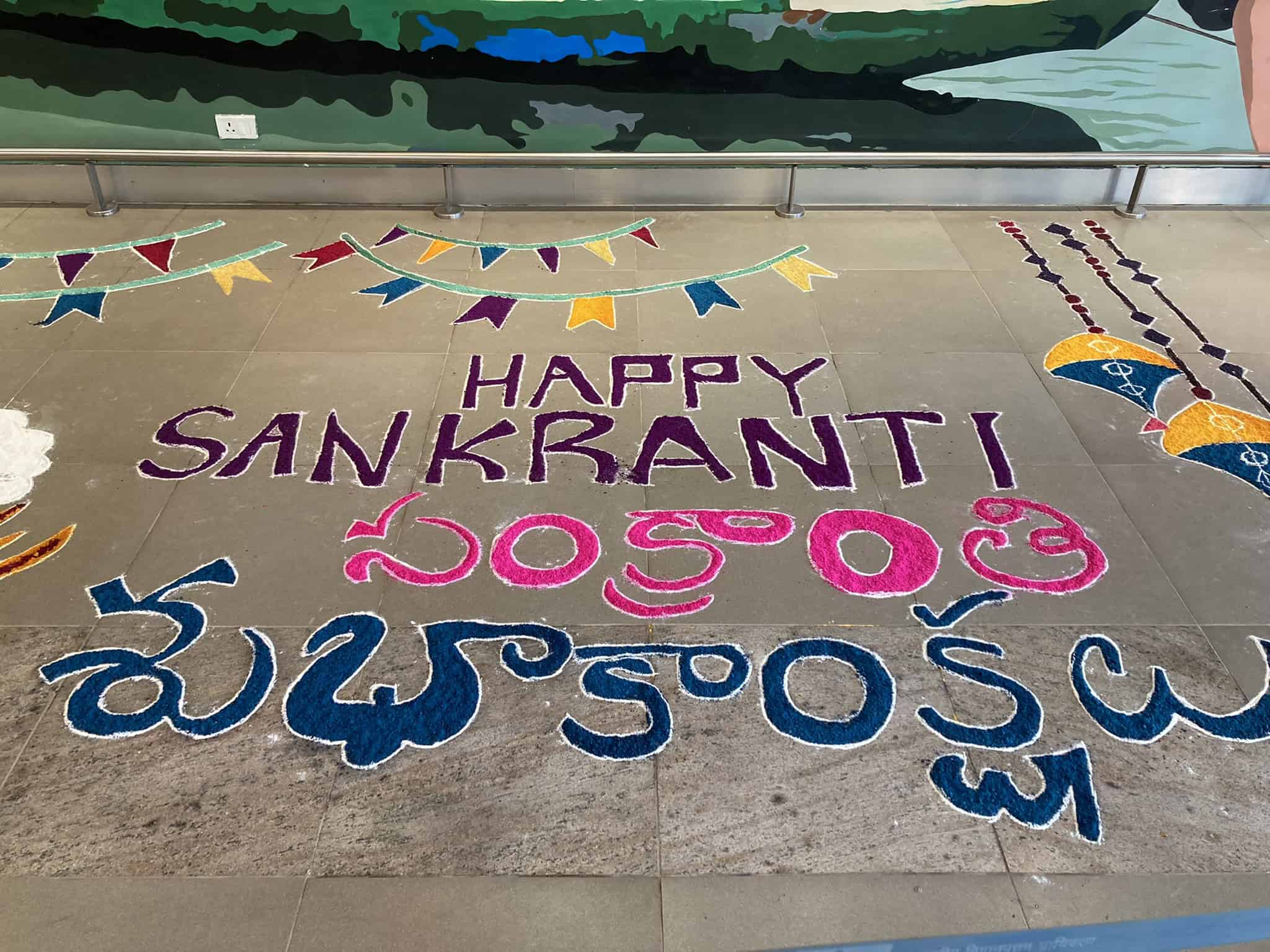
Makar Sankranti: Declutter Your Life, Embrace Brotherhood, and Lead with the Light of Your Heart
Significance Of Makar Sankranti The auspicious day of Makara Sankranti is the day dedicated to worship the Sun - whose light nourishes and sustains all life on this planet. Sankranti means Passage in Sanskrit. Sankranti comes every month of the solar year when...

How to Make Your Heart Pure: Spiritual Lessons for Kids Explained in Satsang
- 1. Obeying the rules of life.2. Preforming one's duties.3. Seeing work as workship.4. Chanting lord's name again and again.5. Trusting God as trusted and beloved to all.6. Seeing the blessings of Lord in everything.7. Love God as much as you love yourself....

Unlock the Secrets of a Well-Lived Life: Ancient Hindu Wisdom from Sanatana Dharma to Become Your Optimal Self
The Perfect Harmony A person's state is said to be in perfect harmony if they are able to balance, both Aahaara - Eating and Vihaara - Resting. Aahara is for the body whereas Vihaara is for the mind. Our personal and professional wellbeing depends on our moral...

How God Stays In and Out of the Frame: The Spiritual Life of Indians in the Diaspora
- 0 - Hi, I’m Rachana. Its been my dream for years to do something to consciously create a better future where every one of us is excited about our own potential. My challenge to everyone is that they aspire for their personal best and leave a legacy of their...

Sri Krishna’s Timeless Wisdom on True Love: Life-Changing Lessons from the Bhagavad Gita
- What Is Love? Krishna explains pure love in this way in the Gita. "The spirit of pure love is to love without condition, to speak without intention, to give without reason, and to care without expectation." As long as humans have existed on earth, there's...

What Western Thinkers Really Say About Advaita Vedanta and Hinduism – Mind-Blowing Insights!
- Thoughts On Hinduism And Eastern Philosophy Some of the most famous people in the world are fascinated by India and Sanatana Dharma. Find out how and why. What distinguishes the Vedanta philosophy from all other philosophies is that it is at the same...

The Divine Power of Bhasma: Unlocking Lord Shiva’s Sacred Symbolism and Spiritual Secrets
Who Is Lord Siva? "Lord Siva is the Absolute Self. The third eye refers to the transcendental vision, wherein the world is negated. He is the destroyer of time, space and causation. He drinks the poison of duality and converts it in to His being. The Ganga on...

Stunning Modern Mehndi Designs Every Bride Will Love – Creative Henna Art Ideas
- A New Age Twist: The Digital Mehendi https://twitter.com/Ravisutanjani/status/1696436821134352651?s=20 - 0 - The Indian American Life

The Science Behind Namaste: Why This Ancient Greeting is More Powerful Than You Think
- In Hindu culture, people greet each other by joining their palms – termed as “Namaskar.” The general reason behind this tradition is that greeting by joining both the palms means respect. However, scientifically speaking, joining both hands ensures joining...
Essence of Gita!🙏
Thank you, indeed!