

–
📚 Book Summary: The Science of Breathing by Yogi Ramacharaka
Originally published in 1905, this classic manual introduces the Yogi Science of Breath – a holistic system combining ancient Eastern wisdom with scientific insights. The author, under the pseudonym Yogi Ramacharaka, explains that breathing is far more than a mechanical act – it is a gateway to physical health, mental clarity, and spiritual awakening.
The book progresses from basic anatomy and physiology of the respiratory system to deeper teachings, including:
– Types of breathing: High, mid, low, and Yogi Complete Breath – a unified method that maximizes oxygen intake and vital energy.
– Physical benefits: Improved vitality, digestion, immunity, and nervous system health.
– Mental and spiritual dimensions: Breath controls prana, the subtle life force, allowing mastery over the mind and deeper connection to the Self.
🌍 Relevance to the Modern World
In today’s high-stress, screen-centric, shallow-breathing culture, this book is more relevant than ever. It provides:
– A natural antidote to anxiety, fatigue, and poor posture.
– An accessible entry point into mindfulness and meditation without needing apps or gadgets.
– A tool for resilience, allowing emotional regulation and inner calm.
– A way to reclaim agency over one’s body and health in a world dominated by passive consumption.
✅ Action Steps to Implement the Philosophy
1. Learn the Yogi Complete Breath:
– Inhale deeply through the nose: lower belly expands, then ribs, then upper chest.
– Exhale slowly, emptying from top to bottom.
– Practice 5–10 cycles, 3 times a day.
2. Breathe Through Your Nose:
– Nose breathing filters, warms, and prana-charges the air.
– Avoid mouth breathing – especially during sleep.
3. Do Daily Pranayama (Breath Control):
– Try rhythmic breathing, alternate nostril breathing (nadi shodhana), and kapalabhati to balance the nervous system and energize the body.
4. Use Breath for Emotional Mastery:
– Pause and take 3 complete breaths before reacting.
– Use calming breath (inhale 4, exhale 8) when anxious.
5. Practice Breath-Awareness Meditation:
– Sit in stillness observing the breath – this builds concentration and stills the mind.
🌬️ The Importance of Breath as Prana
In yogic science, breath is not just air – it is prana, the life force.
While Western science sees oxygen as the main element in breathing, yogis recognize that:
– Prana energizes not just the body, but the mind and spirit.
– It is absorbed primarily through breath, but also through food, water, and sun.
– Mastery over breath leads to mastery over the mind, and ultimately, liberation.
The nervous system acts as a conduit for prana. When we breathe rhythmically and consciously, we store and circulate this vital force – enhancing vitality, willpower, clarity, and spiritual presence.
✨ Inspiring Quotes from the Text
To breathe is to live, and without breath there is no life.
The Yogi knows that by rhythmical breathing one may bring himself into harmonious vibration with nature.
Prana is the active principle of life… it is vitality in motion.
The Yogi Complete Breath gives the proper motion to the diaphragm… Nature’s plan for internal exercise.
– 0 –
About Sanatana Dharma
ब्रह्म सत्यं जगन्मिथ्या जीवो ब्रह्मैव नापरः।
अनेन वेद्यं सच्छास्त्रमिति वेदान्तडिण्डिमः॥
Brahman alone is real; the universe is mithya – neither fully real nor unreal, but an appearance. The individual self (jiva) is none other than Brahman itself, not separate or different. This is the true teaching of the scriptures, as revealed by Vedanta. ~ Verse 20 from Brahma Jnānavali Māla

The Mahabharata: Ancient Wisdom for Modern Life – Timeless Lessons on Human Philosophy and Existence
- It is said in the texts that 80% of the fighting male population of the civilization was wiped out in the eighteen days Mahabharata war. Sanjay, at the end of the war went to the spot where the greatest war took place; Kurukshetra. He looked around and...

Eastern Philosophers Reveal Timeless Wisdom on Advaita Vedanta and Hinduism – Must-Read Insights!
What Hindu Scriptures Say The wise neither grieve for the dead nor for the living. I myself never was not, nor thus, nor all the princes of the earth; nor shall we ever hereafter cease to be. ~ Bhagavad Gita The Brahman forms everything that is living or...

Unlock the Secrets of Modern India: Must-Read Books on Vedic History and Indian Heritage
Books By Indian Authors Breaking India By Rajiv Malhotra & Aravindan Neelakandan Snakes in the Ganga: Breaking India 2.0 By Rajiv Malhotra & Vijaya Viswanathan India, that is Bharat: Coloniality, Civilization, Constitution By J. Sai Deepak Urban Naxals:...

Will God Eat Our Offerings? Lord Krishna Reveals the Truth Behind Naivedyam and Prasad
What Is Prasad? Before eating, a lot of Hindus, offer the food first to God before they consume it. But the question is, will God come and eat our offerings? An attempt is made here to understand the predicament. What follows below is a Guru-Shishya...

Ancient Wisdom for Modern Life: Unlocking Timeless Scriptures with Ami Ganatra
Know Your Scriptures Workshop Timestamp Of Questions 3:04 - QUESTION 1: Bad things happen to good people and good things happen to bad people. What convincing arguments do we find in our scriptures that guide us to follow the path of dharma in...
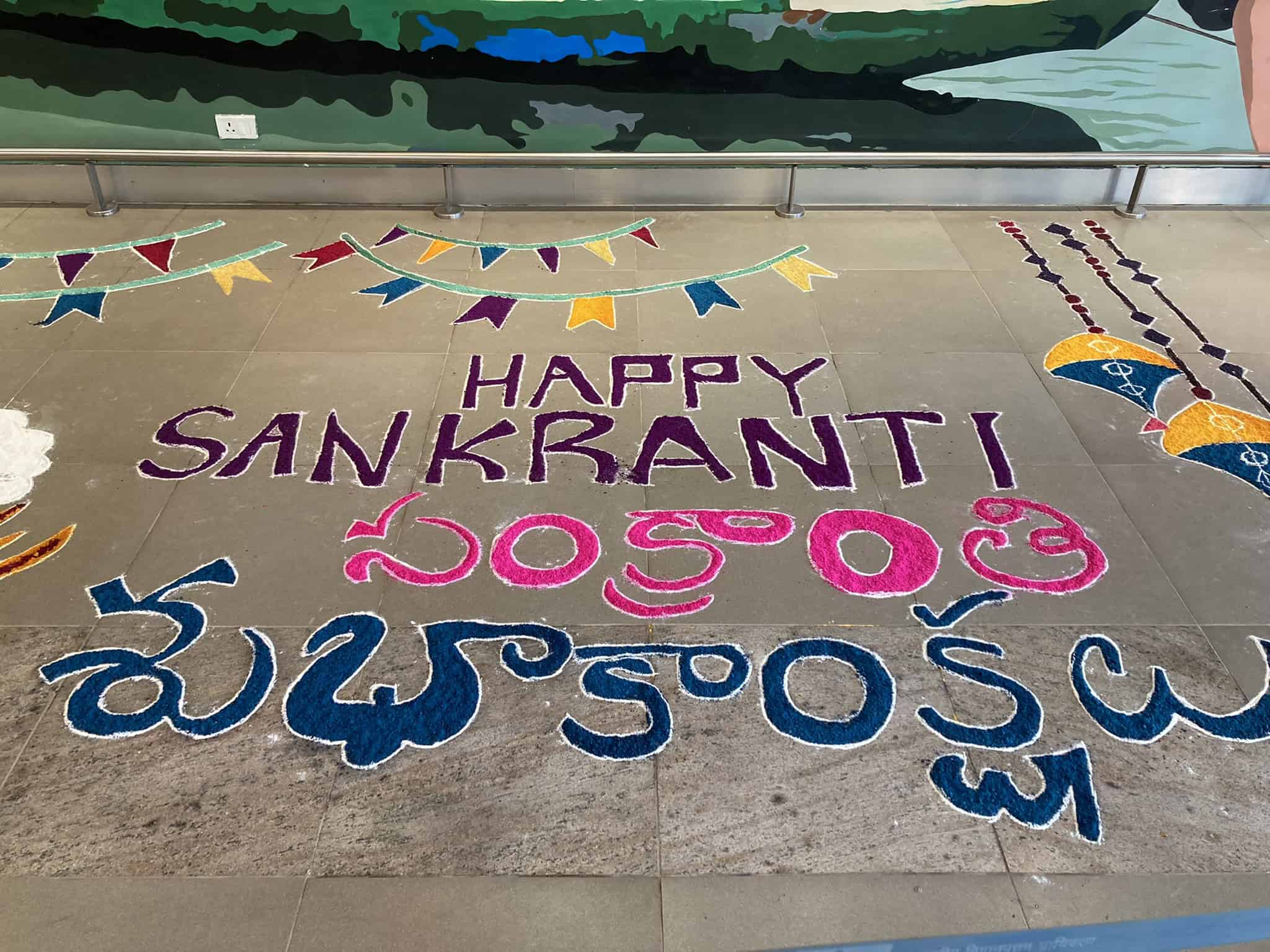
Makar Sankranti: Declutter Your Life, Embrace Brotherhood, and Lead with the Light of Your Heart
Significance Of Makar Sankranti The auspicious day of Makara Sankranti is the day dedicated to worship the Sun - whose light nourishes and sustains all life on this planet. Sankranti means Passage in Sanskrit. Sankranti comes every month of the solar year when...

How to Make Your Heart Pure: Spiritual Lessons for Kids Explained in Satsang
- 1. Obeying the rules of life.2. Preforming one's duties.3. Seeing work as workship.4. Chanting lord's name again and again.5. Trusting God as trusted and beloved to all.6. Seeing the blessings of Lord in everything.7. Love God as much as you love yourself....

Unlock the Secrets of a Well-Lived Life: Ancient Hindu Wisdom from Sanatana Dharma to Become Your Optimal Self
The Perfect Harmony A person's state is said to be in perfect harmony if they are able to balance, both Aahaara - Eating and Vihaara - Resting. Aahara is for the body whereas Vihaara is for the mind. Our personal and professional wellbeing depends on our moral...

How God Stays In and Out of the Frame: The Spiritual Life of Indians in the Diaspora
- 0 - Hi, I’m Rachana. Its been my dream for years to do something to consciously create a better future where every one of us is excited about our own potential. My challenge to everyone is that they aspire for their personal best and leave a legacy of their...

Sri Krishna’s Timeless Wisdom on True Love: Life-Changing Lessons from the Bhagavad Gita
- What Is Love? Krishna explains pure love in this way in the Gita. "The spirit of pure love is to love without condition, to speak without intention, to give without reason, and to care without expectation." As long as humans have existed on earth, there's...

What Western Thinkers Really Say About Advaita Vedanta and Hinduism – Mind-Blowing Insights!
- Thoughts On Hinduism And Eastern Philosophy Some of the most famous people in the world are fascinated by India and Sanatana Dharma. Find out how and why. What distinguishes the Vedanta philosophy from all other philosophies is that it is at the same...

The Divine Power of Bhasma: Unlocking Lord Shiva’s Sacred Symbolism and Spiritual Secrets
Who Is Lord Siva? "Lord Siva is the Absolute Self. The third eye refers to the transcendental vision, wherein the world is negated. He is the destroyer of time, space and causation. He drinks the poison of duality and converts it in to His being. The Ganga on...
Trackbacks/Pingbacks