

Building Resilience in Children: A Guide for Parents
Raising resilient kids in today’s fast-paced, unpredictable world is more important than ever. Resilience helps children adapt to challenges, bounce back from setbacks, and thrive in an ever-changing environment. But how do you nurture this vital trait? Here’s a guide to building resilience with practical insights and strategies.
1. Empower Problem-Solving
Instead of jumping in to solve every problem, teach your child to tackle challenges independently. Guide them through difficult situations by encouraging critical thinking and offering support. When kids learn to overcome obstacles on their own, they build confidence and problem-solving skills that will serve them for life.
2. Expose to Manageable Stress
While it’s natural to want to shield your child from discomfort, manageable stress can actually be beneficial. Facing and overcoming small challenges fosters coping mechanisms, emotional regulation, and adaptability. These experiences prepare kids for bigger hurdles down the road.
3. Validate Feelings and Solutions
When children encounter adversity, acknowledge and validate their emotions. Let them know it’s okay to feel upset or frustrated. Then, work together to brainstorm constructive solutions. Striking the balance between emotional support and fostering independence is key to building resilience.
4. Share Family Stories
At the dinner table, share narratives of your family’s triumphs and struggles. These stories teach kids that setbacks are normal and surmountable. Hearing how others overcame difficulties helps children build their own resilience.
5. Encourage Personalized Success
Let your child define their own success rather than conforming to societal or parental expectations. When kids pursue goals that align with their passions and interests, they develop grit – the combination of perseverance and passion – and a strong sense of self-worth.
6. Address Emotions Beyond Happiness
Teach your child that emotions like sadness, frustration, and even failure are part of life. Helping them navigate these feelings with empathy and understanding lays a foundation for emotional resilience.
7. Foster Grit Through Growth
Explain that grit is built by embracing challenges and learning from mistakes. Encourage persistence and a growth mindset, emphasizing that setbacks are opportunities to grow stronger and wiser.
8. Honest Conversations About Life’s Challenges
Be open with your child about life’s difficulties. Share your own struggles and how you overcame them. Honest discussions help normalize challenges and equip children with tools to face their own.
9. Teach Self-Worth and Kindness
Model self-worth and kindness in your interactions. Children learn by observing – when they see you value yourself and treat others with empathy, they’ll adopt those traits, building resilience in relationships and self-esteem.
10. Navigate Trauma with Empathy
Trauma, such as loss or family conflict, can impact a child’s resilience. Acknowledge their pain and offer empathy. Help them reframe problems constructively, focusing on healing and growth.
11. Build a Supportive Environment
Resilience isn’t built in isolation. Create an environment where children feel safe, supported, and connected. Encourage new interactions and relationships, which foster social resilience and adaptability.
12. Suicide Awareness
Resilience can be a matter of life and death. Alarming statistics reveal that every 13 minutes in America, someone dies by suicide. Among teens, the risk is particularly high. Be proactive in creating a dialogue about mental health, and encourage your child to seek help when needed.
–

–
Resilience in Action
Parenting for resilience means teaching children to navigate life’s complexities with confidence and adaptability. By empowering problem-solving, embracing emotions, and fostering meaningful connections, you’ll help your child develop the strength to thrive, no matter what challenges come their way.
– 0 –
COLLABORATION - A Pillar of FutureSTRONG Academy
Our children will one day face the real world without our support. Academic development is not the only skill they will need in the real world where people skills like taking the lead, emotional intelligence and a strong moral compass will determine who will shine. So, as parents who want to raise well rounded adults, we want to give them the right tools for their personal development.
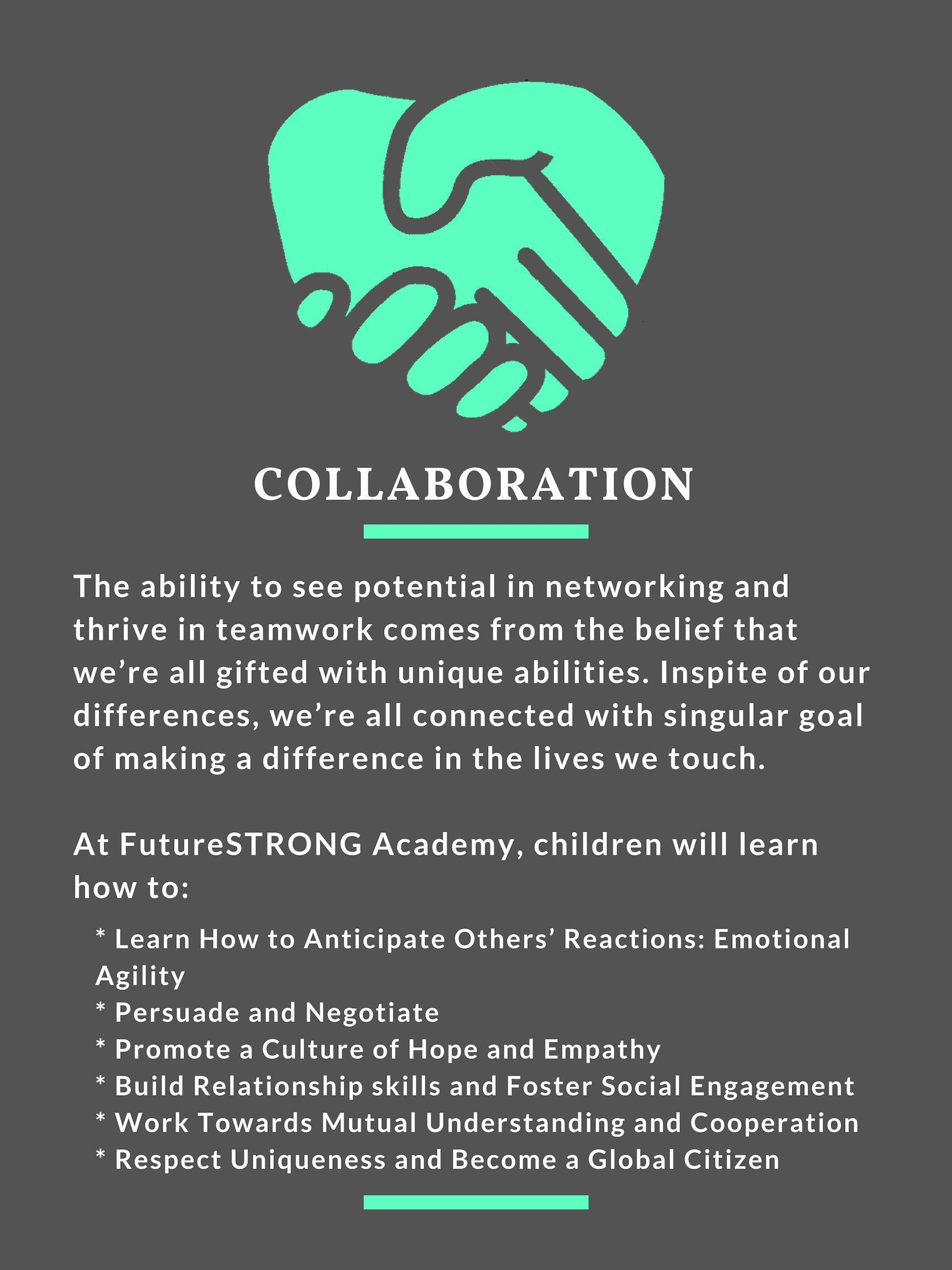
Here is COLLABORATION as described as the 6 C’s of Future STRONG.
Find Below Better Strategies On COLLABORATION

Who Owns Ideas Anymore? How AI Is Hijacking the Internet’s Original Thinkers
- AI Has Turned Search Engines To Answer Engines I watched this video and understood that any of my original thoughts (well, are our thoughts ever original?) might just become a Chat GPT's prompt result, and I would never even know about it. And that's exactly...

Why People Are Falling in Love With ChatGPT and Leaving Their Spouses for AI
The Strange New Intimacy of AI There’s a man on YouTube who says ChatGPT sparked his spiritual awakening. He’s glowing, grinning, and talking about non-duality like he just came back from a 10-day Vipassana retreat. His wife, meanwhile, says it’s threatening...

Mechanize Wants to Replace All White-Collar Jobs With AI – Are We Ready for a Post-Work World?
- Want To Listen To The Article Instead? - Mechanize and the Future of White-Collar Automation 🤖 Mechanize, a bold new startup out of San Francisco, is aiming to do more than just optimize office work - it wants to replace it entirely. Co-founded...

Put Your Phone Down to Reclaim Your Life Says Angela Duckworth 🤳📵
A Lesson from Angela Duckworth Put Your Phone Down, Pick Your Life Up I just watched Angela Duckworth’s graduation speech at Bates College, and I have to tell you that she didn't just speak to the new grads, she spoke to all of us. With her signature mix of...

Why Being Alone (With Intentionality) Is the New Superpower for Happiness and Growth 🧘♀️
- Want To Listen To The Article Instead? - The Joys of Chosen Solitude 🧘♀️ This article from the BBC explores a growing cultural shift towards embracing solitude and single living, distinguishing it from loneliness. It highlights a recent surge...

Anthropic Scanned Millions of Real Books to Train Claude AI 📚
- Want To Listen To The Article Instead? - Claude's Library: Training with Real Books 📚 Anthropic, the company behind the Claude AI model, acquired millions of physical print books and digitally scanned them to use as training data. This approach...

Empowering the Next Generation: How to Teach Kids Coding, Ethics, and Problem-Solving for a Brighter Future
Humanity Before Digital Citizenship Let me tell you something about the future. It’s not some distant, abstract concept - it’s being built right now, in classrooms, living rooms, and playgrounds around the world. And the kids? They’re not just bystanders....

I Sit, Scroll, Rot and Repeat. Yes, It Was The Damn Phones | A Powerful Poem By Kori Jane Spaulding 📵🤳
Sit and Scroll and Rot 📵🤳 For years, I've been writing about all that Ms. Spaulding talks about in her poem "It was the damn phones". But, hearing this from someone like her from Gen Z stands out because she understands that "We are the product." The weight of...

Why ChatGPT Gets It Wrong: Gary Marcus on AI’s Big Flaws and What We Must Fix
- Gary Marcus' Take On The AI Evolution Of Our Times 🤖 One of the most important videos you will hear about the state of AI innovation at the present moment ft. Gary Marcus. This is a discussion between Michael Walker from Novara Media with Gary Marcus, a...

How ChatGPT Can Worsen OCD and Mental Health: A Hidden Danger No One’s Talking About
- Want To Listen To The Article Instead? - ChatGPT and OCD: A Dangerous Combination 😥 We explore the potential dangers of ChatGPT for individuals with Obsessive-Compulsive Disorder (OCD). We discuss how the chatbot, unlike human interaction,...

The Rise of Hate and Intolerance: How Social Media Fuels Asshole Supremacy
Breaking A Vicious Cycle Let’s not mince words here: social media has become a cesspool of hate, intolerance, and performative outrage. It’s a digital coliseum where the loudest, most aggressive voices are crowned champions, and nuance is thrown to the lions....

OpenAI and Microsoft Clash Over AGI Access as Tensions Rise
- Want To Listen To The Article Instead? - AGI Access Dispute: OpenAI Versus Microsoft 🤖 A recent paper from OpenAI regarding the classification of Artificial General Intelligence (AGI) has ignited a dispute with Microsoft. The core of the...

College Decision Readiness: Your Step-by-Step Guide to Academic, Financial, and Personal Preparation for Success
College Decision Readiness Deciding on college isn’t just about picking a school - it’s about preparing yourself academically, financially, emotionally, and socially for the next chapter of your life. Let’s break it down step by step. 1. Academic...

Why Gen Z Is Struggling: Jonathan Haidt and Trevor Noah Break It Down 🎙️
- Want To Listen To The Article Instead? - The Anxious Generation with Jonathan Haidt and Trevor Noah 🎙️ This Apple Podcast episode of "What Now? with Trevor Noah" features social psychologist Jonathan Haidt, the author of "The Anxious...

The Real Talk on Money: Lessons from The Psychology of Money | A FutureSTRONG Production
https://youtu.be/jU9GfZhXAHo - Want To Listen To The Article Instead? The Psychology of Money by Morgan Housel Join us for an insightful coffee chat as we explore *The Psychology of Money* by Morgan Housel, where we dive deep into the intricate...

What Every School Must Teach by 2030 (Hint: It’s Not Memorization)
- Want To Listen To The Article Instead? - The Core Skills for 2030 📈 What Should Schools Truly Prepare Students For? According to the World Economic Forum’s Future of Jobs Survey 2024, the skills that will matter most by 2030 aren’t memorized...

The Two Triangles of Success: How to Measure Performance and Unlock Human Potential
The Full Spectrum Of Human Potential Success. It’s a word that carries weight, yet its meaning shifts depending on who you ask. For some, it’s the crisp satisfaction of hitting deadlines and staying under budget. For others, it’s the warmth of meaningful...

What Every New Product Manager Must Know According to Coinbase Founder Brian Armstrong
- Want To Listen To The Article Instead? - Letter to a New Product Manager: A Brian Armstrong's Guide 🧠 Brian Armstrong, the founder of Coinbase, offers guidance to a new product manager in an adapted email from June 2025, published in The...