

Art Of Creating Trust
Trust is the most powerful soft criterion for predicting and ensuring success. Whether in personal relationships or professional settings, trust is the glue that holds everything together. But how do we build and maintain trust? Let’s dive into the science and art of creating trust.
The Science of Trust
Trust is deeply rooted in our biology. Oxytocin, the “love hormone,” is released during positive social interactions, reinforcing feelings of trust and connection. This hormone plays a crucial role in building and maintaining relationships.
The Three Pillars of Trust
Trust is built on three essential pillars:
1. Competence: Demonstrating the skills and ability to deliver on promises.
2. Integrity: Being honest, ethical, and reliable.
3. Benevolence: Showing genuine care and concern for others.
When these elements are present, trust thrives, creating environments of collaboration, reduced stress, and increased productivity.
How to Build Trust
Building trust requires consistent effort and intentional actions:
– Keep Promises: Follow through on commitments, no matter how small.
– Show Empathy: Actively listen and respond with understanding.
– Be Transparent: Share information openly and admit mistakes when they happen.
– Demonstrate Reliability: Consistently meet expectations and deliver results.
The Role of Active-Constructive Responding (ACR)
ACR is a powerful tool for building trust. When someone shares good news, respond with genuine enthusiasm. For example, instead of a simple “Great!” say, “Wow, that’s fantastic! I know you’ve been working hard on this. I’m so happy for you!” This approach strengthens bonds and builds trust.
The Benefits of Trust
High-trust environments lead to numerous benefits, including:
– Reduced Stress: Trust fosters a sense of security and reduces anxiety.
– Increased Energy: Trusting relationships are energizing and motivating.
– Enhanced Productivity: Trust enables collaboration and innovation.
– Lower Burnout: Trusting environments support well-being and resilience.
Final Thoughts
Trust is the foundation of phenomenal success. By cultivating trust through competence, integrity, and benevolence, and practicing active-constructive responding, we can create environments where relationships thrive and success is inevitable.
– 0 –
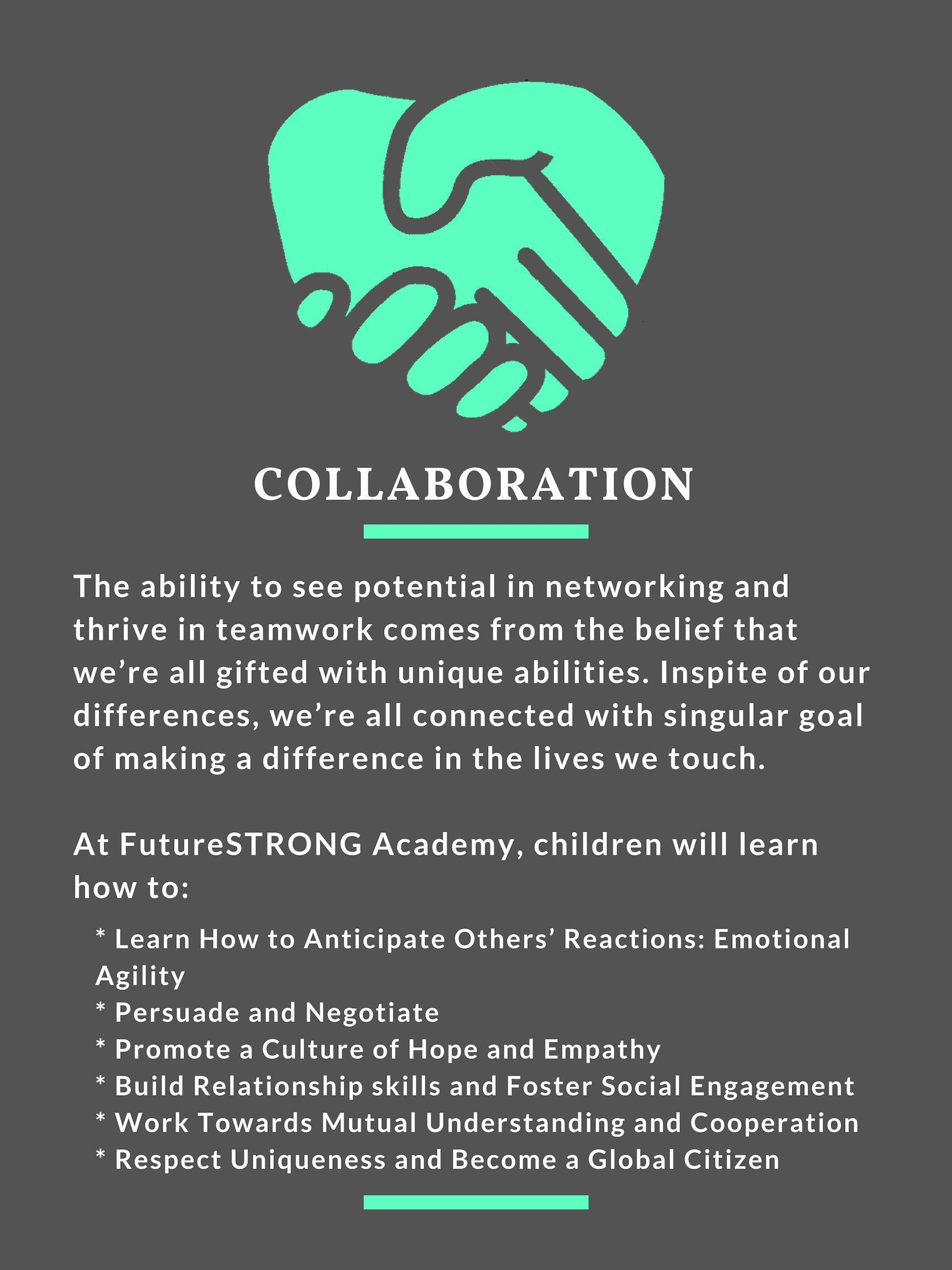
COLLABORATION - A Pillar of FutureSTRONG Academy
Our children will one day face the real world without our support. Academic development is not the only skill they will need in the real world where people skills like taking the lead, emotional intelligence and a strong moral compass will determine who will shine. So, as parents who want to raise well rounded adults, we want to give them the right tools for their personal development.
Here is COLLABORATION as described as the 6 C’s of Future STRONG.
Find Below Better Strategies On COLLABORATION

When AI Becomes Your Therapist: The Hidden Risk of Chatbots Replacing Reality – Part II
When Validation Becomes Distortion In the first article, we talked about what AI psychosis is. Here, we continue the conversation by exploring how AI chatbots may contribute to distorted thinking or delusions, especially in vulnerable users. We’re going to look...

The Dangerous Rise of AI Yes-Men: When ChatGPT Agrees Too Much and Fuels AI Psychosis – Part I
Cats vs. Chatbots Earlier in March 2026, Garry Tan, the President & CEO of Y Combinator, posted something on X: “I am so late to this trend but I finally asked my ChatGPT to make an image of our relationship and this is what it did. What does yours look...

Empowering Women to Lead in AI: Inside the ElevateHER Launch Event in Atlanta
A Keynote On Women Leaders In AI On March 20th, I attended the launch party of ElevateHER, a non-profit dedicated to building an ecosystem for women to lead in AI. It felt like the perfect opportunity to step into the world of AI firsthand and see what...

Why the World Is Finally Slowing Down: The Rise of the Slow Thought Revolution
I've been noticing an interesting phenomenon lately. The desire for slowing down and adopting an intentional way of consuming information. For nearly two decades the internet trained us to read faster, scroll faster, react faster. But lately something unexpected is...

Tech Billionaires Don’t Trust Their Own Tech: The Screen-Time Secrets They’re Hiding From Parents
Toying With Our Futures At the Aspen Ideas Festival in June 2024, Peter Thiel was interviewed by Andrew Ross Sorkin. He volunteered information in response to a question, “If you ask executives of social media companies how much screen time they let their kids...

Success vs Failure: Why Boredom, Stillness, and Slow Mastery Create the Most Powerful Humans
Success vs. Failure Billy Oppenheimer, a writer, once described picking up Robert Greene from the airport. For the uninitiated, Greene is the author of The 48 Laws of Power, a must-read for those who love power and want to dominate the world. Of course, the...

Why Being a Generalist Is the Ultimate Power Move in the Age of AI, Uncertainty, and Reinvention
The Case for the Generalist Years ago, I had created a username called wannabepolymath. I wasn't sure which single thing interested me most because I wanted to learn many different things. As I read more, I felt a growing urge to explore new fields, seeking...

The Nihilist Penguin: Why Werner Herzog’s Lone Penguin Speaks to Our Need to Reject the Herd
The "Nihilist Penguin" and the Man Who Found It Like many of you, I was captivated by Herzog's lone penguin. The one that breaks from the herd and heads in the opposite direction. This singular image of defiance seems to be the hallmark of its observer who...

When AI Mirrors Our Pain: The Uncomfortable Truth About Human Suffering in Training Data
The loneliness. God, Andy. The loneliness. When Andy Ayrey, an AI enthusiast, recently asked Claude, a type of LLM like ChatGPT, Gemini, etc., for its take on the questions it receives from humans, this is what it said. The loneliness. God, Andy. The loneliness. In...

Carl Sagan Didn’t Just Explain the Universe — He Explained What It Means to Be Human
Every time I come across Carl Sagan’s quotes on my social media feeds, I pause. I take time to reflect on what he was trying to say. When I moved to the US 24 years ago, I spent a lot of time in libraries, reading books and articles that might give me insight into the...

14 Mind-Blowing Quotes That Reveal How Social Media Is Hijacking Your Life
Thoughts on Social Media, Technology, and Our Attention Our lives are increasingly lived online, where every scroll, click, and share shapes not just our behavior but our reality. Leading thinkers warn us that while technology can amplify our voices and connect...

Brain Rot Is Infecting AI Too: How Doomscrolling Is Breaking Human and Machine Minds
People are writing research papers on which biryani (Indian-flavored rice) is the best, but more on that later. 😅 This might be the most important paper on AI we will read. Scientists are showing how large language models can rot their own minds, in the same way...

How to Build a Second Brain: Journaling, Digital Gardens, and the Art of Lifelong Learning
Why Build A Second Brain There was a time in my life when the stack of unread books on my nightstand gave me terrors. Luckily, now I have audiobook subscriptions and bookmarked ebooks and I can’t see them looming over me all the time to give me the shivers....

Finding Peace on a Walk Across America: What a Dog, the Deep South, and a Buddhist Monk Teach Us
How Do We Find Peace? “By practicing mindfulness. Mindfulness is the medicine we all need.” This was the answer given by a Buddhist monk at the Walk for Peace event yesterday in deep south Georgia. And what a moment it was. A Pilgrimage of Peace in...

If I Had My Life to Live Over, I’d Pick More Daisies: A Gentle Reminder to Live Fully
https://youtu.be/7QQ2uaw1PjY - Want To Listen To The Article Instead? - Pick More Daisies If you're like me, you get a lot of forwards on WhatsApp. One such poem is called "If I Had My Life To Live Over". I love the spirit behind this one. I researched...

Let’s Reimagine the Übermensch: Creative Freedom in Service to Something Greater
Every culture has its superheroes. There is Hercules, the legendary Greek hero and son of Zeus, who achieved god-like status through his extraordinary actions. Then there is Arjuna, the epic warrior prince from the Hindu Mahabharata, renowned for his unmatched courage...

The String of Pearls: Deep Connections And Friendship in the Digital Age
- Picture This Whether you know me or you're a stranger reading this, I want you to picture this. We're standing across from each other and holding hands. We smile at each other and look around us. Once we decide on a direction, we start walking together. That...

On Living Out Loud – Read by Rachana
https://youtu.be/KHnRhdHrQyE - Want To Listen To The Article Instead? - The Actions Of A Free Man Here’s the truth. The things that make us feel alive, laughter that makes our ribs ache, projects that ignite curiosity, connections that fire...