

–
No One Superior, None Inferior: The Vedic Vision of Human Equality
Hindu Dharma scripture emphasizes equality of all mankind. Rig Veda states:
Ajyesthaso akanishthaso ete sambhrataro vahaduhu saubhagaya
No one is superior, none inferior. All are brothers marching forward to prosperity.
Caste-based discrimination and “untouchability” are purely social evils not accepted or recognized anywhere in the Hindu Dharmi scriptural tradition.
The word “caste” is derived from the Portuguese “casta” – meaning lineage, breed, or race. As such, there is no exact equivalent for “caste” in Indian society, but what exists is the dual concept of Varna and Jāti.
Caste-based discrimination is not intrinsic to Hindu Dharma. What Vedic society is based on is the four Varnas.
Sacred texts describe Varna not as four rigid, societal classes, but as a metaphysical framework detailing four distinctive qualities which are manifest, in varying degrees, in all individuals. Jāti refers to the occupation-based, social units with which people actually identified.
There are four varnas and countless jātis. In theory, the numerous jātis loosely belonged to one of the four varnas, but were not limited to the traditional profession of the varna in ancient India. Over time, however, varna and jati became conflated and birth-based.
The four varnas and the most common professions belonging to each were: teachers, scholars, physicians, judges, and priests (brahmanas) kings, soldiers, administrators, city planners (kshatriyas) businessmen, traders, bankers, agricultural, and dairy farmers (vaishyas) laborers, artisans, blacksmiths, and farmers (including wealthy landowners) (sudras).
A subsequent fifth category, now known as the “untouchables,” emerged more than 2,000 years after the Rig Veda (the first Veda) to categorize those jātis which, for various reasons, did not fit into the four-fold varna structure.
–
Beyond Caste: Varna, Jāti, and the Timeless Law of Karma
Many of these jātis performed tasks considered ritually impure, physically defiling, or involving violence, such as preparing and eating animal products. However, no sacred text or book of social law ever prescribes this fifth category.
The term “caste” in modern India is primarily understood to mean jāti rather than varna and is a feature across all religious communities. Discrimination on the basis of caste is also outlawed.
Generally, neither varna nor jāti have bearing on one’s occupation in modern Bharat /India, but may still influence lifestyle, certain socio-cultural practices, and marriage.
Karma may well influence Varna which is more than just “what goes around comes around.”
Karma is the universal law of cause and effect: each action and thought has a reaction, and this cycle is endless until one is able to perform virtuous action without expecting rewards.
–
Karma and the Eternal Soul: Lessons from the Bhagavad Gita
The Bhagavad Gita, III.19 and III.20 expounds on this:
Tasmad asakta satatam
Karyam karma samacara
Asakto hy acaran karma
Param apnoti purusah
Lokasampraham eva’pi
Sampasyan kartum arhasi
Therefore, without attachment
Perform always the work that has to be done
For man attains to the highest
By doing work without attachment
Likewise you should perform with a view to guide others
And for the sake of benefiting the welfare of the world
Belief in karma goes hand in hand with belief in reincarnation, where the immortal soul, on its path of spiritual evolution, takes birth in various physical bodies through the cycle of life and death.
Though karma can be immediate, it often spans over lifetimes and is one explanation to the commonly asked question, “Why do bad things happen good people?” or vice versa.
–
Bhagavad Gita: Chapter 9, Verse 32
मां हि पार्थ व्यपाश्रित्य येऽपि स्यु: पापयोनय: |
स्त्रियो वैश्यास्तथा शूद्रास्तेऽपि यान्ति परां गतिम् || 32||BG 9.32: All those who take refuge in Me, whatever their birth, race, gender, or caste, even those whom society scorns, will attain the supreme destination.
–

The Dharma Spectrum – Source Unknown
–
The Caste Rush – A Documentary by Indic Dialogue
This 60-minute documentary is a truth-seeking journey across India, exploring the realities behind allegations of caste discrimination in ancient temples. Guided by the principle of ‘Truth, the Whole Truth, and Nothing but the Truth,’ we traveled to all four corners of the country to document present-day temple practices. Are Dalits really denied entry? Can non-Brahmins become priests? This film investigates the questions at the heart of faith, tradition, and equality.
– 0 –
About Sanatana Dharma
ब्रह्म सत्यं जगन्मिथ्या जीवो ब्रह्मैव नापरः।
अनेन वेद्यं सच्छास्त्रमिति वेदान्तडिण्डिमः॥
Brahman alone is real; the universe is mithya – neither fully real nor unreal, but an appearance. The individual self (jiva) is none other than Brahman itself, not separate or different. This is the true teaching of the scriptures, as revealed by Vedanta. ~ Verse 20 from Brahma Jnānavali Māla

Discover Peace at Sandeepany Sadhanalaya: Swami Chinmayananda’s Spiritual Oasis in Powai, Mumbai
- - 0 - About Sanatana Dharma ब्रह्म सत्यं जगन्मिथ्या जीवो ब्रह्मैव नापरः।अनेन वेद्यं सच्छास्त्रमिति वेदान्तडिण्डिमः॥ Brahman alone is real; the universe is mithya – neither fully real nor unreal, but an appearance. The individual self (jiva) is none other...

The Secret to Achieving Any Goal: Start with Clarity of Intention
The Yogic Guide To Goal Setting Kalpana and Vikalpa are two words that are derived from the word Kalpa that means imaginative creation. Vikalpa refers to our imagination or fantasy. It is daydreaming, or thinking of things that don't exist. Another word that's...

How to Be a Modern Renaissance Man: Raghav Krishna Brhat’s Yogic Secrets to Holistic Growth
- Refine Your Instrument Workshop Let's gather to find out from Raghava Krishna, what it takes to be a modern human with deep roots in our cultural traditions. Raghava Krishna is the CEO and Founder of Bṛhat बृहत्. He has 21 yrs of experience spanning...

Ugadi & Gudi Padwa: Celebrate the Hindu Lunar New Year with 9 Days of Spring Festivities!
Shobhakruthu Naama Samvatsaram: 2023 According to the Hindu Calendar, Ugadi falls on the first day of the Chaitra month. Yugadi means the beginning of new age. The day also marks the beginning of spring season, which is considered to be the first of all...

The Mahabharata: Ancient Wisdom for Modern Life – Timeless Lessons on Human Philosophy and Existence
- It is said in the texts that 80% of the fighting male population of the civilization was wiped out in the eighteen days Mahabharata war. Sanjay, at the end of the war went to the spot where the greatest war took place; Kurukshetra. He looked around and...

Eastern Philosophers Reveal Timeless Wisdom on Advaita Vedanta and Hinduism – Must-Read Insights!
What Hindu Scriptures Say The wise neither grieve for the dead nor for the living. I myself never was not, nor thus, nor all the princes of the earth; nor shall we ever hereafter cease to be. ~ Bhagavad Gita The Brahman forms everything that is living or...

Unlock the Secrets of Modern India: Must-Read Books on Vedic History and Indian Heritage
Books By Indian Authors Breaking India By Rajiv Malhotra & Aravindan Neelakandan Snakes in the Ganga: Breaking India 2.0 By Rajiv Malhotra & Vijaya Viswanathan India, that is Bharat: Coloniality, Civilization, Constitution By J. Sai Deepak Urban Naxals:...

Will God Eat Our Offerings? Lord Krishna Reveals the Truth Behind Naivedyam and Prasad
What Is Prasad? Before eating, a lot of Hindus, offer the food first to God before they consume it. But the question is, will God come and eat our offerings? An attempt is made here to understand the predicament. What follows below is a Guru-Shishya...

Ancient Wisdom for Modern Life: Unlocking Timeless Scriptures with Ami Ganatra
Know Your Scriptures Workshop Timestamp Of Questions 3:04 - QUESTION 1: Bad things happen to good people and good things happen to bad people. What convincing arguments do we find in our scriptures that guide us to follow the path of dharma in...
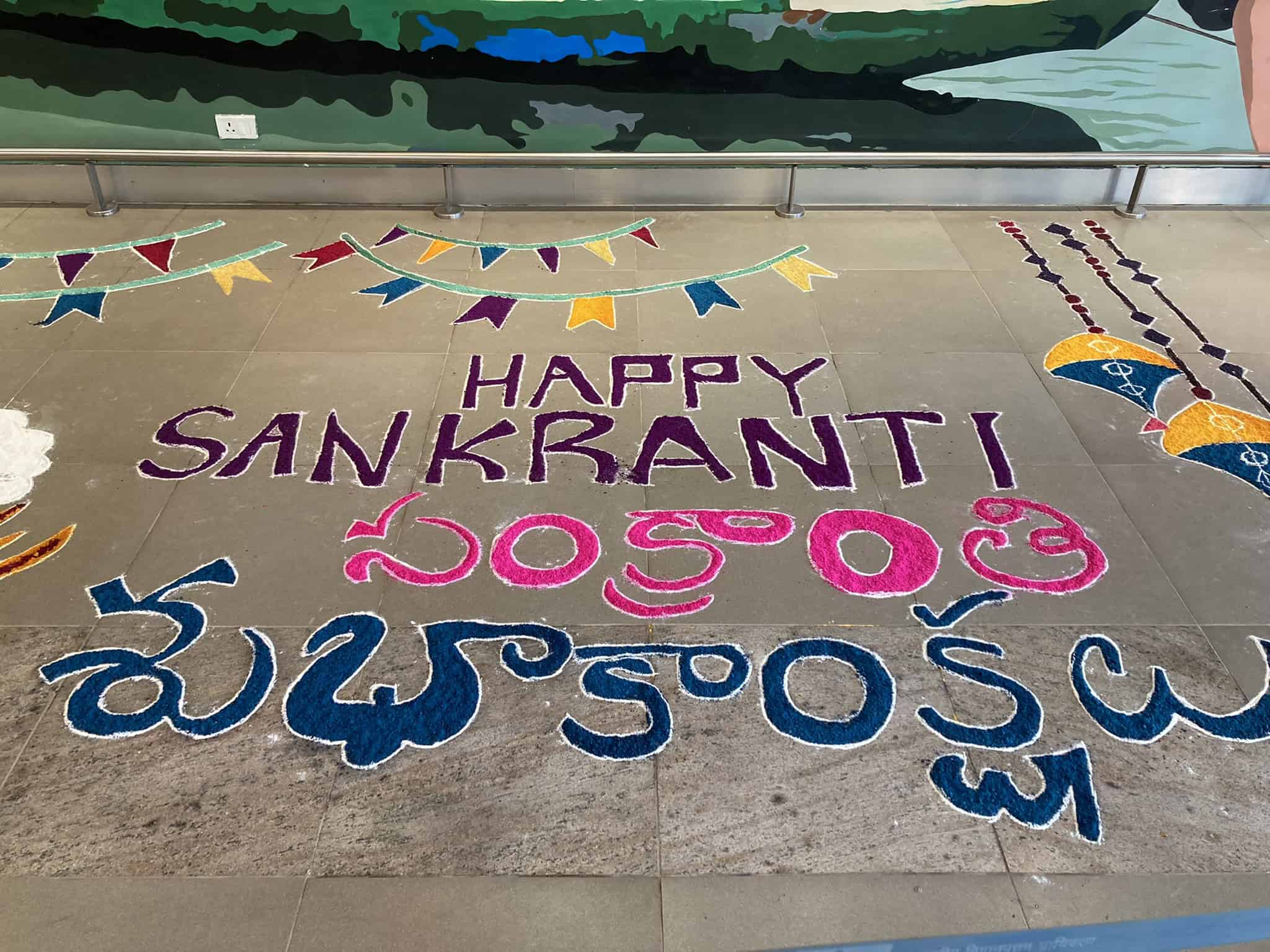
Makar Sankranti: Declutter Your Life, Embrace Brotherhood, and Lead with the Light of Your Heart
Significance Of Makar Sankranti The auspicious day of Makara Sankranti is the day dedicated to worship the Sun - whose light nourishes and sustains all life on this planet. Sankranti means Passage in Sanskrit. Sankranti comes every month of the solar year when...

How to Make Your Heart Pure: Spiritual Lessons for Kids Explained in Satsang
- 1. Obeying the rules of life.2. Preforming one's duties.3. Seeing work as workship.4. Chanting lord's name again and again.5. Trusting God as trusted and beloved to all.6. Seeing the blessings of Lord in everything.7. Love God as much as you love yourself....

Unlock the Secrets of a Well-Lived Life: Ancient Hindu Wisdom from Sanatana Dharma to Become Your Optimal Self
The Perfect Harmony A person's state is said to be in perfect harmony if they are able to balance, both Aahaara - Eating and Vihaara - Resting. Aahara is for the body whereas Vihaara is for the mind. Our personal and professional wellbeing depends on our moral...

How God Stays In and Out of the Frame: The Spiritual Life of Indians in the Diaspora
- 0 - Hi, I’m Rachana. Its been my dream for years to do something to consciously create a better future where every one of us is excited about our own potential. My challenge to everyone is that they aspire for their personal best and leave a legacy of their...

Sri Krishna’s Timeless Wisdom on True Love: Life-Changing Lessons from the Bhagavad Gita
- What Is Love? Krishna explains pure love in this way in the Gita. "The spirit of pure love is to love without condition, to speak without intention, to give without reason, and to care without expectation." As long as humans have existed on earth, there's...

What Western Thinkers Really Say About Advaita Vedanta and Hinduism – Mind-Blowing Insights!
- Thoughts On Hinduism And Eastern Philosophy Some of the most famous people in the world are fascinated by India and Sanatana Dharma. Find out how and why. What distinguishes the Vedanta philosophy from all other philosophies is that it is at the same...

The Divine Power of Bhasma: Unlocking Lord Shiva’s Sacred Symbolism and Spiritual Secrets
Who Is Lord Siva? "Lord Siva is the Absolute Self. The third eye refers to the transcendental vision, wherein the world is negated. He is the destroyer of time, space and causation. He drinks the poison of duality and converts it in to His being. The Ganga on...

Stunning Modern Mehndi Designs Every Bride Will Love – Creative Henna Art Ideas
- A New Age Twist: The Digital Mehendi https://twitter.com/Ravisutanjani/status/1696436821134352651?s=20 - 0 - The Indian American Life

The Science Behind Namaste: Why This Ancient Greeting is More Powerful Than You Think
- In Hindu culture, people greet each other by joining their palms – termed as “Namaskar.” The general reason behind this tradition is that greeting by joining both the palms means respect. However, scientifically speaking, joining both hands ensures joining...