

–
Towards the end of every ritualistic worship (pooja or bhajan) of God or to welcome an honored guest or saint, we perform the aarati. This is always accompanied by the ringing of the bell and sometimes by singing, playing of musical instruments and clapping.
It is one of the sixteen steps (shodasha upachaara) of the pooja ritual. It is referred to as the lighted lamp in the right hand, which we wave in a clockwise circling movement to light the entire form of God.
Each part is revealed individually and also the entire form of God. As the light is waved we either do mental or loud chanting of prayers or simply behold the beautiful form of the Lord, illumined by the lamp. At the end of the aarati we place our hands over the flame and then gently touch our eyes and the top of the head.
We have seen and participated in this ritual from our childhood. Let us find out why we do the aarati?
Having worshipped God of love – performing abhisheka, decorating the image and offering fruits and delicacies, we see the beauty of God in all His glory. Our minds are focused on each limb of God as the lamp lights it up. It is akin to silent open-eyed meditation on His beauty. The singing, clapping, ringing of the bell etc. denote the joy and auspiciousness, which accompanies the vision of God.
Aarati is often performed with camphor. This holds a telling spiritual significance. Camphor when lit, burns itself out completely without leaving a trace of it. It represents our inherent tendencies (vaasanas). When lit by the fire of knowledge which illumines God (Truth), our vaasanas thereafter burn themselves out completely, not leaving a trace of ego which creates in us a sense of individuality that keeps us separate from God.
Also while camphor burns to reveal the glory of Lord, it emits a pleasant perfume even while it sacrifices itself. In our spiritual progress, even as we serve the guru and society, we should willingly sacrifice ourselves and all we have, to spread the “perfume” of love to all. We often wait a long while to see the illumined Lord but when the aarati is actually performed, our eyes close automatically as if to look within. This is to signify that each of us is a temple of God.
Just as the priest reveals the form of God clearly with the aarati flame, so too the guru reveals to us the divinity within each of us with the help of the “flame” of knowledge (or the light of spiritual knowledge). At the end of the aarati, we place our hands over the flame and then touch our eyes and the top of the head. It means – may the light that illuminated God light up my vision; may my vision be divine and my thoughts noble and beautiful.
The philosophical meaning of aarati extends further. The sun, moon, stars, lightning and fire are the natural sources of light. God is the source of this wonderous phenomenon of the universe. It is due to Him alone that all else exist and shine. As we light up God with the flame of the aarati, we turn our attention to the very source of all light, which symbolizes knowledge and life.
Also the sun is the presiding deity of the intellect, the moon, that of the mind, and fire, that of speech. God is the supreme consciousness that illuminates all of them. Without Him, the intellect cannot think, nor can the mind feel nor the tongue speaks. God is beyond the mind, intellect and speech. How can this finite equipment illuminate God? Therefore, as we perform the aarati we chant;
Na tatra suryo bhaati na chandra taarakam
Nemaa vidyuto bhaanti kutoyamagnib
Tameva bhaantam anubhaati sarvam
Tasya bhasa sarvam idam vibhaati
Translation:
He is there where the sun does not shine,
Nor the moon, stars and lightning.
then what to talk of this small flame (in my hand),
Everything (in the universe) shines only after God,
And by His light alone are we all illumined.
– 0 –
About Sanatana Dharma
ब्रह्म सत्यं जगन्मिथ्या जीवो ब्रह्मैव नापरः।
अनेन वेद्यं सच्छास्त्रमिति वेदान्तडिण्डिमः॥
Brahman alone is real; the universe is mithya – neither fully real nor unreal, but an appearance. The individual self (jiva) is none other than Brahman itself, not separate or different. This is the true teaching of the scriptures, as revealed by Vedanta. ~ Verse 20 from Brahma Jnānavali Māla

Discover Peace at Sandeepany Sadhanalaya: Swami Chinmayananda’s Spiritual Oasis in Powai, Mumbai
- - 0 - About Sanatana Dharma ब्रह्म सत्यं जगन्मिथ्या जीवो ब्रह्मैव नापरः।अनेन वेद्यं सच्छास्त्रमिति वेदान्तडिण्डिमः॥ Brahman alone is real; the universe is mithya – neither fully real nor unreal, but an appearance. The individual self (jiva) is none other...

The Secret to Achieving Any Goal: Start with Clarity of Intention
The Yogic Guide To Goal Setting Kalpana and Vikalpa are two words that are derived from the word Kalpa that means imaginative creation. Vikalpa refers to our imagination or fantasy. It is daydreaming, or thinking of things that don't exist. Another word that's...

How to Be a Modern Renaissance Man: Raghav Krishna Brhat’s Yogic Secrets to Holistic Growth
- Refine Your Instrument Workshop Let's gather to find out from Raghava Krishna, what it takes to be a modern human with deep roots in our cultural traditions. Raghava Krishna is the CEO and Founder of Bṛhat बृहत्. He has 21 yrs of experience spanning...

Ugadi & Gudi Padwa: Celebrate the Hindu Lunar New Year with 9 Days of Spring Festivities!
Shobhakruthu Naama Samvatsaram: 2023 According to the Hindu Calendar, Ugadi falls on the first day of the Chaitra month. Yugadi means the beginning of new age. The day also marks the beginning of spring season, which is considered to be the first of all...

The Mahabharata: Ancient Wisdom for Modern Life – Timeless Lessons on Human Philosophy and Existence
- It is said in the texts that 80% of the fighting male population of the civilization was wiped out in the eighteen days Mahabharata war. Sanjay, at the end of the war went to the spot where the greatest war took place; Kurukshetra. He looked around and...

Eastern Philosophers Reveal Timeless Wisdom on Advaita Vedanta and Hinduism – Must-Read Insights!
What Hindu Scriptures Say The wise neither grieve for the dead nor for the living. I myself never was not, nor thus, nor all the princes of the earth; nor shall we ever hereafter cease to be. ~ Bhagavad Gita The Brahman forms everything that is living or...

Unlock the Secrets of Modern India: Must-Read Books on Vedic History and Indian Heritage
Books By Indian Authors Breaking India By Rajiv Malhotra & Aravindan Neelakandan Snakes in the Ganga: Breaking India 2.0 By Rajiv Malhotra & Vijaya Viswanathan India, that is Bharat: Coloniality, Civilization, Constitution By J. Sai Deepak Urban Naxals:...

Will God Eat Our Offerings? Lord Krishna Reveals the Truth Behind Naivedyam and Prasad
What Is Prasad? Before eating, a lot of Hindus, offer the food first to God before they consume it. But the question is, will God come and eat our offerings? An attempt is made here to understand the predicament. What follows below is a Guru-Shishya...

Ancient Wisdom for Modern Life: Unlocking Timeless Scriptures with Ami Ganatra
Know Your Scriptures Workshop Timestamp Of Questions 3:04 - QUESTION 1: Bad things happen to good people and good things happen to bad people. What convincing arguments do we find in our scriptures that guide us to follow the path of dharma in...
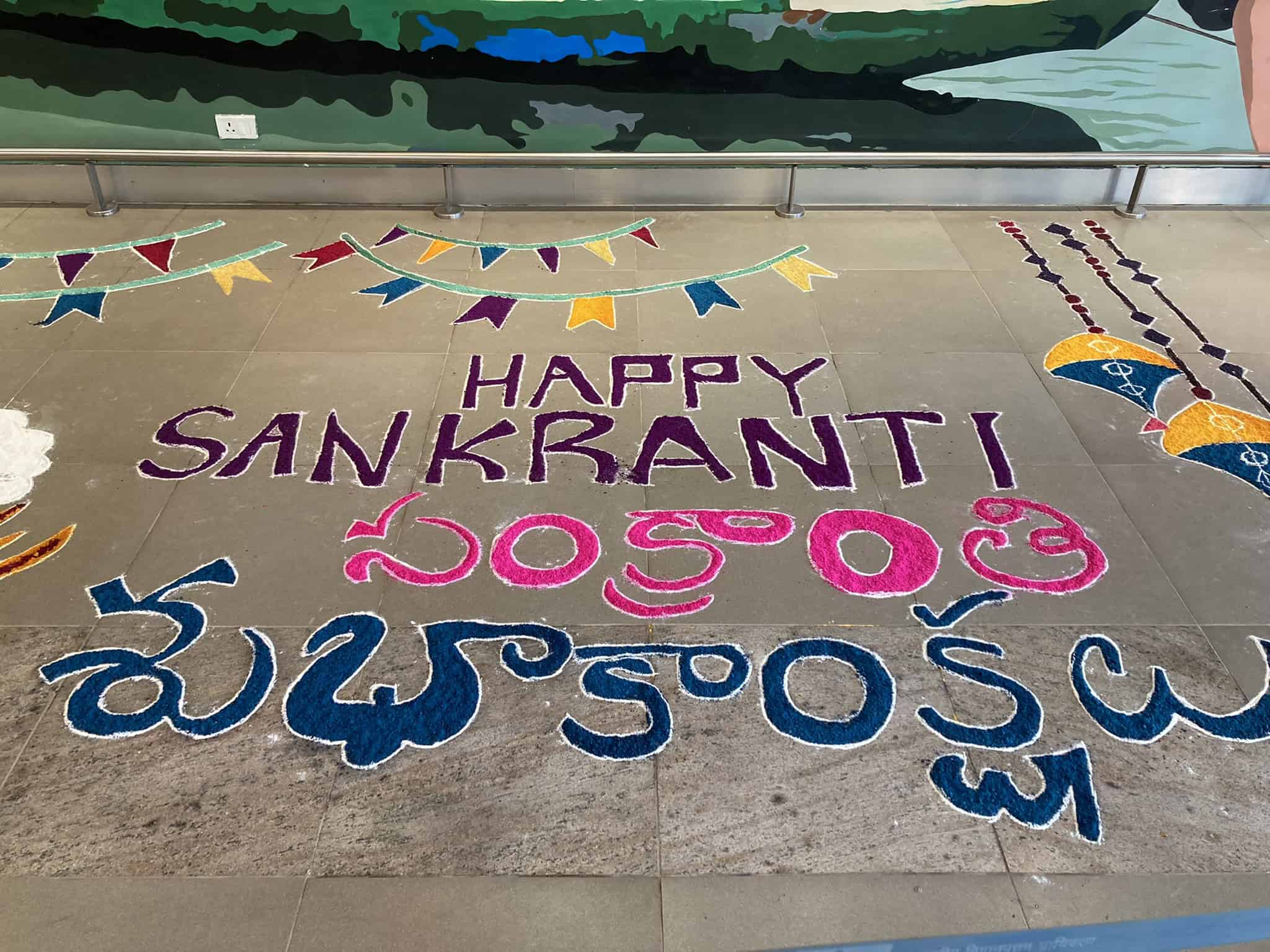
Makar Sankranti: Declutter Your Life, Embrace Brotherhood, and Lead with the Light of Your Heart
Significance Of Makar Sankranti The auspicious day of Makara Sankranti is the day dedicated to worship the Sun - whose light nourishes and sustains all life on this planet. Sankranti means Passage in Sanskrit. Sankranti comes every month of the solar year when...

How to Make Your Heart Pure: Spiritual Lessons for Kids Explained in Satsang
- 1. Obeying the rules of life.2. Preforming one's duties.3. Seeing work as workship.4. Chanting lord's name again and again.5. Trusting God as trusted and beloved to all.6. Seeing the blessings of Lord in everything.7. Love God as much as you love yourself....

Unlock the Secrets of a Well-Lived Life: Ancient Hindu Wisdom from Sanatana Dharma to Become Your Optimal Self
The Perfect Harmony A person's state is said to be in perfect harmony if they are able to balance, both Aahaara - Eating and Vihaara - Resting. Aahara is for the body whereas Vihaara is for the mind. Our personal and professional wellbeing depends on our moral...

How God Stays In and Out of the Frame: The Spiritual Life of Indians in the Diaspora
- 0 - Hi, I’m Rachana. Its been my dream for years to do something to consciously create a better future where every one of us is excited about our own potential. My challenge to everyone is that they aspire for their personal best and leave a legacy of their...

Sri Krishna’s Timeless Wisdom on True Love: Life-Changing Lessons from the Bhagavad Gita
- What Is Love? Krishna explains pure love in this way in the Gita. "The spirit of pure love is to love without condition, to speak without intention, to give without reason, and to care without expectation." As long as humans have existed on earth, there's...

What Western Thinkers Really Say About Advaita Vedanta and Hinduism – Mind-Blowing Insights!
- Thoughts On Hinduism And Eastern Philosophy Some of the most famous people in the world are fascinated by India and Sanatana Dharma. Find out how and why. What distinguishes the Vedanta philosophy from all other philosophies is that it is at the same...

The Divine Power of Bhasma: Unlocking Lord Shiva’s Sacred Symbolism and Spiritual Secrets
Who Is Lord Siva? "Lord Siva is the Absolute Self. The third eye refers to the transcendental vision, wherein the world is negated. He is the destroyer of time, space and causation. He drinks the poison of duality and converts it in to His being. The Ganga on...

Stunning Modern Mehndi Designs Every Bride Will Love – Creative Henna Art Ideas
- A New Age Twist: The Digital Mehendi https://twitter.com/Ravisutanjani/status/1696436821134352651?s=20 - 0 - The Indian American Life

The Science Behind Namaste: Why This Ancient Greeting is More Powerful Than You Think
- In Hindu culture, people greet each other by joining their palms – termed as “Namaskar.” The general reason behind this tradition is that greeting by joining both the palms means respect. However, scientifically speaking, joining both hands ensures joining...