
Sanskrit: The Language Of Hindu Scriptures
Languages are the soul of a nation, and Indian languages are a reflection of our unity in diversity. India is the only country having “Unity in Diversity”. With so many languages, cultural change, functions etc etc.. Hindu civilization is the oldest civilization and the only one which is still existing from the past 6000 years (As Civilizations like Mesopotamian, Egyptian, Roman, Greek etc. perished with time).
The thought that languages are the soul of a nation would only help to unite and cement the bonding and feeling of belongingness. No country in the world comes close to matching the linguistic diversity of India just the number of ‘mother tongues’ in the country.
Languages are linked to each other by shared words or sounds or grammatical constructions. All Indian scripts come from the same script Brahmi. Writing came much later to India than to other parts of the world. Hence, both Tamil and Sanskrit have extremely strong oral traditions. The Sanskrit language is called Devbhasha. The theory is that the members of each linguistic group have descended from one language, a common ancestor.
–

–
Hindi (mother language from Sanskrit) is so concocted language and has progressively subsumed many original languages by classifying them as ‘dialects’. Language is an everlasting emotion. It seems we feel much comfort when we communicate in our mother tongue (Native language).
Indian languages have been in existence and use for many centuries, and are well established. Their uniqueness lies in their originality, authenticity in terms of structure/grammar, richness in content and meaning belongs to Sanskrit. All Indian languages fall into one of these 4 groups; Indo-Aryan, Dravidian, Sino-Tibetan and Afro-Asiatic. Sanskrit is classical language of South Asia that belongs to the Indo-Aryan branch of the Indo-European languages.
Sanskrit is also widely used in Jainism, Buddhism, and Sikhism. Hindi was known by different names at different stages of its evolution in different eras. It was known as Apabhramsa at its earliest stage. Sanskrit is most logical language which follows a well-structured grammar system using separate tenses for one person, two persons and multiple persons.
The various vowels and consonants that make up Sanskrit words represent these core sounds, known as bijas. A Sanskrit word, is therefore not merely a word chosen to name something, but an actual reflection of the inherent ‘sound’ of that object, concept or phenomena. In fact, proper, or rather, perfect, pronunciation of Sanskrit words, it is told, can replicate the exact nature, or essence, of that which it is referring too.
–
“India was the motherland of our race, and Sanskrit the mother of Europe’s languages: she was the mother of our philosophy; mother, through the Arabs, of much of our mathematics; mother, through the Buddha, of the ideals embodied in Christianity; mother, through the village community, of self-government and democracy. Mother India is in many ways the mother of us all.” ~ Will Durant, World Historian
–

–
Sanskrit For Natural Language Processing
Sanskrit means ‘The most perfected and cultured’ among languages. It is the root of the entire IndoAryan branch in Asia and systems of European languages. The ten mandalas of the oldest literature of the world, the Rig Veda, is the basis of 10th or dasam, the unit of decimal system of the world.
To name a few only, words (Sabda or Soft) and their embedded ideas (Artha or Worth / Hard) like takkhana (to design and sculpture), jara (old age), asthi (bones), dhatri (child caretaker), kalasa (class taxonomy) are the bases of later knowledge systems namely ‘Technology’, ‘Geriatrics’, ‘Osteopathy’, ‘Paediatrics’
and ‘Ecclesia’, respectively.
Source: INDIAN INSTITUTE OF TECHNOLOGY KHARAGPUR
Chinmaya Niketan Atlanta Samskritam Adult’s Class 2019-2020 | Swayamvaram
–
TEXT SOURCE: Whatsapp Forward
– 0 –
About Sanatana Dharma
ब्रह्म सत्यं जगन्मिथ्या जीवो ब्रह्मैव नापरः।
अनेन वेद्यं सच्छास्त्रमिति वेदान्तडिण्डिमः॥
Brahman alone is real; the universe is mithya – neither fully real nor unreal, but an appearance. The individual self (jiva) is none other than Brahman itself, not separate or different. This is the true teaching of the scriptures, as revealed by Vedanta. ~ Verse 20 from Brahma Jnānavali Māla

Ugadi & Gudi Padwa: Celebrate the Hindu Lunar New Year with 9 Days of Spring Festivities!
Shobhakruthu Naama Samvatsaram: 2023 According to the Hindu Calendar, Ugadi falls on the first day of the Chaitra month. Yugadi means the beginning of new age. The day also marks the beginning of spring season, which is considered to be the first of all...

The Mahabharata: Ancient Wisdom for Modern Life – Timeless Lessons on Human Philosophy and Existence
- It is said in the texts that 80% of the fighting male population of the civilization was wiped out in the eighteen days Mahabharata war. Sanjay, at the end of the war went to the spot where the greatest war took place; Kurukshetra. He looked around and...

Eastern Philosophers Reveal Timeless Wisdom on Advaita Vedanta and Hinduism – Must-Read Insights!
What Hindu Scriptures Say The wise neither grieve for the dead nor for the living. I myself never was not, nor thus, nor all the princes of the earth; nor shall we ever hereafter cease to be. ~ Bhagavad Gita The Brahman forms everything that is living or...

Unlock the Secrets of Modern India: Must-Read Books on Vedic History and Indian Heritage
Books By Indian Authors Breaking India By Rajiv Malhotra & Aravindan Neelakandan Snakes in the Ganga: Breaking India 2.0 By Rajiv Malhotra & Vijaya Viswanathan India, that is Bharat: Coloniality, Civilization, Constitution By J. Sai Deepak Urban Naxals:...

Will God Eat Our Offerings? Lord Krishna Reveals the Truth Behind Naivedyam and Prasad
What Is Prasad? Before eating, a lot of Hindus, offer the food first to God before they consume it. But the question is, will God come and eat our offerings? An attempt is made here to understand the predicament. What follows below is a Guru-Shishya...

Ancient Wisdom for Modern Life: Unlocking Timeless Scriptures with Ami Ganatra
Know Your Scriptures Workshop Timestamp Of Questions 3:04 - QUESTION 1: Bad things happen to good people and good things happen to bad people. What convincing arguments do we find in our scriptures that guide us to follow the path of dharma in...
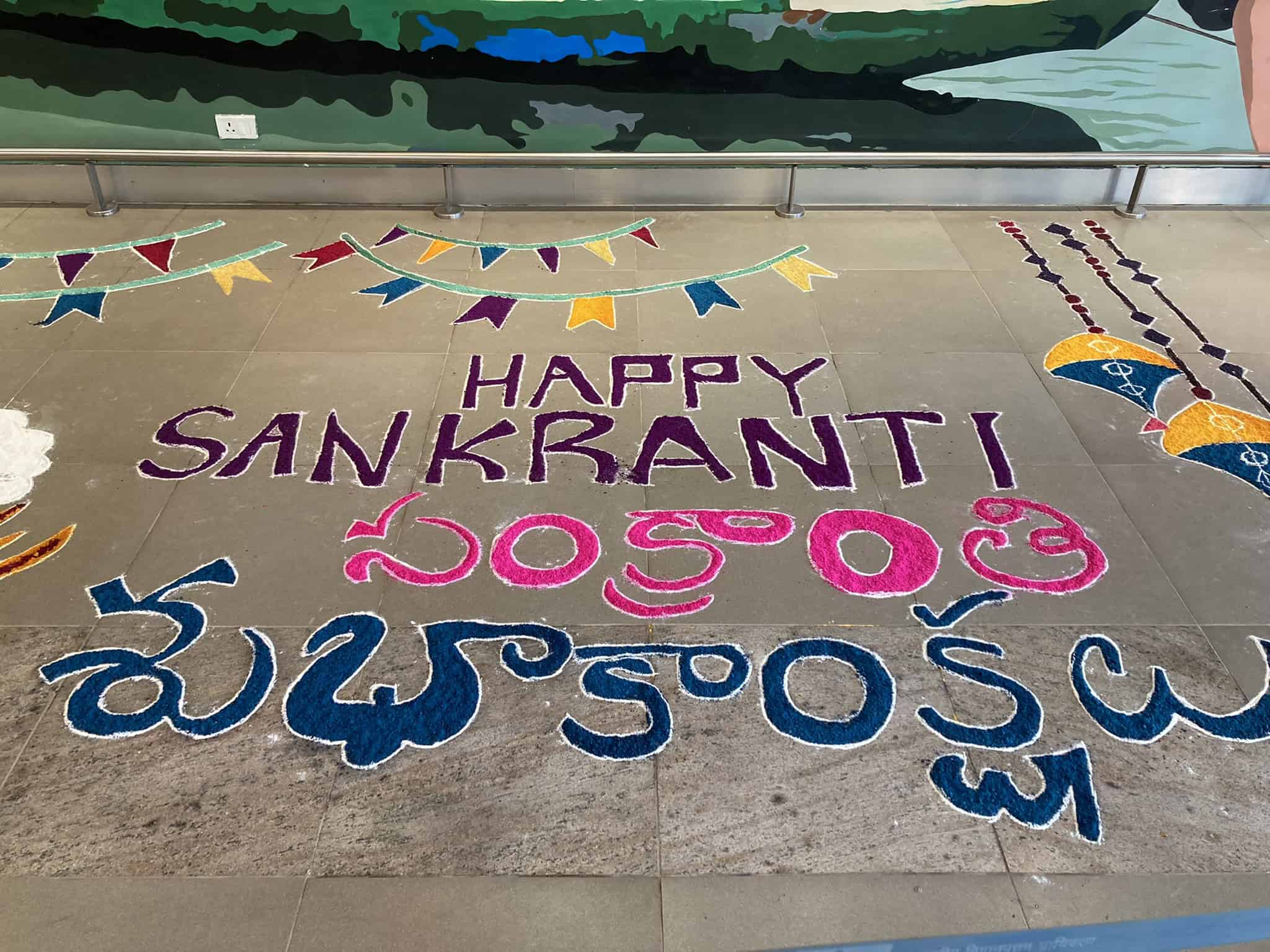
Makar Sankranti: Declutter Your Life, Embrace Brotherhood, and Lead with the Light of Your Heart
Significance Of Makar Sankranti The auspicious day of Makara Sankranti is the day dedicated to worship the Sun - whose light nourishes and sustains all life on this planet. Sankranti means Passage in Sanskrit. Sankranti comes every month of the solar year when...

How to Make Your Heart Pure: Spiritual Lessons for Kids Explained in Satsang
- 1. Obeying the rules of life.2. Preforming one's duties.3. Seeing work as workship.4. Chanting lord's name again and again.5. Trusting God as trusted and beloved to all.6. Seeing the blessings of Lord in everything.7. Love God as much as you love yourself....

Unlock the Secrets of a Well-Lived Life: Ancient Hindu Wisdom from Sanatana Dharma to Become Your Optimal Self
The Perfect Harmony A person's state is said to be in perfect harmony if they are able to balance, both Aahaara - Eating and Vihaara - Resting. Aahara is for the body whereas Vihaara is for the mind. Our personal and professional wellbeing depends on our moral...

How God Stays In and Out of the Frame: The Spiritual Life of Indians in the Diaspora
- 0 - Hi, I’m Rachana. Its been my dream for years to do something to consciously create a better future where every one of us is excited about our own potential. My challenge to everyone is that they aspire for their personal best and leave a legacy of their...

Sri Krishna’s Timeless Wisdom on True Love: Life-Changing Lessons from the Bhagavad Gita
- What Is Love? Krishna explains pure love in this way in the Gita. "The spirit of pure love is to love without condition, to speak without intention, to give without reason, and to care without expectation." As long as humans have existed on earth, there's...

What Western Thinkers Really Say About Advaita Vedanta and Hinduism – Mind-Blowing Insights!
- Thoughts On Hinduism And Eastern Philosophy Some of the most famous people in the world are fascinated by India and Sanatana Dharma. Find out how and why. What distinguishes the Vedanta philosophy from all other philosophies is that it is at the same...

The Divine Power of Bhasma: Unlocking Lord Shiva’s Sacred Symbolism and Spiritual Secrets
Who Is Lord Siva? "Lord Siva is the Absolute Self. The third eye refers to the transcendental vision, wherein the world is negated. He is the destroyer of time, space and causation. He drinks the poison of duality and converts it in to His being. The Ganga on...

Stunning Modern Mehndi Designs Every Bride Will Love – Creative Henna Art Ideas
- A New Age Twist: The Digital Mehendi https://twitter.com/Ravisutanjani/status/1696436821134352651?s=20 - 0 - The Indian American Life

The Science Behind Namaste: Why This Ancient Greeting is More Powerful Than You Think
- In Hindu culture, people greet each other by joining their palms – termed as “Namaskar.” The general reason behind this tradition is that greeting by joining both the palms means respect. However, scientifically speaking, joining both hands ensures joining...

What the Lakota Tribe Teaches Us About Our Deep Connection to Nature – Lessons for a Better Life
- 1) When the heart went away from nature, it became hard. The lack of respect for nature’s softening influences soon led to lack of respect for humanity. 2 Knowledge was in all things. The world was a library and its books were the animals, the birds, the...

Arangetram: The Grand Debut of Bharatanatyam – A Celebration of Art, Discipline, and Tradition
- Shri Gurubhyo namaha. The origin of the word “Bharatanatyam” is a derivative of the four most important aspects of the dance - Bhaavam, or emotion, Ragam, or melody, Talam, meaning Rhythm, and Natyam, meaning dance. Thus, as its name indicates, Bharatanatyam...

Unlocking the Holy Trinity of Hindu Scriptures: The Essence of Upanishads and Vedanta Explained
- You are what your deep, driving desire isAs your desire is, so is your willAs your will is, so is your deedAs your deed is, so is your destiny ~ Brihadaranyaka Upanishad, 4.4.5 - Prasthana Trayam: The Trinity Of Holy Scriptures 1. The Brahma...