

What Is Prasad?
Before eating, a lot of Hindus, offer the food first to God before they consume it. But the question is, will God come and eat our offerings?
An attempt is made here to understand the predicament. What follows below is a Guru-Shishya conversation:
The shishya who doesn’t believe in God, asks his Guru: “Does God accept our ‘naivedyam’ (offerings)? If God eats away the ‘prasadam’ then from where can we distribute it to others? Does God really consume the ‘prasadam’, Guruji?”
The Guru doesn’t reply to the shishya’s question. Instead, he asks him to prepare for the day’s classes.
That day, the Guru was teaching his class about the ‘upanishads’.
He teaches his students the mantra: “poornamadam, poornamidam,
poornasya poornaadaaya….”
ॐ पूर्णमदः पूर्णमिदम् पूर्णात् पूर्णमुदच्यते |
पूर्णस्य पूर्णमादाय पूर्णमेवावशिष्यते ||
ॐ शान्तिः शान्तिः शान्तिः ||
and explains it as:
“Everything came out from Poorna or Totality. What is visible is the infinite. What is invisible is also the infinite. Out of the Infinite Being the finite has come, yet being infinite, only infinite remains.” ~ Ishavasya upanishad
Later, everyone is instructed to practice the mantra by heart. So all the boys started reciting and practicing.
After a while, the Guru comes back and asks the very student who had raised his doubt about Naivedyam to recite the mantra without seeing the book. The shishya chants the mantra.
The Guru asks with a smile on his face, “Did you really memorize everything as it is in the book?”
The shishya responds: “Yes Guruji, I’ve recited whatever is written as in the book.”
The Guru asked: “If you have taken every word into your mind then how come the words are still there in the book?”
The shishya smiles.
The Guru explains further:
The words in your mind are in the SOOKSHMA STHITI (unseen form).
The words in the book are there in the STOOLASTHITI (seen).
GOD too exists around us in the ‘sookshma sthiti’. The offering made to Him is done in ‘stoola sthiti’.
Thus, God takes the food in ‘sookshmam’, in sookshma stithi. Hence the food doesn’t become any less in quantity.
While GOD takes it in the sookshma sthiti, We take it as ‘prasadam’ in sthoola sthiti.
Hearing this the shishya felt guilty for his disbelief in God and surrendered himself to his GURU.
–

A Vegetarian Meal Offered As Prasad
–
From The Physical Realm To Divinity
When Bhakti enters Food,
Food becomes Prasad…
When Bhakti enters Hunger,
Hunger becomes a Fast…
When Bhakti enters Water,
Water becomes Charanamrit…
When Bhakti enters Travel,
Travel becomes a Pilgrimage…
When Bhakti enters Music ,
Music becomes Kirtan…
When Bhakti enters a House,
House becomes a Temple…
When Bhakti enters Actions,
Actions become Seva…
When Bhakti enters in Work,
Work becomes Karma…
When Bhakti enters a Man,
Man becomes Human…
… Eeshwaro rakshath
From The Physical Realm To Divinity
Here’s an excerpt about Prasad from the book: Vegetarianism: Recommended in Vedic Scripture By Stephen Knapp
LORD KRISHNA’S INSTRUCTIONS ON WHAT TO EAT IN BHAGAVADGITA
Many people question what Lord Krishna says, or if He says anything at all, about whether to be vegetarian or not. Actually, He provides some important insights. Lord Krishna says in Bhagavad-Gita: “The devotees of the Lord are released from all kinds of sins because they eat food which is offered first for sacrifice. Others, who prepare food for personal sense enjoyment, verily eat only sin.” (Bg.3.13)
So, food should be first offered in sacrifice, or ritual, but what ritual is this? He explains quite clearly that all food, as well as anything else, should first be offered to Him. “If one offers Me with love and devotion a leaf, a flower, fruit or water, I will accept it. O son of Kunti, all that you do, all that you eat, all that you offer and give away, as well as all austerities that you may perform, should be done as an offering unto Me. In this way you will be freed from all reactions to good and evil deeds, and by this principle of renunciation you will be liberated and come to Me.” (Bg.9.2628)
Herein it is clear that food should be first prepared for offering the Lord, but with love. You can often see this in temples wherein the food is cooked with the intention of preparing it with love and then offering it before the Deities of Krishna with love. Thereafter, the devotees take the remnants and distribute amongst them as offered food. This becomes prasadam, or the spiritually surcharged food that is the mercy of the Lord, and which purifies our consciousness by honoring it through the process of respectfully eating it.
Furthermore, what is meant to be offered to the Lord is outlined as a leaf (most vegetables consist of leafy substances), flowers or fruits (which consist of grains, nuts, and fruits and juices), and water.
Gita Chapter 9: Verses 26 To 28
पत्रं पुष्पं फलं तोयं यो मे भक्त्या प्रयच्छति |
तदहं भक्त्युपहृतमश्नामि प्रयतात्मन: || 26||
patraṁ puṣhpaṁ phalaṁ toyaṁ yo me bhaktyā prayachchhati
tadahaṁ bhaktyupahṛitam aśhnāmi prayatātmanaḥ
If one offers to Me with devotion a leaf, a flower, a fruit, or even water, I delightfully partake of that item offered with love by My devotee in pure consciousness.
यत्करोषि यदश्नासि यज्जुहोषि ददासि यत् |
यत्तपस्यसि कौन्तेय तत्कुरुष्व मदर्पणम् || 27||
yat karoṣhi yad aśhnāsi yaj juhoṣhi dadāsi yat
yat tapasyasi kaunteya tat kuruṣhva mad-arpaṇam
Whatever you do, whatever you eat, whatever you offer as oblation to the sacred fire, whatever you bestow as a gift, and whatever austerities you perform, O son of Kunti, do them as an offering to Me.
शुभाशुभफलैरेवं मोक्ष्यसे कर्मबन्धनै: |
संन्यासयोगयुक्तात्मा विमुक्तो मामुपैष्यसि || 28||
śhubhāśhubha-phalair evaṁ mokṣhyase karma-bandhanaiḥ
sannyāsa-yoga-yuktātmā vimukto mām upaiṣhyasi
By dedicating all your works to Me, you will be freed from the bondage of good and bad results. With your mind attached to Me through renunciation, you will be liberated and will reach Me.
Food According To Hinduism
Read about it HERE.
–
Cited Works: A Whatsapp Forward
The Book: Vegetarianism: Recommended in Vedic Scripture By Stephen Knapp
– 0 –
About Sanatana Dharma

How to Be a Modern Renaissance Man: Raghav Krishna Brhat’s Yogic Secrets to Holistic Growth
- Refine Your Instrument Workshop Let's gather to find out from Raghava Krishna, what it takes to be a modern human with deep roots in our cultural traditions. Raghava Krishna is the CEO and Founder of Bṛhat बृहत्. He has 21 yrs of experience spanning...

Ugadi & Gudi Padwa: Celebrate the Hindu Lunar New Year with 9 Days of Spring Festivities!
Shobhakruthu Naama Samvatsaram: 2023 According to the Hindu Calendar, Ugadi falls on the first day of the Chaitra month. Yugadi means the beginning of new age. The day also marks the beginning of spring season, which is considered to be the first of all...

The Mahabharata: Ancient Wisdom for Modern Life – Timeless Lessons on Human Philosophy and Existence
- It is said in the texts that 80% of the fighting male population of the civilization was wiped out in the eighteen days Mahabharata war. Sanjay, at the end of the war went to the spot where the greatest war took place; Kurukshetra. He looked around and...

Eastern Philosophers Reveal Timeless Wisdom on Advaita Vedanta and Hinduism – Must-Read Insights!
What Hindu Scriptures Say The wise neither grieve for the dead nor for the living. I myself never was not, nor thus, nor all the princes of the earth; nor shall we ever hereafter cease to be. ~ Bhagavad Gita The Brahman forms everything that is living or...

Unlock the Secrets of Modern India: Must-Read Books on Vedic History and Indian Heritage
Books By Indian Authors Breaking India By Rajiv Malhotra & Aravindan Neelakandan Snakes in the Ganga: Breaking India 2.0 By Rajiv Malhotra & Vijaya Viswanathan India, that is Bharat: Coloniality, Civilization, Constitution By J. Sai Deepak Urban Naxals:...

Ancient Wisdom for Modern Life: Unlocking Timeless Scriptures with Ami Ganatra
Know Your Scriptures Workshop Timestamp Of Questions 3:04 - QUESTION 1: Bad things happen to good people and good things happen to bad people. What convincing arguments do we find in our scriptures that guide us to follow the path of dharma in...
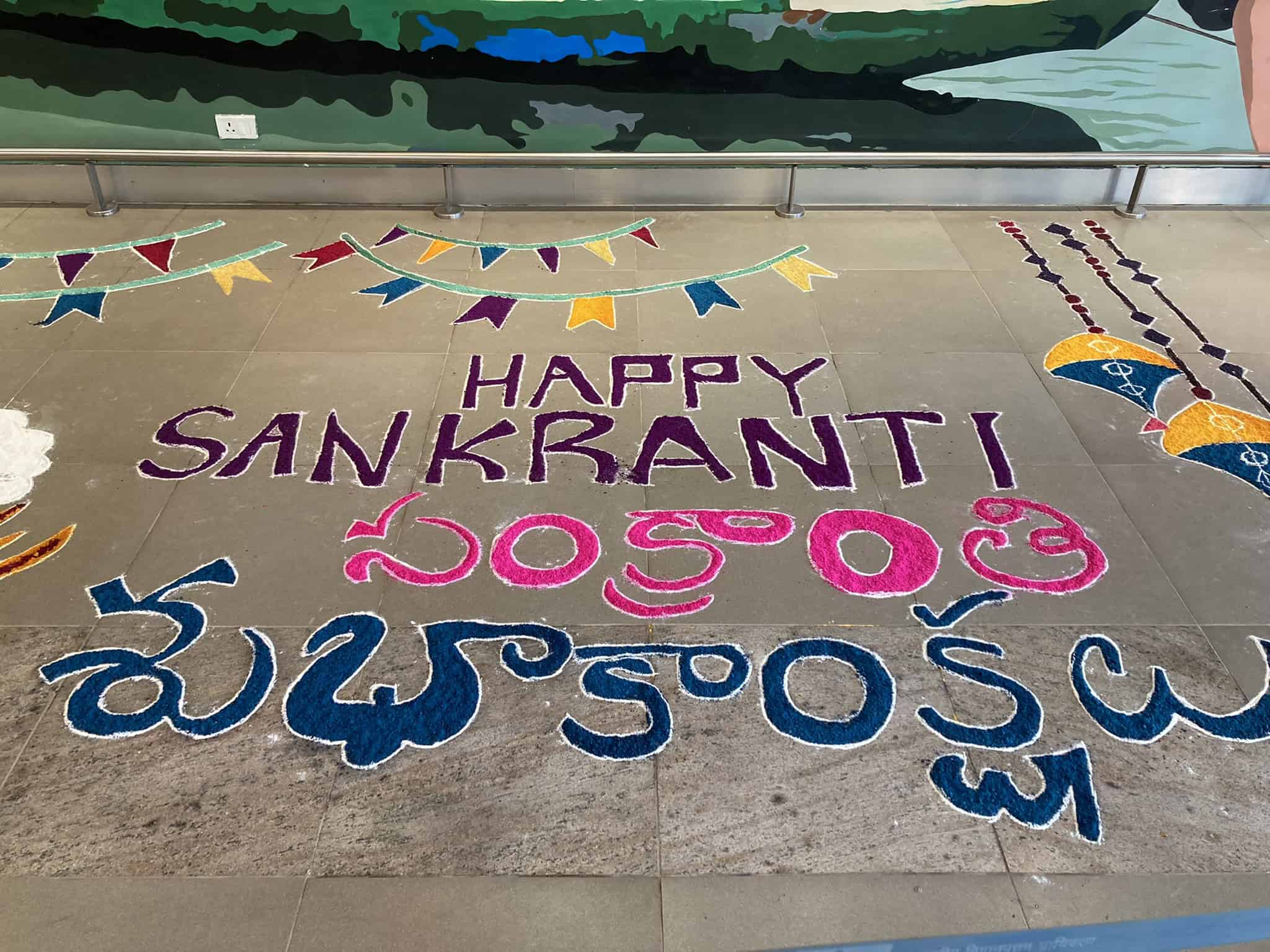
Makar Sankranti: Declutter Your Life, Embrace Brotherhood, and Lead with the Light of Your Heart
Significance Of Makar Sankranti The auspicious day of Makara Sankranti is the day dedicated to worship the Sun - whose light nourishes and sustains all life on this planet. Sankranti means Passage in Sanskrit. Sankranti comes every month of the solar year when...

How to Make Your Heart Pure: Spiritual Lessons for Kids Explained in Satsang
- 1. Obeying the rules of life.2. Preforming one's duties.3. Seeing work as workship.4. Chanting lord's name again and again.5. Trusting God as trusted and beloved to all.6. Seeing the blessings of Lord in everything.7. Love God as much as you love yourself....

Unlock the Secrets of a Well-Lived Life: Ancient Hindu Wisdom from Sanatana Dharma to Become Your Optimal Self
The Perfect Harmony A person's state is said to be in perfect harmony if they are able to balance, both Aahaara - Eating and Vihaara - Resting. Aahara is for the body whereas Vihaara is for the mind. Our personal and professional wellbeing depends on our moral...

How God Stays In and Out of the Frame: The Spiritual Life of Indians in the Diaspora
- 0 - Hi, I’m Rachana. Its been my dream for years to do something to consciously create a better future where every one of us is excited about our own potential. My challenge to everyone is that they aspire for their personal best and leave a legacy of their...

Sri Krishna’s Timeless Wisdom on True Love: Life-Changing Lessons from the Bhagavad Gita
- What Is Love? Krishna explains pure love in this way in the Gita. "The spirit of pure love is to love without condition, to speak without intention, to give without reason, and to care without expectation." As long as humans have existed on earth, there's...

What Western Thinkers Really Say About Advaita Vedanta and Hinduism – Mind-Blowing Insights!
- Thoughts On Hinduism And Eastern Philosophy Some of the most famous people in the world are fascinated by India and Sanatana Dharma. Find out how and why. What distinguishes the Vedanta philosophy from all other philosophies is that it is at the same...