

–
Asian/Indian families traditionally emphasize the importance of family membership, respect, and solidarity. These values are referred to as family obligations. Instead of promoting individual needs and personal identity, Asian/Indian families tend to have a family and group orientation. ~ Collectivistic Orientation (Sue & Sue, 2017)
–
Growing up in a Collective society
Children are expected to strive for family goals and not to engage in behaviors that would bring dishonor to the family. Generally, parents tend to show very little interest in the child’s viewpoint regarding family matters. Our culture very often undermines children as decision makers. Parenting styles tend to be authoritarian and directive. “I know what is best for my kid, I don’t need his input.” Is usually how some parents feel.
As children in our own countries, we were raised in an environment where expectations were high. We come from a culture where a successful career means (still mostly does) a degree in the Sciences. Art was something we do when we have some spare time. Grade Bs couldn’t have possibly entered our report cards. “How do you expect to succeed with a B?” Well, let’s say, we actually did really well in school or life. Then, instead of showing off our accomplishments, we’re taught to submit to a show of humility and modesty.
There’s nothing wrong with passing down culture from your generation to your child’s. But, what is culture if not food, rituals, festivals, Sunday school, and the values of the unbroken spirit, hard work and dedication?
Raising children in an Individualistic society
Conflicts arise when role modeling at micro (home) and macro (society) levels don’t match. Conflicts arise when parents who grow up in strict collective environments of the East raise children in the Western culture where individualism is highly coveted.
Most Asian and Indian homes tend to be very patriarchal whereas most schools encourage children to question and debate as they learn new things. When he moves from an environment of high expectations at home to a school, where there are high levels of tolerance even for not knowing things, the child is confused. This lack of congruency between messages the child receives at home, school and peers about expectations can be a big problem.
–

–
Balancing Culture and Community as Parents
Man’s control of nature external is Civilization. His control of nature internal is Culture. ~ Swami Chinmayananda
–
As adults, we don’t consciously draw a line at where we will stop in pushing our children. Its when we as parents don’t strike a balance with our expectations, our children suffer. Below are the strategies for improving a child’s self confidence and self esteem:
Respect your own culture:
Show the light from those who have walked in front of you. Be a role model to your own children and your community. Applaud your child’s curiosity and their drive to understand things and customs around them. Explain cultural contexts patiently.
Embrace yourself:
See humor in being different. You are one of many. There’s a reason why diverse teams in Global companies are successful. Explore your own strengths. Next, humanize yourself and share your own short comings with your children. (Of course, up to a certain extent that’s age appropriate.)
Practice self compassion:
Share tips on how to boost self confidence. “Smile, dress well and give. Assume no one’s judging, because no one can really.” Give honest and a compassionate review of tasks your children have completed. Tell them their inner voice of appreciation is always good enough. Ask them how they feel about themselves. And then reinforce your love for them.
Take their opinion:
And value them. Ask them to explain their preference. For example, when you’re grocery or clothes shopping with your child, ask him to choose one item over another, and then let him explain his preference. Show him that his ideas matter.
Beat the taboos:
Beat taboos about counseling and seeking help. Don’t dismiss their fears. Even the most high functioning kids might need to reach out. They might be meeting all expectations but silently struggling.
Set expectations:
Explain the difference between their duties and rights. The hardest thing to do is drawing a line. We all consciously know this discrepancy, but we don’t want to acknowledge it. We are anxious that our children might not realize their potential and tap into it.
–
Understand his environment:
The school provides a safe place for making and learning from their mistakes. And understand that his school environment is designed to allow him to thrive in all areas of psychological development and not just his academic achievements. So, don’t lament, “It feels like children here don’t have much desire to grow. They don’t want to excel. They’re very comfortable being mediocre. It feels like they don’t have the drive to succeed. They seem to be confident about the grades they get. They also want to feed us the same chill pill.”
Drop those Sky high standards:
Parents often wonder, “Why should I’ve to congratulate my child for stuff that he’s supposed to do anyway? How is having expectations having bad? Isn’t pressure important for growth? How else will a child know how far he can go?” See, having these thoughts is not the problem, taking them too far is.
Assess where he stands:
Is your child capable of what you’re pushing him to aim for? Does he have the potential for it? It might be hard to accept where he is or what he is capable of, but the first step in the wellbeing and mental happiness of the child is parents coming to terms with their expectations of the child. And every child is different. Are you falling into a comparison trap as a parent??
Let them set agendas:
Instead of telling everyone who’s willing to listen, “My daughter is going to MIT or GATech, if I can’t afford to send her out of state, then it has to be GA Tech.” Or, “My first one went to MIT, so its OK if the second one wants to go to GATech.” For a change, ask your child what his own agenda for his future is.
Accept them:
We discipline them using any of these three techniques: Shame, induction of guilt and withdrawal of laughter, hugs and smiles. Instead, take a break and learn to pick up on subtle cues in changes in moods and behaviors. They are the best predictors of anxiety.
“Good job” them periodically:
Even for the low grade in that test, encourage and positively reinforce them to do better next time. You didn’t hear “Good job,” while growing up. Agreed. But, its a learned behavior. We all can make a conscious effort to learn to do it. And better yet, offer them help with their pain points.
Reinforcements at home:
Non verbal cues are important. Act like you’re proud. There was a time when we would bring home good grades and my mother would make sweets for my sister and I. That’s one of the ways I knew my mother was proud of us. In America, they teach children to “Use your words.” So, that’s what they look for from you!
Don’t embellish:
For the smallest infractions that children do playfully, refrain from saying things like, “You’re being too Americanized.” Instead, if its their first mistake at a particular task, tell them how grateful you’re because they had a chance to fail by saying, “Now you can improve and learn from your mistakes.”
Quality time:
How much quality time are you spending with your child, without any distractions? Don’t be in denial about the influence his school and peers have on him. A majority of his waking hours are spent at school. So, thank them for their time when they agree to go for a bike ride with you.
Seek feedback:
Ask them feedback about how you’re doing as a parent. Tell them your goal is to raise happy confident children who realize and reach for their full potential. Keep these thoughts turned off, “I turned out OK, and I was raised in a strict household. So, my son will be OK, once he gets used to my expectations from him.”
Once again, communicate:
Watch for signs of trouble, ask your children to speak up, about what their fears, and what their ambitions are. The key is to open channels of communication to learn about each other. At the end of the day, the ONLY thing they want is a chance to interact with you with undivided attention.
– 0 –
About The Article Author:
Hi, I’m Rachana. Its been my dream for years to do something to consciously create a better future where every one of us is excited about our own potential. My challenge to everyone is that they aspire for their personal best and leave a legacy of their work through their contributions to mankind.
One more thing. In December of 2044, I hope to win the Nobel.
Will you join me on this journey of growth and transformation?
Namasté.
COLLABORATION - A Pillar of FutureSTRONG Academy
Our children will one day face the real world without our support. Academic development is not the only skill they will need in the real world where people skills like taking the lead, emotional intelligence and a strong moral compass will determine who will shine. So, as parents who want to raise well rounded adults, we want to give them the right tools for their personal development.
Here is COLLABORATION as described as the 6 C’s of Future STRONG.
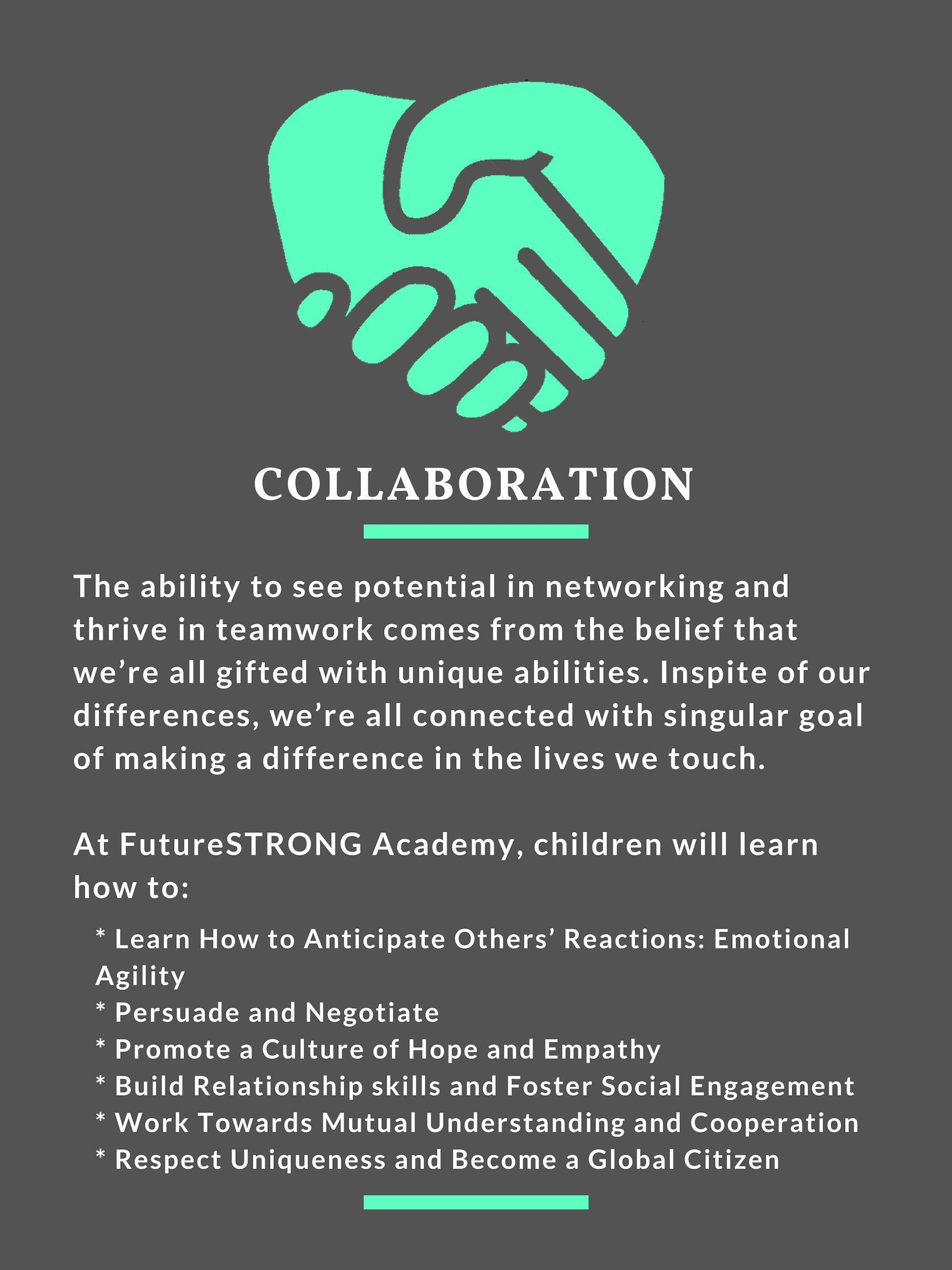
Find Below Better Strategies On COLLABORATION

How Leaders Can Stay Relevant by Embracing AI: Strategies for Bridging the Gap Between Perception and Reality
– Want To Listen To The Article Instead? - Leading with AI: Skills for Executives This timely Forbes article underscores a significant disconnect between executive perceptions and the reality of employee AI usage in the workplace. It highlights that...

Why Gen Z Is Anxious and What Jonathan Haidt Says We Must Do About It 🤳📵
- Want To Listen To The Article Instead? - The Anxious Generation: Fighting Big Tech for Young Minds 📵 This article from Guardian primarily focuses on Jonathan Haidt, author of "The Anxious Generation," and his urgent message regarding the...

Unlock Your Ikigai: The Secret to Finding Your Life’s Purpose and True Fulfillment
https://youtu.be/w6sVR9yQd-4 - Want To Listen To The Article Instead? - Ikigai: A Reason For Being The Japanese concept of Ikigai when translated means "a reason for being." There are four core elements that contribute to the concept of Ikigai....

Mastering Expectations, Boundaries, and Intentions: Your Guide to a Balanced and Fulfilling Life
- A Guide to Balanced Living Expectations. They’re the silent architects of our lives, shaping how we move through the world. They can lift us up, propelling us toward our goals, or they can weigh us down, leaving us tangled in disappointment when reality...

Are You a Hedgehog or a Fox? How to Think Deeply in a World That Won’t Stop Distracting You
- Isaiah Berlin’s Enduring Insight In his influential essay "The Hedgehog and the Fox", Isaiah Berlin borrows a line from the ancient Greek poet Archilochus: “The fox knows many things, but the hedgehog knows one big thing.” With this simple aphorism, Berlin...

AI Is Coming for White-Collar Jobs – And No One’s Ready ✨✨
https://youtu.be/JYUV_im7TtM - Want To Listen To The Article Instead? - 🤖 AI and the White - Collar Job Reckoning Artificial intelligence is on the brink of reshaping the job market - and not in subtle ways. In a stark warning, Dario Amodei, CEO...

Why Naval Ravikant Says If You’re Unsure, It’s a No – The Decision-Making Rule That Changes Everything 🤔🎯✅
- Want To Listen To The Article Instead? - The Almanack of Naval Ravikant 🤔 The book "The Almanac of Naval Ravikant" by Eric Jorgenson can be described as a guide to wealth and happiness. The text visible from the book suggests that when faced...

Transform Your Life with These 8 Timeless Japanese Philosophies for Growth and Peace ⛩️
- Want To Listen To The Article Instead? - Eight Japanese Life Philosophies ⛩️ This is a discussion on the eight distinct Japanese philosophies intended to positively influence one's life. Each philosophy is identified by its Japanese name and...

Aaron Swartz’s Theory of Change Will Reshape How You Think About Goals
- Want To Listen To The Article Instead? - Aaron Swartz: Theory of Change (Raw Thought) Aaron Swartz's Theory of Change contrasts a typical forward-thinking theory of action with a more effective backward-thinking theory of change. Swartz argues...

Why Gen Z Is Turning to AI for Emotional Support Instead of Dating 🤳
- Want To Listen To The Article Instead? - Gen Z, AI, and Emotional Support 🤳 This discussion sheds light on how Generation Z is increasingly turning to artificial intelligence for emotional support. It explores the possibility that AI may be...

Massive Survey Reveals Alarming Link Between Smartphones and Youth Mental Health Crisis 📵📵
- Want To Listen To The Article Instead? - Youth Mental Health and Technology Consensus Survey 📱 Author and professor Jonathan Haidt discusses findings from the largest expert survey to date on youth mental health, which reveals broad...

Nietzsche on Suffering and Happiness: The Hidden Connection Between Pain and Comfort
https://youtu.be/40sSAKwR-ss - Want To Listen To The Article Instead? - If you experience suffering and displeasure as evil, hateful, worthy of annihilation, and as a defect of existence, then it is clear that besides your religion of pity you...
Trackbacks/Pingbacks