

–
*** Source: Lessons of Life of Bhakthi (Devotion) from the Ramayana: By Swami Tejomayananda, an Indian spiritual leader and head of Chinmaya Mission. These are my notes on the discourse I attended when he visited Atlanta in July of 2015.
–
I feel that it is my duty to submit my notes here for public consumption. The discourse is secular in nature and the God is metaphorical when you understand the deep meaning of what he communicates through the essence of the Karma Yoga as described in the story of Ramayana.
The importance to liturgy and it’s non-existent place in the “devotion to the supreme” when no transformation to the inner self is achieved was clearly explained. The usage of the word Hinduism was kept to a minimum, which I thoroughly appreciated considering the word doesn’t truly describe what the scriptures have wanted the “religion” to be called. If it were upto me, I would pick Dharma, the philosophy of discovering the true nature of oneself. Swami concludes by giving us the secrets to true inner transformation.
–
The philosophy of Karma Yoga is explained as a story book narrative in one of the Hindu Scriptures Ramayana. It is broken down into Gyana (Knowledge), Bhakti (Devotion) and Seva (Service). It is defined by many characters of the story that service is love made visible. It teaches love not ‘because’, but ‘inspite’.
–
KINDS OF DEVOTIONS:
Bhakti is divided into Devotion, the Devotee and the concept of realizing God. Bhakti is devotion in the form of love, trust, respect. In Sanskrit, they translate to Prem, Shraddha and Samman.
–
KINDS OF DEVOTEES:
I
This person is the most perfect devotee. Any creature, any being, any human, in this person’s line of vision, all and anything is divine for him.
II
This person has a few categories he draws his subjects into. His feelings are not uniform towards everyone. For him, God is supreme. He has love (PREM) for some, he extends his friendship (MAITRI) for some and shows pity (KARUNA) for others. And he leaves a few untouched souls in his wake. (UPEKSHA).
III
Then the third category is what we call a beginner, he is a Saamanya Bhakth. He is a novice and believes in the ritualistic form of devotion.
–
Realizing GOD:
The knowledge about God comes from Love and Compassion. Life is a jungle and it’s easy to get lost. Guidance from spiritual masters is important to find the right path to your destination.
Ears: Beginners of the journey in inner transformation are encouraged to start with listening. Ears are like oceans. It does not matter where water comes from, whether the rain or the river, the ocean accepts it. In the same sense, a real devotee needs to hear the philosophy of Karma and Bhakti Yoga many times. When a child is successful, the mother cannot get enough of praise for him, her ears are always thirsty for it. Can you ask a fish if its bored of water? It is it’s lifeline.
Eyes: Those who have made their eyes like the Chaataka Pakshi (Chaataka Bird). It waits for a particular cloud and drinks water only from that one. The cloud should be under the Swathi Nakshatra (The Star called Swathi). It ignores all other clouds and rivers. Krishna’s Gopikas (Girl friends) were personification of Lord Krishna’s vision. Ramakrishna Paramahamsa wrote in his autobiography about losing a day because he didn’t have the vision of what he wanted to be. Eyes that can’t see are like the eyes of a peacock, only for show.
Speech: The lake of Ramayana, Manasarovar is filled with the glories of the Lord. The swan only picks up the pearls that are floating on it. Unlike the crows which pick up debris.
Nose: Flowers, Garlands, Agarbathis, Sandlewood. Smell and sense only the best flavors.
The Guru versus God: God will be there when Guru thinks he is greater than God. Have you ever come across such a place?
God is where there is no place for attachment: Where feelings like hypocrisy, desire, pretension, anger, ego, betrayal, greed, infatuation, agitation don’t exist.
Sometimes the same things that we had enjoyed earlier cannot give joy anymore. Upanishads tell us that which is infinite can be of fullness. So that is something solid, and has a form that cannot be a source of true and complete happiness.
What we greedily accumulate, we dispose of quickly in garage sales.
God lives where there is love for everyone: Upanishads say that all beings start loving those who help everyone.
God lives where equanimity exists: Inspite of joy or sorrow.
Causes of sorrow: Health, wealth, family and insult.
Causes of joy: Wealth, love and praise.
Equanimity is being unaffected by praise or insult. Detachment from every emotion. Such a person thinks in these lines before he speaks:
Is it necessary that I speak now? Is what I am about to say the truth? How can I tell the truth in a pleasant manner?
God lives with a person who looks at other man’s wife as mother: When a disciple of Swami Vivekananda, asked him to marry him, so she can give birth to a great and delightful man like him, he asked her to take him as his son. If you consider yourself the son of your mother, your love is duty. But if your mother is God to you, it is devotion. Bhakthi.
God lives where other peoples’ wealth is treated as poison: Don’t be jealous, don’t think of others’ property. Stealing or smuggling is hardwork, but it is immoral, unconstitutional and illegal.
God lives in everything even those who have Guna Dosha (Vices): There are many opposites in the world. Virtues and Vices exist, they are called guna dosha. Lots of food is poison, but poison is sometimes good medicine.
There was once a man who lived in a village who was the best person anyone could ever meet. All the villagers were perplexed when he was never getting married. When someone asked him why, he answered, “I am in search of a perfect wife!”
There is good even in the Devil? It is his consistency in scaring us.
God is present for whom you are the BE all, and DO all of life: One who has you in THOUGHT, WORK and DEEDS. All good is a little reflection of God’s values, all mistakes are reflection of me.
God exists in him who wants nothing: His love is born from within and is spontaneous.
Lay down your life for Dharma, righteousness. When you don’t stand for something, you fall for everything.
–
Finally, the secret of true inner transformation:
Man has five senses of action.
EYES, EARS, NOSE, TONGUE and SKIN.
They help him perceive the world.
He has five organs of action:
SPEECH, HANDS, LEGS, GENITALS and ANUS.
He has four emotions that he can act upon:
MIND: Buddhi
INTENTION: Sankalpa
IMAGINATION: Vikalpa
and EGO: Ahankara
These 14 tools can give birth to DESIRE. And when Desire arises, it dilutes the person’s inner core.
–
A few questions answered during the discourse:
You are realized soul, can you read what’s in my mind or heart at the moment?
Answer: Why reading anyone else’s heart when we can already make them trust you and bear their heart in front of you. Love produces oneness. You love your sleep so much that once you feel sleepy, you become one with it.
Where do you bow your head?
Answer: Barbers and Bosses.
–
I never got the chance to ask these questions:
How do we know when there is undeserving of our unconditional love?
Where do we draw the line for good desires? Is there such a thing?
*

– 0 –
About The Article Author:
Hi, I’m Rachana. Its been my dream for years to do something to consciously create a better future where every one of us is excited about our own potential. My challenge to everyone is that they aspire for their personal best and leave a legacy of their work through their contributions to mankind.
One more thing. In December of 2044, I hope to win the Nobel.
Will you join me on this journey of growth and transformation?
Namasté.
About Sanatana Dharma
ब्रह्म सत्यं जगन्मिथ्या जीवो ब्रह्मैव नापरः।
अनेन वेद्यं सच्छास्त्रमिति वेदान्तडिण्डिमः॥
Brahman alone is real; the universe is mithya – neither fully real nor unreal, but an appearance. The individual self (jiva) is none other than Brahman itself, not separate or different. This is the true teaching of the scriptures, as revealed by Vedanta. ~ Verse 20 from Brahma Jnānavali Māla

How to Be a Modern Renaissance Man: Raghav Krishna Brhat’s Yogic Secrets to Holistic Growth
- Refine Your Instrument Workshop Let's gather to find out from Raghava Krishna, what it takes to be a modern human with deep roots in our cultural traditions. Raghava Krishna is the CEO and Founder of Bṛhat बृहत्. He has 21 yrs of experience spanning...

Ugadi & Gudi Padwa: Celebrate the Hindu Lunar New Year with 9 Days of Spring Festivities!
Shobhakruthu Naama Samvatsaram: 2023 According to the Hindu Calendar, Ugadi falls on the first day of the Chaitra month. Yugadi means the beginning of new age. The day also marks the beginning of spring season, which is considered to be the first of all...

The Mahabharata: Ancient Wisdom for Modern Life – Timeless Lessons on Human Philosophy and Existence
- It is said in the texts that 80% of the fighting male population of the civilization was wiped out in the eighteen days Mahabharata war. Sanjay, at the end of the war went to the spot where the greatest war took place; Kurukshetra. He looked around and...

Eastern Philosophers Reveal Timeless Wisdom on Advaita Vedanta and Hinduism – Must-Read Insights!
What Hindu Scriptures Say The wise neither grieve for the dead nor for the living. I myself never was not, nor thus, nor all the princes of the earth; nor shall we ever hereafter cease to be. ~ Bhagavad Gita The Brahman forms everything that is living or...

Unlock the Secrets of Modern India: Must-Read Books on Vedic History and Indian Heritage
Books By Indian Authors Breaking India By Rajiv Malhotra & Aravindan Neelakandan Snakes in the Ganga: Breaking India 2.0 By Rajiv Malhotra & Vijaya Viswanathan India, that is Bharat: Coloniality, Civilization, Constitution By J. Sai Deepak Urban Naxals:...

Will God Eat Our Offerings? Lord Krishna Reveals the Truth Behind Naivedyam and Prasad
What Is Prasad? Before eating, a lot of Hindus, offer the food first to God before they consume it. But the question is, will God come and eat our offerings? An attempt is made here to understand the predicament. What follows below is a Guru-Shishya...

Ancient Wisdom for Modern Life: Unlocking Timeless Scriptures with Ami Ganatra
Know Your Scriptures Workshop Timestamp Of Questions 3:04 - QUESTION 1: Bad things happen to good people and good things happen to bad people. What convincing arguments do we find in our scriptures that guide us to follow the path of dharma in...
Makar Sankranti: Declutter Your Life, Embrace Brotherhood, and Lead with the Light of Your Heart
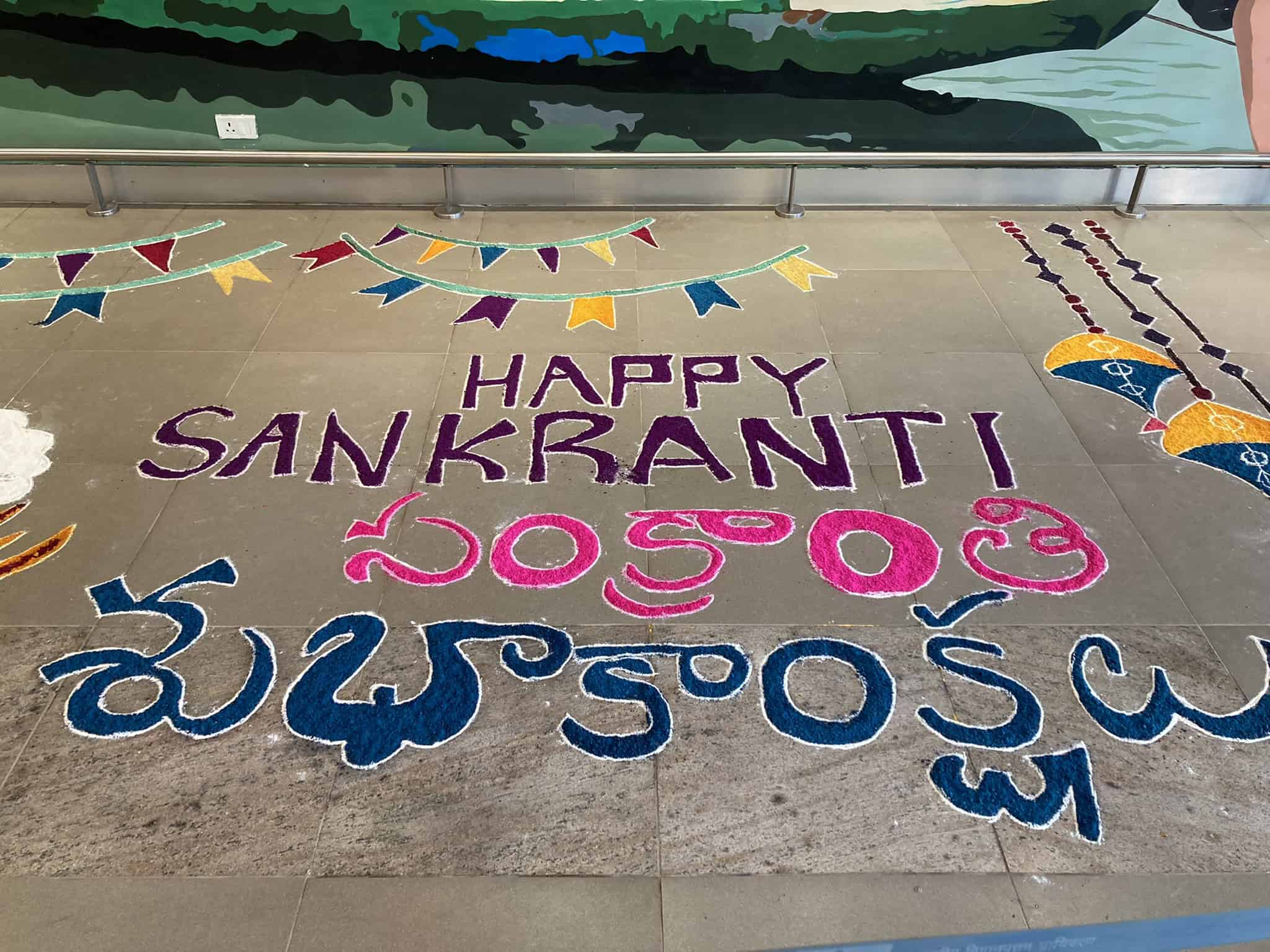
Significance Of Makar Sankranti The auspicious day of Makara Sankranti is the day dedicated to worship the Sun - whose light nourishes and sustains all life on this planet. Sankranti means Passage in Sanskrit. Sankranti comes every month of the solar year when...

How to Make Your Heart Pure: Spiritual Lessons for Kids Explained in Satsang
- 1. Obeying the rules of life.2. Preforming one's duties.3. Seeing work as workship.4. Chanting lord's name again and again.5. Trusting God as trusted and beloved to all.6. Seeing the blessings of Lord in everything.7. Love God as much as you love yourself....

Unlock the Secrets of a Well-Lived Life: Ancient Hindu Wisdom from Sanatana Dharma to Become Your Optimal Self
The Perfect Harmony A person's state is said to be in perfect harmony if they are able to balance, both Aahaara - Eating and Vihaara - Resting. Aahara is for the body whereas Vihaara is for the mind. Our personal and professional wellbeing depends on our moral...

How God Stays In and Out of the Frame: The Spiritual Life of Indians in the Diaspora
- 0 - Hi, I’m Rachana. Its been my dream for years to do something to consciously create a better future where every one of us is excited about our own potential. My challenge to everyone is that they aspire for their personal best and leave a legacy of their...

Sri Krishna’s Timeless Wisdom on True Love: Life-Changing Lessons from the Bhagavad Gita
- What Is Love? Krishna explains pure love in this way in the Gita. "The spirit of pure love is to love without condition, to speak without intention, to give without reason, and to care without expectation." As long as humans have existed on earth, there's...