

Math Is Not My Strong Suit
I remember one time I went to the store and the checkout machines were not working. The cashier, a nice young lady, refused to check me out because she couldn’t figure out how much my total grocery bill would be.
I offered to help her. I even asked for a pen and paper so I could prove to her that the total in my head was correct and that I wasn’t scheming her into giving me a few free grapes from the store.
After 15 minutes of long-drawn-out discussions, I convinced her and her manager that our totals tallied: the one they had on the dusty old calculator they had brought out from somewhere, and the one I had come up with in my head after adding up everything, including something close to the tax I would owe.
I was reminded of this 15-year-old incident this month when Prince Harry was speaking at a conference about AI and its potential harm to children.
The Teleprompter as the Brain
In the middle of his speech, the teleprompter went blank. Harry momentarily turned to the giant screen behind him, only to notice that even that had gone blank. He hadn’t prepared enough to continue without his technology, and after a few minutes, he walked off the stage with an, “And that’s it.”
If your teleprompter dies or your microphone stops working, the audience should see a speaker dealing with a technical problem — not a person whose ability to speak has disappeared along with the technology.
And sadly, that’s what happened with Prince Harry. The memes and trolls that followed have been relentless, and I, too, in my own capacity, have tried to coax him into preparing better next time.
So, what should you do when technology fails you in the middle of a speech?
Breathe, Smile and Proceed
Technology has failed you. You are not the failure.
To an audience that has been engaged until that moment, a technical problem simply means that something has gone wrong. You don’t have to immediately fill those silent moments with nervous words.
You have a relationship with the audience. Build it back up slowly.
Take a breath. Smile. Look at the people in front of you. Give the technical team a moment to figure things out. And then continue.
Do a Little Background Work
This is where a little preparation comes in handy when things like this happen.
Even if you don’t memorize your entire speech, and you don’t have to, you must atleast remember the architecture of your speech.
What is the problem you’re addressing? Why does it matter? And what can we all do about it? If you know your mission, words are simply the vehicle that takes your audience there.
You should be able to put your notes aside and explain your central idea in your own words. You should know where you started, where you’re going, and where you want to leave your audience.
That doesn’t mean memorizing every sentence. It means understanding your own argument well enough that you don’t need a machine to tell you what you think.
Keep a Few Recovery Sentences Ready
Self-deprecation is one of the finest forms of humor. And in a vulnerable moment, when you’re standing in front of an audience staring at a blank teleprompter, a little humor can lighten both you and the room.
You don’t have to be naturally funny or theatrical. But you need enough comfort with yourself to survive an unscripted moment.
In this case, Harry could have easily said something like:
“Well, apparently technology has decided to make its own point today. We were just talking about the dangers of too much technology and AI, and now this happens.”
The audience would probably have laughed. The tension would have broken. And he would have bought himself a few minutes while the technical team worked on the problem.
Or perhaps this is the perfect time to take questions or engage with the audience until the system is back up.
The point isn’t to have a perfect comeback. The point is to remain present.
Have a Plan B to Close Out
No matter what happens, you don’t have to be Harry when your technology fails you.
His abrupt conclusion communicated something without him literally having to say, “I can’t continue without my presentation.”
A prepared speaker should always have a Plan B that does not require technology.
You should know how you would finish your speech if the slides disappeared, the teleprompter died, the microphone stopped working, or the laptop suddenly decided to become your enemy.
Technology should amplify your ability. It should never be the source of it.
And perhaps that’s the irony of a speech about the dangers of technology: when the technology failed, the real test was no longer about AI.
It was about the human being standing behind it.
– 0 –
About The Article Author:
Hi, I’m Rachana. Its been my dream for years to do something to consciously create a better future where every one of us is excited about our own potential. My challenge to everyone is that they aspire for their personal best and leave a legacy of their work through their contributions to mankind.
One more thing. In December of 2044, I hope to win the Nobel.
Will you join me on this journey of growth and transformation?
Namasté.
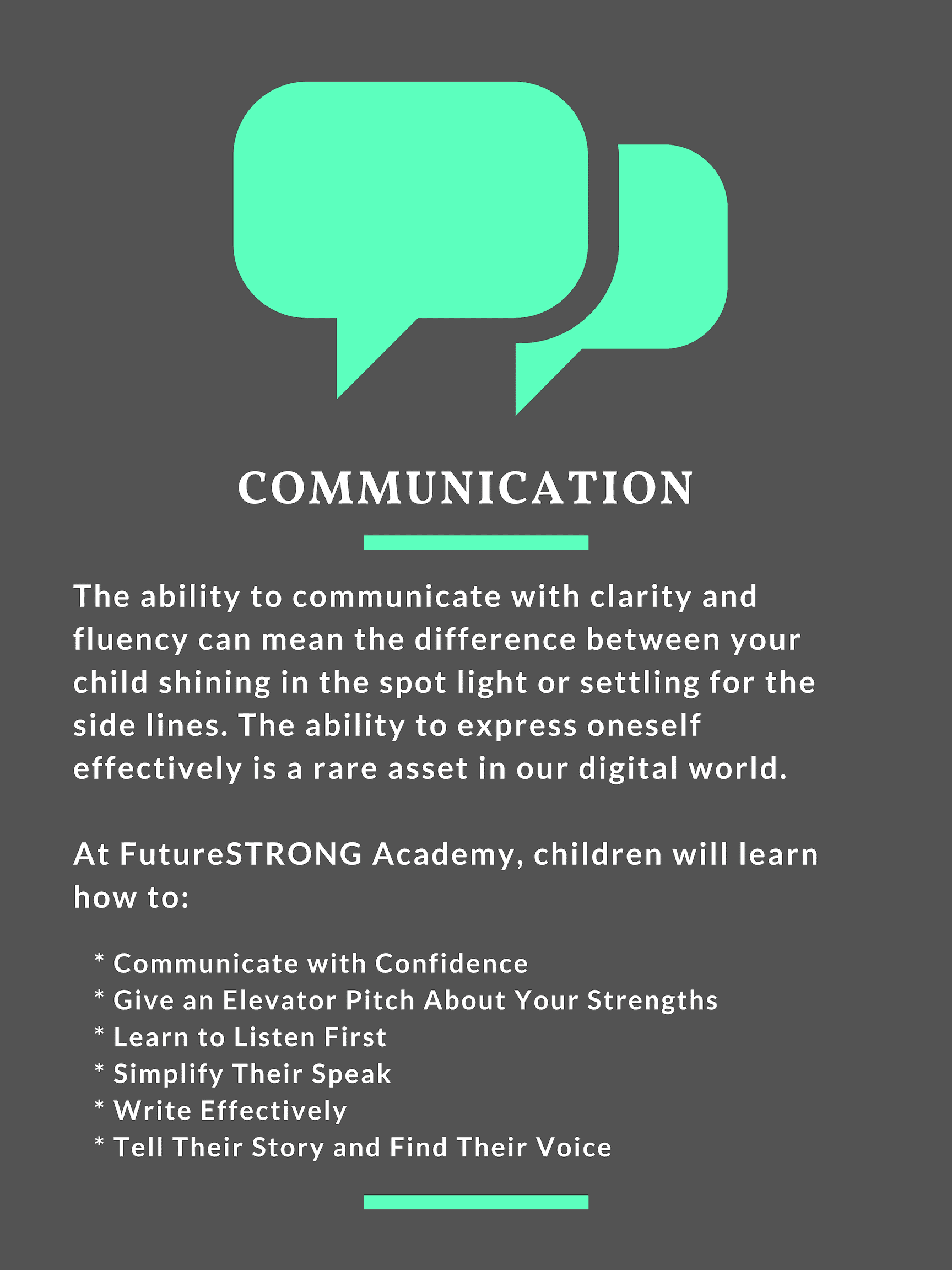
COMMUNICATION - A Pillar of FutureSTRONG Academy
Our children will one day face the real world without our support. Academic development is not the only skill they will need in the real world where people skills like taking the lead, emotional intelligence and a strong moral compass will determine who will shine. So, as parents who want to raise well rounded adults, we want to give them the right tools for their personal development.
Here is COMMUNICATION as described as the 6 C’s of Future STRONG.
Find Below Better Strategies On COMMUNICATION

The Human Arc in the Attention Economy: How Algorithms Are Changing Love

Can a Child’s Life Be a True Adventure? Teaching Kids Agency, Discipline & Independence

Vita Brevis: Life’s Too Short — Stop Drifting, Start Living

Ask Yourself These 5 Questions Every Day to Live with More Purpose and Leave a Lasting Legacy

I’ve Got FIFA Fever. Just Not The Kind You Think I Do.

Modern Times, Ancient Wisdom: What Chanakya and Dr. Radhakrishnan Pillai Teach Us About Leadership Today

Beyond GenAI Pilots: How Enterprises Build Scalable AI with Governance and Trust

What Working with Kids Taught Me About Phones, Focus, and Taking Back Control

The Modern Paradox: Why We’re Richer Than Ever but Starving for Real Connection

When AI Becomes Your Therapist: The Hidden Risk of Chatbots Replacing Reality – Part II

The Dangerous Rise of AI Yes-Men: When ChatGPT Agrees Too Much and Fuels AI Psychosis – Part I
