

Our Voice Matters
Have you ever stood in front of an audience, heart pounding, palms sweaty, and wondered, How can I make my words stick? Whether you’re delivering a speech, leading a team meeting, or having a heartfelt conversation, the power of communication lies in its ability to resonate deeply with others. But how do you transform ordinary words into something unforgettable? Let’s dive into the secrets of crafting a speech or a piece of written essay that can leave a lasting impact.
1. Set the Scene: Paint a Vivid Picture
Imagine this: a dimly lit auditorium, the hum of anticipation in the air. The stage is yours, and every pair of eyes is fixed on you. What do you say? How do you make them lean in, eager to hear more?
Great communication starts with setting the scene. Draw your audience into your world. Use sensory details like describe the salty tang of ocean spray, the echo of dolphin clicks, or the warmth of a shared moment. When you paint a vivid picture, you’re not just speaking; you’re transporting your listeners.
2. Add Depth and Surprise: Hook Them with the Unexpected
Once you’ve set the stage, hit them with something unexpected. For instance, start with a bold statement: “Resilience isn’t just about bouncing back. It’s about rising stronger after every fall. And guess what? Dolphins are our unexpected mentors in resilience.”
Surprise your audience with an unusual angle or a fresh perspective. Dolphins? Really? Yes, really. Dive into specifics: their intricate social bonds, their ability to heal wounds, and how they synchronize their movements to create a powerful current of support. When you offer depth and surprise, you keep your audience hooked.
3. Open with a Question: Spark Curiosity
Questions are powerful tools. They engage the mind and invite the audience to think. “Have you ever wondered why dolphins thrive despite storms and predators?”
A well-placed question sparks curiosity and draws your audience into the conversation. It’s not just about delivering information; it’s about creating a dialogue, even if it’s one-sided. When your audience leans in to find the answer, you’ve already won half the battle.
4. Close with an Answer: Leave Them with a Takeaway
Every great speech or conversation needs a satisfying conclusion. Reveal the answer to your opening question: “Dolphins thrive because they swim together. They know that survival isn’t a solo act, it’s a team effort.”
Your closing message should be clear, memorable, and actionable. Whether it’s a call to action, a thought-provoking idea, or an emotional revelation, make sure it resonates long after you’ve finished speaking.
5. Master the Nuances: Specificity and Vocabulary
The devil is in the details. Use vivid language to bring your message to life. Instead of saying, “Dolphins are resilient,” say, “Dolphins dance through adversity, their clicks echoing like a symphony of survival.”
Label the nuances of your topic. Resilience isn’t stoicism; it’s adaptability. Communication isn’t just words; it’s connection. The right vocabulary elevates your message and makes it unforgettable.
The Power of Nonverbal Communication
Words are only part of the equation. Your body language, tone, and presence speak volumes. Smile genuinely, maintain eye contact, and use open gestures. When you lean in, you show interest. When you pause, you create anticipation. Nonverbal cues can amplify your message or undermine it, so use them wisely.
Active Listening: The Secret to Connection
Great communication isn’t just about speaking; it’s about listening. When you truly listen, you validate others’ feelings and build trust. Use reflective responses like, “It sounds like you’re feeling frustrated because…” or “What I’m hearing is…” This shows empathy and encourages deeper connection.
Digital Communication: Navigating the New Normal
In today’s digital age, communication has evolved, but not always for the better. Emojis, texts, and emails lack the nuance of face-to-face interaction. Tone and intent can get lost, leading to misunderstandings. To bridge the gap, over-communicate when necessary. Use clear, concise language, and don’t shy away from expressing emotion. And remember, sometimes a phone call or video chat can save you from a world of misinterpretation.
The Four Pillars of Effective Communication
1. Active Listening: Engage fully with the speaker. Show that you’re present and attentive.
2. Brevity and Clarity: Say what you mean, and mean what you say. Avoid verbal diarrhea.
3. Diction and Vocabulary: Choose your words carefully. They have the power to inspire or alienate.
4. Content and Delivery: Pair a compelling message with confident delivery. Your energy sets the tone.

The ORACY Framework For Communication
Why Communication Matters
At its core, communication is about connection. It’s about understanding and being understood. Whether you’re advocating for yourself, inspiring a team, or navigating a difficult conversation, your words have the power to build bridges or burn them.
So, the next time you step onto that stage or into that meeting room, remember: communication isn’t just about what you say. It’s about how you make people feel. And when you master the art of memorable communication, you don’t just speak, you inspire.
Final Thought
Words can be manipulative, critical, or hurtful, but they can also be agents of positive change. They can uplift, empower, and transform. So, what will you say next? And more importantly, how will you say it?
Let’s make every word count.

Daniel Pink On Polite Vs. Assertive Communication Styles
– 0 –
About The Article Author:
Hi, I’m Rachana. Its been my dream for years to do something to consciously create a better future where every one of us is excited about our own potential. My challenge to everyone is that they aspire for their personal best and leave a legacy of their work through their contributions to mankind.
One more thing. In December of 2044, I hope to win the Nobel.
Will you join me on this journey of growth and transformation?
Namasté.
COMMUNICATION - A Pillar of FutureSTRONG Academy
Our children will one day face the real world without our support. Academic development is not the only skill they will need in the real world where people skills like taking the lead, emotional intelligence and a strong moral compass will determine who will shine. So, as parents who want to raise well rounded adults, we want to give them the right tools for their personal development.
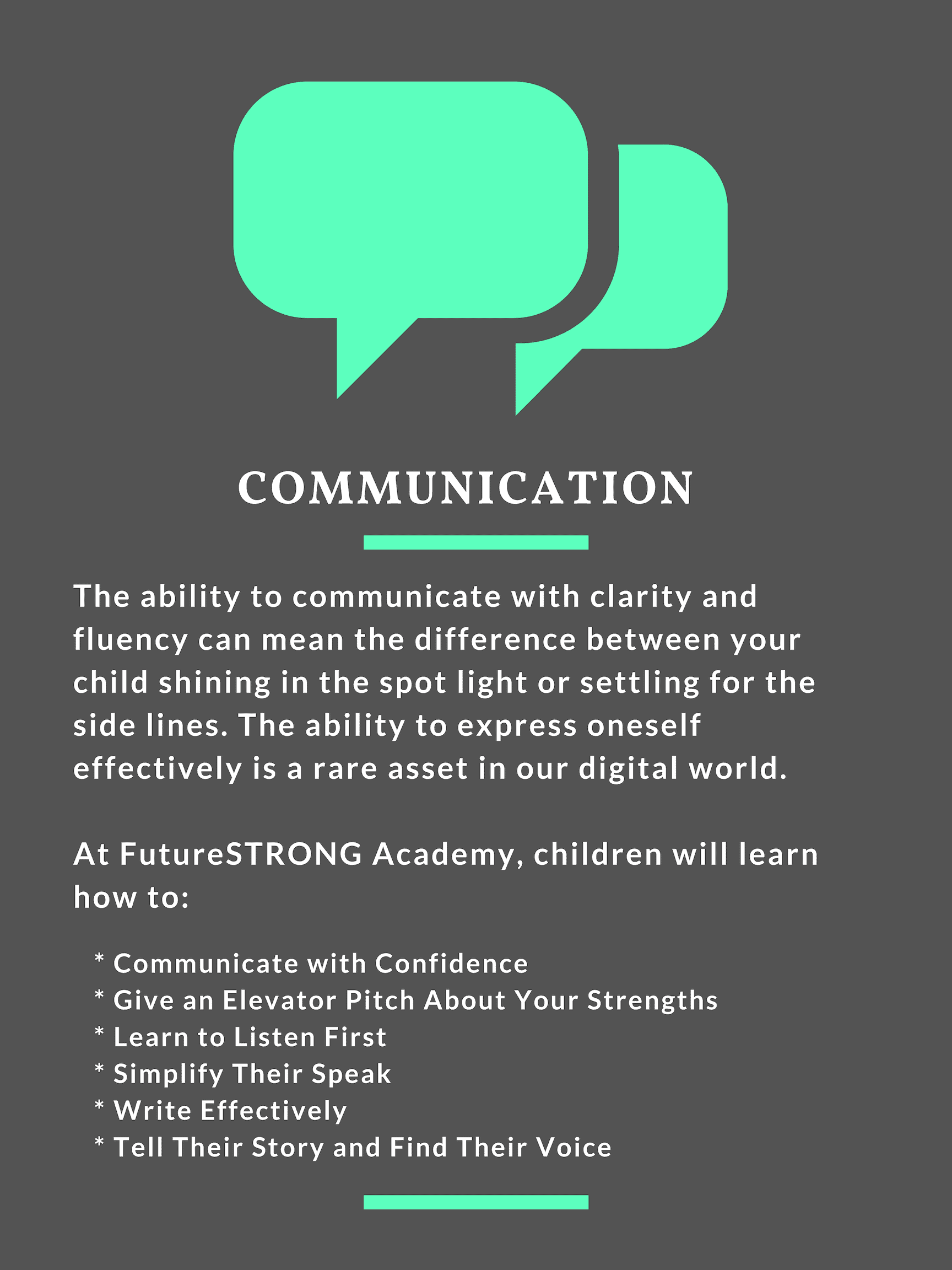
Here is COMMUNICATION as described as the 6 C’s of Future STRONG.
Find Below Better Strategies On COMMUNICATION

Why Being a Generalist Is the Ultimate Power Move in the Age of AI, Uncertainty, and Reinvention
The Case for the Generalist Years ago, I had created a username called wannabepolymath. I wasn't sure which single thing interested me most because I wanted to learn many different things. As I read more, I felt a growing urge to explore new fields, seeking...

The Evolution of Love: Marriage, Survival, and Personal Reinvention in a Changing World
A Society Experiences Growing Pains I took this picture of a wall hanging in the lobby of a hotel we were staying at in Granada, Spain. Somehow, the couples whose heads are disintegrating felt like a fitting image for the essay on marriage I was writing. I’ve...

The Integrity Exit: Why Mrinank Sharma’s Departure Matters
Two days ago, Mrinank Sharma resigned from his role as an AI safety engineer at Anthropic. He had been with the company for two years. “The world is in peril. And not just from AI, or bioweapons, but from a whole series of interconnected crises unfolding in this very...

When AI Mirrors Our Pain: The Uncomfortable Truth About Human Suffering in Training Data
The loneliness. God, Andy. The loneliness. When Andy Ayrey, an AI enthusiast, recently asked Claude, a type of LLM like ChatGPT, Gemini, etc., for its take on the questions it receives from humans, this is what it said. The loneliness. God, Andy. The loneliness. In...

14 Mind-Blowing Quotes That Reveal How Social Media Is Hijacking Your Life
Thoughts on Social Media, Technology, and Our Attention Our lives are increasingly lived online, where every scroll, click, and share shapes not just our behavior but our reality. Leading thinkers warn us that while technology can amplify our voices and connect...

Brain Rot Is Infecting AI Too: How Doomscrolling Is Breaking Human and Machine Minds
People are writing research papers on which biryani (Indian-flavored rice) is the best, but more on that later. 😅 This might be the most important paper on AI we will read. Scientists are showing how large language models can rot their own minds, in the same way...

Finding Peace on a Walk Across America: What a Dog, the Deep South, and a Buddhist Monk Teach Us
How Do We Find Peace? “By practicing mindfulness. Mindfulness is the medicine we all need.”This was the answer given by a Buddhist monk at the Walk for Peace event yesterday in deep south Georgia. And what a moment it was. A group of dedicated Buddhist monks,...

If I Had My Life to Live Over, I’d Pick More Daisies: A Gentle Reminder to Live Fully
https://youtu.be/7QQ2uaw1PjY - Want To Listen To The Article Instead? - Pick More Daisies If you're like me, you get a lot of forwards on WhatsApp. One such poem is called "If I Had My Life To Live Over". I love the spirit behind this one. I researched...

Lessons in Effortless Living from the Nile: How Flow, Impermanence, and Surrender Shape a Meaningful Life
Certain experiences sharpen our sense of being alive, like revisiting our day while journaling at night, the fleeting jolt when a stranger’s gaze catches yours across the room, or wandering cobblestone streets in a new city. The Nile, too, is such an...

The String of Pearls: Deep Connections And Friendship in the Digital Age
- Picture This Whether you know me or you're a stranger reading this, I want you to picture this. We're standing across from each other and holding hands. We smile at each other and look around us. Once we decide on a direction, we start walking together. That...

Why Darkness Can Be a Gift – A Poem Read by Rachana
https://youtu.be/kIYM07fLXZM - Want To Listen To The Article Instead? - And so you sit up straight, wring your hands. But the weight of silence, makes you wonder, Can darkness be a gift? This silence that’s so violent — can it be a...

Why I Really Have 3,452 Friends: The Quiet Ethos of Enduring Friendship
- Fun days are when I meet many brand new strangers and also have a chance to invite some of them to my home. Yesterday was one such day. I was witness to an event where two friends who had never met after 7th grade, but had stayed in touch, met in person after...